
Tensions are rising over the Adriatic oil pipeline. Hungarian energy group MOL points to technical failures, while Croatia’s state operator Janaf flatly denies the allegations. Speaking in New York, Foreign Minister Péter Szijjártó sharply criticised Croatia, accusing it of charging a “war surcharge” and exploiting Hungary’s vulnerable position.
The European Union and the United States have for months been pressing member states to halt imports of Russian oil and gas. One alternative would be to rely on the Adriatic pipeline, but Budapest insists the system cannot provide secure supplies for Hungary and Slovakia in its current state.
Szijjártó rejects the Adriatic option
According to a report by hvg.hu on MOL, September’s trial runs revealed multiple technical failures, showing that the Croatian system cannot guarantee long-term supply to Hungary and Slovakia. Janaf, however, strongly rejected the claim. The issue even surfaced at the UN General Assembly in New York, where Szijjártó was asked to respond to the contradictory reports.
The foreign minister stuck to his position: the Adriatic pipeline cannot deliver the volumes required, and relying on it alone would be dangerous.
“If we can only import oil through Croatia, that pipeline simply cannot deliver enough to guarantee uninterrupted supplies for Hungary and Slovakia,” Szijjártó said.
He added that Croatia’s energy infrastructure is less advanced than Hungary’s, making it, in his words, impossible to base Hungary’s energy security on Zagreb.
Szijjártó says Croatia is charging ‘war surcharge’ on oil
Beyond technical doubts, Szijjártó voiced deep distrust toward Croatia. He argued that Zagreb had not acted as a fair partner in recent years and is now profiting from the war at Hungary’s expense.
“The Croats are exploiting the situation that there is a war, and that Hungary sometimes needs crude oil through the Adriatic pipeline. They are charging us a war surcharge (…) and we will not allow the results of our utility price cuts to be destroyed by Croatian profiteering.”
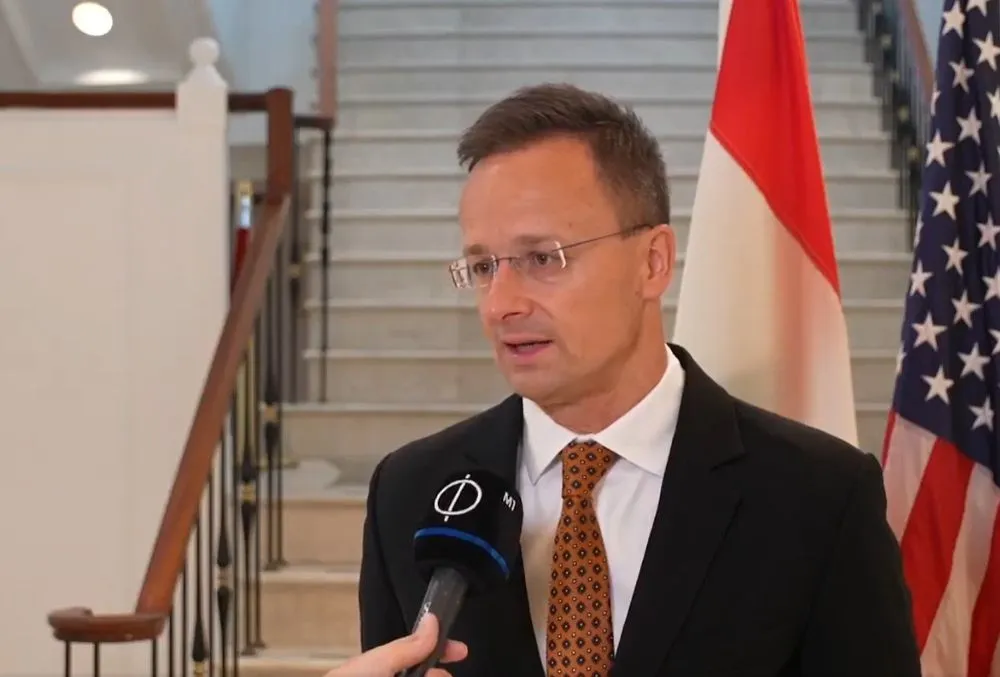
According to the minister, since the war began, Croatia has continuously raised transit fees, now five times the European benchmark – proof, he said, that Croatia is taking advantage of Hungary’s reliance.
MOL vs. Janaf
In September, several trial runs tested whether the Adriatic pipeline could supply Hungary and Slovakia in the long term. MOL reported outages and pressure drops, claiming these showed the system cannot sustain high-volume, continuous deliveries.
Janaf, by contrast, called the tests successful, insisting the pipeline can transport over 12 million tonnes of oil per year.
“We are prepared, whether technically, organizationally or otherwise, to cover the full annual crude oil needs of MOL Group’s Hungarian and Slovak refineries,” the company said in a statement.
Janaf also argued that reduced throughput during the third test was not due to technical failure, but because MOL requested lower volumes. The tests, it noted, were carried out on the section between the Sisak terminal and the Hungarian border.
Hungary faces growing pressure to cut Russian energy dependence
The past months have seen the EU and the US ramp up pressure on member states to cut their dependence on Russian energy. Brussels is phasing out Russian oil and gas as part of its sanctions policy, while Washington has issued tougher warnings.

U.S. Senator Lindsey Graham recently warned that “if Hungary and Slovakia do not end their imports of Russian oil, there will be consequences – and there must be.”
Former President Donald Trump has also repeatedly urged NATO allies to stop buying Russian oil. “No excuses,” he said earlier, arguing that NATO members must act in unison to cut Moscow off from global energy markets.
At the UN General Assembly in New York, and in a meeting with Ukrainian President Volodymyr Zelenskyy, Trump again demanded an end to Europe’s “inexcusable” purchases of Russian energy. Referring specifically to Hungary, he added:
“Viktor Orbán is a friend of mine. I haven’t spoken to him about importing Russian oil yet, but I have a feeling that if I did, he would stop – and I think I will.”
What comes next for Hungary?
With international pressure intensifying, Hungary remains defiant. Péter Szijjártó has made clear that his government does not consider the Adriatic pipeline a safe alternative. In the coming months, the key question will be whether Hungary can find a solution that both satisfies its allies and secures reliable supplies for its own people.


Fidesz is incapable of having friendly relations with any neighbouring country except for those which are fellow autocratic Russia friendly states such as Serbia and Slovakia. Every other state is a “decadent Western oriented” country”. Oh my.
‘Toe the PARTY line” – that Szijjarto, a “gofer” of Victor Mihaly. Orban over time, in particular the last decade, in and part of the “inner sanctum” of the Orban “power” structure.
Through factual performance the Fidesz Government, over (15) fifteen years, of toxic and heinous, in the CORE of the Victor Mihaly. Orban – his “Deranged” – Political Ideas and Philosophy, his Dogma, his Ideology that has DELIVERED Hungary to a “new age abyss” – a place of FUTURE grave un-certainty.
Szijjarto, performs likened to a worn out RECORD, being the “gofer” the “Puppet on a String” – to Victor Mihaly. Orban.
Szijjarto – his intellectual capacity over the years of his Ministerial postion, to long factually, for the GOOD of Hungary.
Orban effected on Mihaly Varga, the former “Dud” of a Finance Minister of Hungary, that Victor Mihaly. Orban as a FAVOUR – to a LOVED brother, a founding father of the Fidesz Political Party “shuffled” Mihaly Varga off, to the postion as Head of the Central Bank of Hungary, a postion Varga exhibits, remembering the cataclysmic MESS as Finance Minister he created of Hungary, and left behind, that is STILL the economic and financial BIG picture of Hungary being in SHAMBLES.
Szijjarto, what in his Ministerial postion is SUPPOSED to “voice out” promote – being a Foreign Minister and of Trade his PERFORMANCE personifies over to long a period of time, of years, that its outside his intellectual capabilities.
Hungary as we near the Spring of 2026, the PROPAGANDA games, of BLAME without facts and truths, the FABRICATION of Truth, acts of heinous conduct just MALIGNANT in the “toxic culture” of the Victor Mihaly. Orban – Fidesz Government will PURSIST increase in usage, in attempts to be again voted in as the Government of Hungary.
Szijjarto, is a MAJOR player in the “heinous” practices of the Orban led Fidesz Government of Hungary.
Szijjarto, as was factually Mihaly Vargas image – still is in his new “protected” role, that lacks European Union respect and trust, which is his IMAGE globally, with ALL countrys that are GOVERNED under DEMOCRACY.
BLAME, we know Victor Mihaly. Orban loves to play the BLAME game.
Orban, his accusatory, practiced CONSTANTLY by the Foreign Minister and of Trade for Hungary – Peter Szijjarto – this rightful title BELONGS to those, who live their LIVES in the ACCUSSING of others.
FEAR of Truth – never ABANDONS then – NEVER.
Victor Mihaly. Orban, his appointed Foreign Minister and of Trade – Peter Szijjarto, the PERSONIFICATION in the Creed of the Fidesz Political Party – membership inclusive of the Oligarchy – in words, in actions they DOMINATE the absence of JUSTICE.
Victor Mihaly. Orban, as has the Foreign Minister and of Trade – Peter Szijjarto – the Fidesz Government, membership – SMAMED and Abused mislead the people of Hungary – Heartbreaking.
Whoever wants us to stop getting oil, gas, or any other resource from X needs to ensure we can get that same resource from Y, with the same speed and reliability, in the same quantity, of the same quality, and at the same price.
If they can’t do that, they can go jump in a lake.