
Hungary and Slovakia have jointly appealed to the European Commission amid a growing dispute over oil transit routes, after supplies through the Druzhba pipeline were disrupted, intensifying tensions between Budapest and Zagreb.
Hungary and Slovakia turned to the European Commission
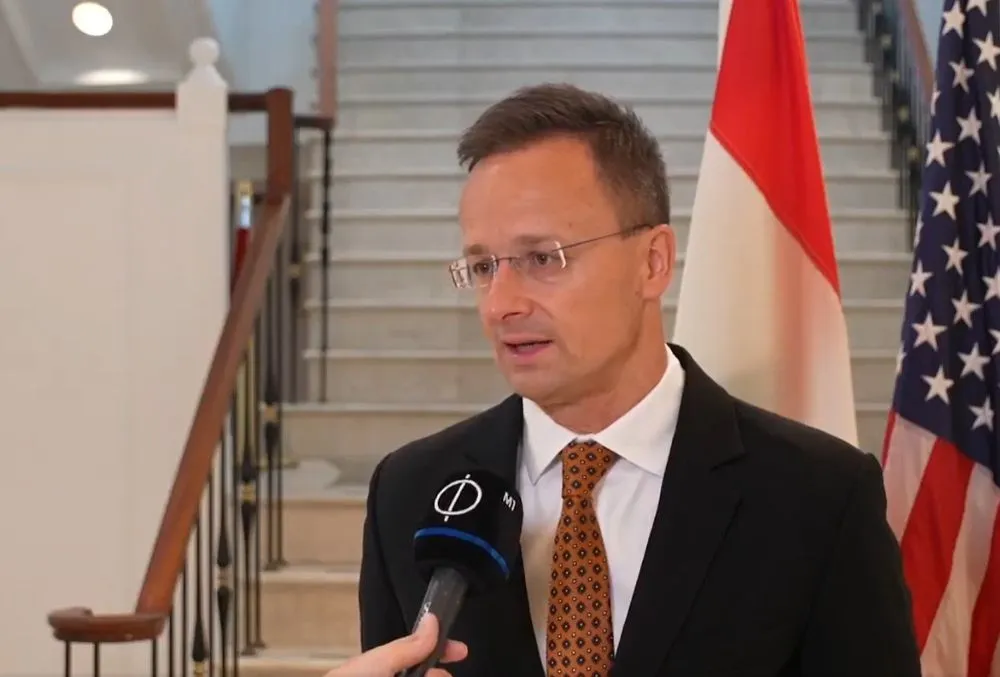
Hungarian Foreign Minister Péter Szijjártó said the two countries had formally requested Brussels to enforce an EU rule allowing them to purchase Russian crude via maritime routes if pipeline deliveries are blocked. According to him, Ukraine’s president, Volodymyr Zelenskyy, halted shipments to Hungary for “political reasons”, an accusation Kyiv has not accepted.
Szijjártó insisted Hungary’s energy security remains stable, noting the country holds more than three months’ worth of strategic reserves. He added that Hungarian oil and gas company MOL has already ordered alternative supplies transported by sea. The first cargoes are expected to reach a Croatian port in early March before being pumped onward to refineries in Hungary and Slovakia.
We recently reported on how Hungary seeks Croatia’s help to secure Russian oil supplies while putting the blame on Ukraine.
Croatia says their pipeline is to reduce Russian reliance and not to prolong it
However, the issue has triggered a sharp and unusually public exchange with Croatia. Croatian Economy Minister Ante Šušnjar responded with pointed remarks on social media, saying it was “heartwarming” to hear Hungary speak so strongly about EU law and values. His comments were widely interpreted as sarcastic, reflecting longstanding disagreements between Budapest and Brussels on rule-of-law matters, writes HVG.
The Croatian government has stressed that the Adria pipeline, operated by state-linked firm Janaf, is reliable and has sufficient capacity to meet Hungarian and Slovak demand. Officials in Zagreb argue the infrastructure was designed specifically to reduce Central Europe’s dependence on Russian energy rather than facilitate continued imports from Russia, reports 444.
In case you missed it: Foreign policy by friendship, as government says Orbán-Trump bond protects Hungary’s interests.
Hungary and Slovakia were given exemptions when the Russian invasion started
Under EU sanctions, Russian oil purchases remain restricted, though landlocked member states such as Hungary and Slovakia were granted temporary exemptions after the start of Russia’s invasion of Ukraine. Extending those exemptions to maritime deliveries via Croatia would require specific approvals and would likely be subject to strict conditions.
The dispute also carries a political edge. Croatian officials have pointed out that only months ago, Hungarian representatives questioned whether the Adria pipeline could handle sufficient volumes — a claim Zagreb rejected at the time. Now, Croatian leaders say the same infrastructure is being presented by Budapest as an EU obligation.
Featured image: Szijjártó Péter/Facebook



It is obvious, that Croatia is violating internwtional agreements here. They are obliged to help.
Still, the Commission, or Commie-shion demonstrated, that they violate any law, agreement or whatever, if they can cause damage to Hungary doing so, so the best would be to turn to Trump, to rein in his vassals.
Hungary, of course, doesn’t have to abide by EU treaties if it doesn’t suit it; this doesn’t apply to the other member states, because for those who, like Hungary, are in close proximity to Trump, different rules naturally apply. At the same time, the EU is vilified at every opportunity and subjected to a barrage of lies and propaganda that should actually make Hungarians blush with shame.
But here, someone is actually adhering to EU treaties, and now the EU is supposed to break the law because the Trumpian “might makes right” principle (Orbán’s exact words), which Hungary otherwise champions and favors, doesn’t apply here. I can only suggest that Hungary turn to Trump or Putin. I also keep reading here that Trump is Hungary’s “guardian angel.” So, go for it and have fun!
And if Hungary doesn’t like it, it always has the option of leaving the EU. However, losing access to the EU market would create a minor financial problem for Hungary. But for everyone else, that would be cause for celebration once the Hungarian internal destroyer and obstructionist of the EU, commissioned by external forces, is eliminated. Then Putin and Trump would have to declare national mourning, and Trump’s guardian angel status would certainly be over.
What kind of rotten morality and legal attitude is this? Has Hungary really already arrived in Russia?
Szijarto, Orban i Fico mogu samo da nam flautišu.
Croatia will of corse help, you are free to import oil but not the sanctioned one. We are not obliged but in context of being neighbours with only one issue in relations (mr. Hernady facing bribery charges), we have means and capacities to help.
But think about it, last year mr. Szijarto and mr. Orban were saying Croatia and JANAF do not have capacities to transport enough oil even tho tests and measurments proved them wrong. Now, Croatia and JANAF are a lifeline as elections are nearing and they don’t need issues with consumers facing issues…
“Sovereignty”. Remember that word Fidesz Russian stooges. Croatia has sovereignty over what flows through their pipeline and no Russian ass licking bastards can force them to allow Russian oil to flow through THEIR pipeline. Hungary is free to import the oil that Croatia allows to flow through its’ pipeline.
‘Hungary and Slovakia turn to Brussels over oil transit dispute with Croatia.’
Well, this will give Bruxelles and opportunity to actually do something that they were intended to do – resolve disputes to avoid bloodshed.
However, they, Bruxelles, are so busy interfering in elections, shipping out German industry, waging Operation Barbarossa 2.0, all the while organizing a legal invasion of Europe, that I doubt they will have time to take care of this.
Besides, if they took care of this, it would help Hungary and Slovakia, and that would be the last thing they would want to do – help a member state that has not pledged to become non-White and homosexual.
Why should the EU help Hungary or Slovakia solve their self-inflicted problems? The EU warned about this development long enough, but Orbán and his ilk claim to have a guardian angel and don’t need EU help. Hungary, like the other EU members, had plenty of time to find other suppliers. But they preferred to stay cozy with the Russians.
Now the problem is acute, and they expect the EU to bail them out. It’s astonishing how brazenly they demand EU assistance. Before, the EU was bombarded with insulting propaganda, and now it’s supposed to jump to attention because Orbán fears it could jeopardize his re-election. But no matter what Brussels does, it won’t be enough. In the end, the EU will once again be made the scapegoat, because that’s what Orbán needs for his political campaign, regardless of whether it’s true or not.
The EU is well aware of this, of course, which is why Brussels won’t exactly break its back and will let Orban squirm for a while. They deserve the pleasure.