
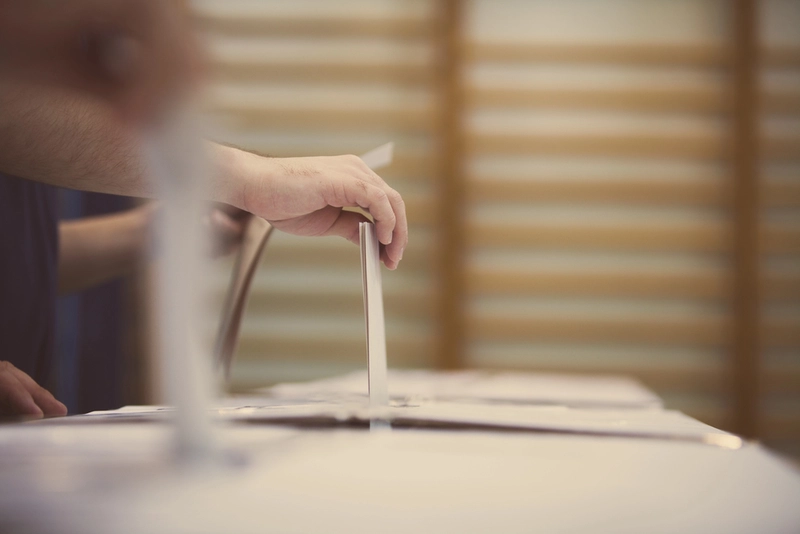
The small village of Tiszabura in Jász-Nagykun-Szolnok County is heading to the polls for the third time on 30 November, after the previous two by-elections were annulled due to allegations of electoral fraud. With a population of just 3,300, voter turnout has consistently been high, yet reports suggest widespread manipulation behind the scenes.
Tiszabura: Where votes can be bought
According to a thorough report by Index, the controversy dates back to the early 2000s, when local political operatives reportedly began using “technical candidates” to ensure their delegates were present in polling stations, a method allegedly intended to safeguard democracy.
Over the years, this practice has evolved. Sources claim that in recent elections, votes could effectively be purchased, ranging from HUF 20,000 (approx. EUR 50) in the morning to HUF 70,000 (approx. EUR 180) by the evening. Even “family packages” were said to exist, allowing multiple votes within a household to be bought at once.
The latest phase of the scandal
The latest saga began in June, when Tiszabura’s newly elected council dissolved itself, officially citing conflicts of interest involving Mayor Géza Vavrik. In October, the first by-election saw Vavrik win, but the result was annulled by Hungary’s Supreme Court (Kúria) due to evidence of vote-buying, photographs of electoral rolls, and money found in ballot boxes. A second by-election in November resulted in victory for Zsigmond Fekete, only for that outcome to be annulled as well, prompting the upcoming third vote.

The public doesn’t really discuss the elections
Journalists visiting Tiszabura found little public discussion of the alleged irregularities. Locals were reluctant to speak on the record, often dismissing inquiries with evasive or hostile responses. Among those willing to comment anonymously, the consensus was that the elections represent a high-stakes power struggle between wealthy local figures, rather than genuine civic debate. Nevertheless, residents remain committed to voting, often returning for multiple elections regardless of past controversies.
“Dummy candidates”
Historical accounts suggest that the real leverage lies not in who votes, but who counts the votes. Former officials allegedly devised strategies involving “dummy candidates” to place loyal delegates inside polling stations, a tactic that has been refined over successive elections. Observers claim this system now also serves to monitor voters whose support has been purchased.
Monetary incentives for votes have reportedly escalated over time. Some voters are said to have demanded payment or debt repayment in exchange for their ballots, with rates increasing on election day. These practices reflect the significant stakes at play: the mayor of Tiszabura earns around HUF 1.5 million (approx. EUR 3,900) per month (far more than local councillors) and controls access to local contracts and public programmes, creating financial incentives for electoral dominance.
Mayor Vavrik acknowledges the use of technical candidates but denies engaging in vote-buying himself. He has stated that he would only contest elections if fraud occurred. His rival Fekete has publicly appealed for a compromise, suggesting that no challenges be submitted after the 30 November vote to end the cycle of annulled elections. Vavrik responded that he will not challenge the results unless irregularities are proven.



Being “family friendly” Fidesz even has “family packages” for vote buying.
@Larry we have a Catholic party in Belgium, well that’s what it claims to be! The current chairman is a washed-up Muslim who recently married a Muslim woman with great pomp and circumstance! This wedding took place in Morocco and was widely shared by him on social media! This is an aside but still worth mentioning! Representatives of this “Catholic” party will be canvassing for proxies in nursing homes during elections! Old people they never see except during elections are taken to the polling station by bus! Afterwards, they receive a piece of stale cake and a cup of fair trade coffee at the nursing home! Those who survive will face the same ritual four years later! The cake is then slightly different, but just as tough and stale! However, the coffee is still fair-trade and just as tasteless! When these practices are criticized, the “Catholics” say so, but the Socialists and other parties do it too! It was not without reason that the Belgian René Magritte was one of the greatest surrealist painters!!
Unfortunately no matter how legitimate-seeming a Democracy seems, there remains a Capitalist aspect to it, that namely being that every voter can be bought – either by dollars directly, or, more commonly, by promises of dollars, or cultural benefits, that will come along with certain changes in policy.
This is complicated by the fact that Hungary’s coming election puts it right in the crosshairs of a titanic struggle between The Transnational Western Elite and the Russian Empire, the latter which is the defacto champion for the Global South – or, if you will, ‘BRICS’.
Nothing more obvious about the unseemly bribery campaigns going on than the EU which, having stolen untold amount of money in recent years, from every Hungarian, is now promising to restore it, IF their guy, Magyar Peter, or, rather, his party, Tisza, wins the election.
That said, the Hungarian Left will never see this irony, but, instead, will only see what they regard as Fideszs’ travesties.
An additional note is that Orban Victor, and this Hungary, has tremendous goodwill from all over the world, as not just Trump, Putin, and Xi do not want to see him lose, but, as well, neither do Fico, Vucic, Klickl, Babis, Duda, Melonia, Farage, Le Pen or the entire leadership structure of the AFD. Orban also has support from Romania and Bulgaria.
I mention this because, if, in the Hungarian countryside, Classical American politics are going to be practiced, it is not hard to imagine a lot of money finding it’s way into Hungary, for exactly these purposes.
The Western Elite, and the Hungarian Left despises Hungary’s leader, but the vast majority of The West very much disagrees.
This may be the one way Orban can pull out an amazing comeback.
If only the Western Elites would better understand the Russian system – with all the democratic institutions, competitive elections, and constitutional checks and balances – on paper … And a benevolent, peace-loving leader Mr. Putin, who fortunately can formally preside until 2036. We hear so many good things – but please tell us more ! The Media are keeping this from us.
Speaking of stealing money, bribery and corruption – Hungary ranks worst in the EU (82nd) – China does better (76th), and Russia ranks an enviable 154th!
You do not live in Hungary, do you? It is all quite blatant, here, if not hard to miss. People can see with their own eyes. The local media smoke screens only goes so far.
Dear Norbert – I’ll say to you what I said to Larry : these rankings are not objectively compiled, but, rather, serve certain political interests. Therefore they are not reliable.
Please do not misunderstand me … I am not saying there is not corruption in Hungary.
Who does not have corruption?
In my smalltown, there is a street where all the drugs are sold. Everybody knows this, and yet … there is no enforcement, in a town where law enforcement is, in every other respect, good.
In the county next door 13 out of 16 sheriff department members were arrested for drug-trafficking.
In my town we have a good town council. That said, the streets where the Negroes live have few street lights, whereas the streets where the Whites lives have plenty of street lights.
In my state, we never get a governor that we deserve, because 2 counties open and reopen polls, till very late hours, until they get the votes they need to find.
My state is part of a country that is not much considered corrupt, and my state is considered on of the least corrupt.
So, yes, I understand Hungarian frustration at corruption, I do follow Mi Hazank, daily, which investigates Fidesz officials constantly.
I just do not think that you ought think you have a unique problem or that the EU, incredibly corrupt, is going to solve your problems.
You have a Christ problem, or the lack of Him.
We have the same problem, too.
‘If only the Western Elites would better understand the Russian system – with all the democratic institutions, competitive elections, and constitutional checks and balances – on paper … And a benevolent, peace-loving leader Mr. Putin, who fortunately can formally preside until 2036.’
This is New England Yankee-think. It, also, is how the English think – this, namely being, that we ought force everybody to have the same system, executed to our precise druthers, or else we regard them as some shade of evil.
Despite the endless propaganda guided at us, to make us, White Southerners, think that we ought judge everyone in the world, we still believe that we have our ways – and other people have their ways.
The Southern way is morally and intellectually superior to the Yankee way of thinking, if for no other reason that it makes us less susceptible to the endless propaganda campaigns to villianize world leaders and other countries, simply because The Western Elite want us to support their violent intent against these other countries.
My only disagreement with you over Russia has been that I think you are incredibly unfair in evaluating how we have a war in the Ukraine.
The war is not Russia’s fault.
They did not start it; they tried everything thing, for many years, to avoid it, but, as God is my witness, but, they, Russians, will finish it, the war, and on they will do it on own terms.
Be well!