Subscribe to our social channels to get the latest news about Hungary!


Budapest, September 1 (MTI) – The government will set up an advisory board tasked with putting together a plan to improve Hungarian medical education, the government office chief said on Thursday. Illegal migration will continue to be a problem over the coming years, which is why the fence on Hungary’s southern border needs to be reinforced, he said.
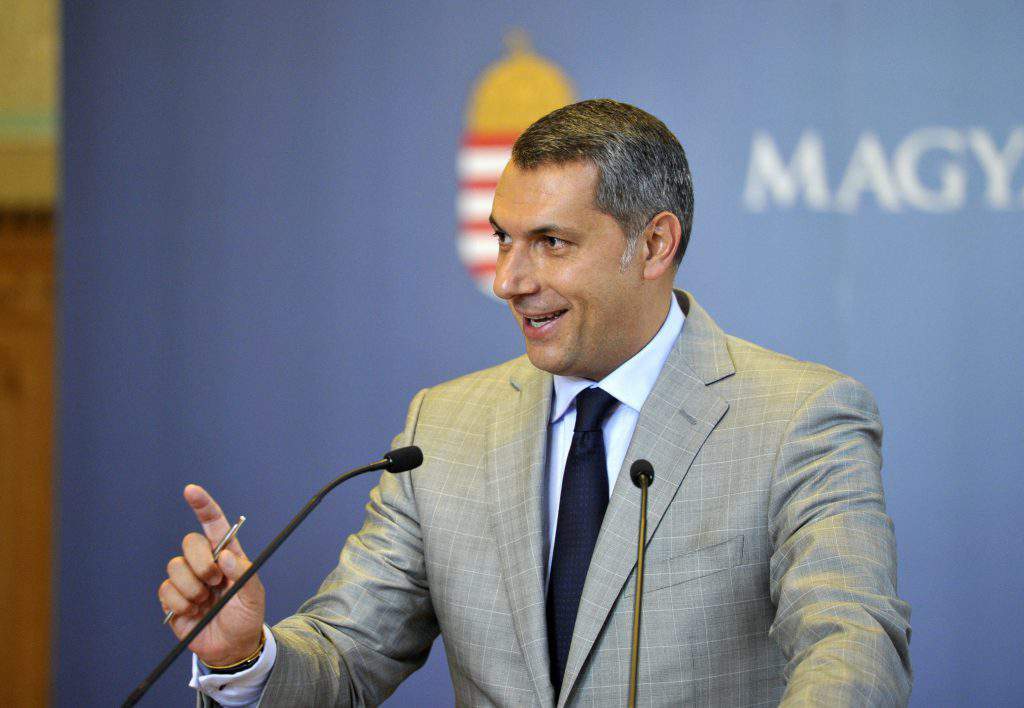
Medical education is the strongest and most competitive element in Hungary’s higher education system, János Lázár told a regular government news conference.
The plan aimed at improving medical education will address both the actual learning material as well as the financial and infrastructure aspects of medical training, Lázár added.
He said the advisory board will comprise Hungarian medical professors. The aim is for the board to approve the educational development plans on the basis of a professional consensus, Lázár said.
He said sports secretary Tünde Szabó had given the government her briefing on the Rio Olympics. The results will first have to be evaluated by the Hungarian Olympic Committee, the professional sports federations, the University of Physical Education and the various interest representation groups. The government will begin talks with 16 sports federations on further ways the government can help them, he said, adding that public funding for the key federations will have to be increased.
Lázár said the strategic cabinet has discussed a proposal that parliament should approve a report on the state-owned land privatisation programme. The cabinet also recommends wrapping up the auctions of farmlands larger than 3 hectares, he said. He noted that the government plans to spend the 270 billion forints (EUR 871.6m) in revenues from farmland auctions on reducing the public debt.
On another subject, Lázár said that by 2018 Hungary will look for the graves of the 650,000 Hungarian soldiers who fell in WWI on the Galician, Serbian and Italian fronts. The government has also decided to renovate all of Hungary’s WWI graves and monuments by the autumn of 2018. The government has also confirmed its plan to build a central memorial in Budapest to the victims of the war, he said. There are also plans to build another memorial somewhere else in the country, Lázár added.
Regarding the upgrade of Budapest’s third metro line, Lázár reiterated the government would ensure that replacement buses needed during the upgrade would be sourced from Hungarian bus manufacturers. But the government will stay true to its word and cover any extra costs that would arise from buying Hungarian-made buses. “Although it may cost the capital more to buy Hungarian buses, in the end it will benefit the national economy,” Lázár said.
He said the start date of the metro upgrade was not up to the government, adding that there were no financial obstacles to starting the renovation. Lázár added, however, that he thought it unlikely that the upgrade would start this year. He said Prime Minister Viktor Orbán will meet Budapest Mayor István Tarlós on Friday to discuss the metro upgrade.
Asked about the possibility of introducing a chancellery system (state appointed economic managers) in the public health-care sector, Lázár said talks are under way on the matter, adding that the government’s aim was to establish a uniform health-care management system. He said the government has to learn from the mistakes made with state school manager Klik, namely that if a system becomes too centralised, it could hamper the quality of what it is trying to manage.
He said the European Commission had approved Hungary’s state monopoly on retail tobacco sales, adding that it remained to be seen if the government could also make the wholesale trade of spirits or medicines a state monopoly.
New border fence needed to boost security
The aim of the second barrier Hungary plans to erect on its border with Serbia is to ensure that the country is fully secure, János Lázár told a regular government news conference. Hungary will also expand its police force and army, he added.


