Subscribe to our social channels to get the latest news about Hungary!


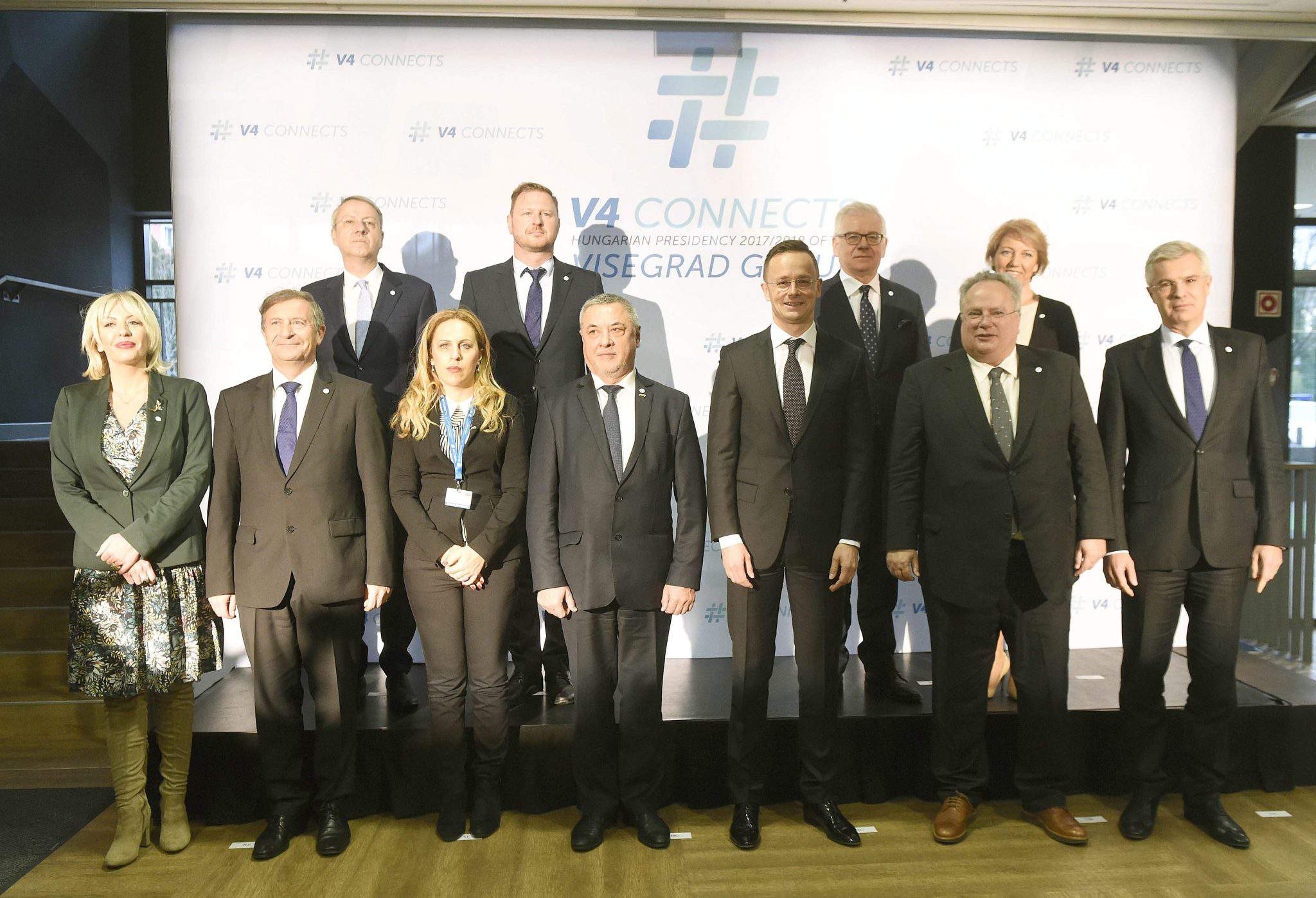
Ministers from the Visegrad Group plus Serbia, Slovenia, Croatia, Greece, Romania and Bulgaria agreed at a meeting in Budapest on Monday on the need to enlarge the European Union to embrace countries of the Western Balkans as well to expand the Schengen area and establish energy security.
Péter Szijjártó met ministers representing the other three countries of the Visegrad Group (Czech Republic, Poland and Slovakia) plus Bulgaria, Croatia, Greece, Serbia, Slovenia and Romania.
“We have nothing to be ashamed of when it comes to making the EU stronger,” Szijjártó told a joint press conference.
“Here in central Europe we have proved that illegal migration can be stopped,” he said.
Szijjártó added that by producing economic growth above the EU average, the region had greatly contributed to Europe’s rebound. So the region has justifiable grounds for expectations when it comes to the EU, he said, adding that these included maintaining the Schengen zone and speeding up further EU integration as well as helping to guarantee central Europe’s energy security.
The foreign minister said it is important that the Schengen zone “function normally again”, but for this to happen, the external borders needed protection and rules within the zone rules must be respected. This is essential in terms of competitiveness, he said, adding that “hobbling the Schengen system would mean sacrificing the European economy; so its survival is in everyone’s interest.”
On the topic of energy security, Szijjártó said they rejected “double standards” and expected the EU to help in diversification, because new energy transport routes were needed to move forward on energy security.
On the subject of the Western Balkans, he said enlargement of the EU should be speeded up as the best way to overcome tensions in the region.
“Hungary sees political, economic and security risks should the EU fail to speed up enlargement, and Hungary will do its utmost to accelerate Serbia’s accession process,” the minister said.