Subscribe to our social channels to get the latest news about Hungary!


According to GLOBS Magazine, imagine a regular start of the day. You wake up, brush your teeth, dress and walk into the kitchen. You simply tell your coffee machine to prepare your favourite latte. Then in a couple of seconds, your coffee is ready to go and you rush outside to leave for work. You get in the car, say where you want to go, drink the coffee, put on your make-up and relax until your car takes you to your destination. This scenario might not be as far away as you would think. Welcome to the near future in this digital village we call the 21st century.
Who would have thought a few years ago that a company in Hungary would bring us closer to this reality? The Budapest-based start-up, AImotive (founded in 2015), is a self-driving car technology company that won the Start-Up Innovation Prize from the Hungarian Association for Innovation just one year after developing aiDrive. AiDrive is an artificial-intelligence-based software used in the automotive industry that combines computer vision, artificial intelligence, mapping and multiple sensor technologies to ensure that cars drive themselves from A to B safely. This means that
AImotive is actively working on developing eyes and senses for future cars that would turn a normal car into Kitt from Knight Rider.
What sets AImotive apart from its huge competitors like Google, Intel or Baidu lies in using an unorthodox “vision first” approach. The firm claims that this system could navigate cars primarily using the input from webcams positioned around the vehicle. Radar sensors that operate onboard complement this input. In this way AImotive wouldn’t need to rely primarily on so-called LiDAR laser scanners (which is a standard for most self-driving car technologies) that are very expensive. As the online car magazine Just Auto writes in a January article about the firm, “AImotive hopes to bring autonomous driving to the masses”.


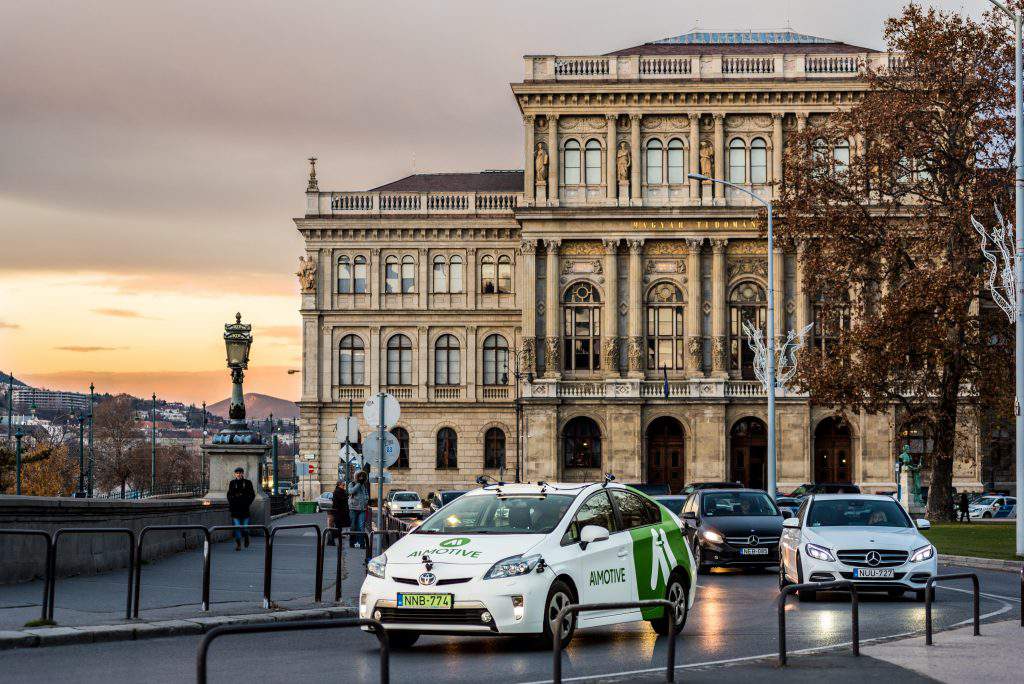
 AImotive has tested its technology with Volvo and is now working with other companies, including a “Japanese Tier 1” automaker. “Clients would like to deploy the highway driving component as early as 2021”, said Kishonti in an interview for Fast Company, a US-American business magazine in June.