Subscribe to our social channels to get the latest news about Hungary!


They are the historical faces that we interact with most often. We are so accustomed to seeing them as pieces of currency that we seldom stop and actually look at them. Still, they are representing some of our most important historical legacies. This article, the first in a series of two, will tell you about the portraits and landmarks on three Hungarian banknotes, so that the next time you pay for your coffee, you will appreciate that guy with the weird hat better.
The current series of banknotes has been in usage since 1997, and as of now, it consists of six denominations. Although the National Bank redesigned its colour scheme in 2014, the illustrations remained unchanged.
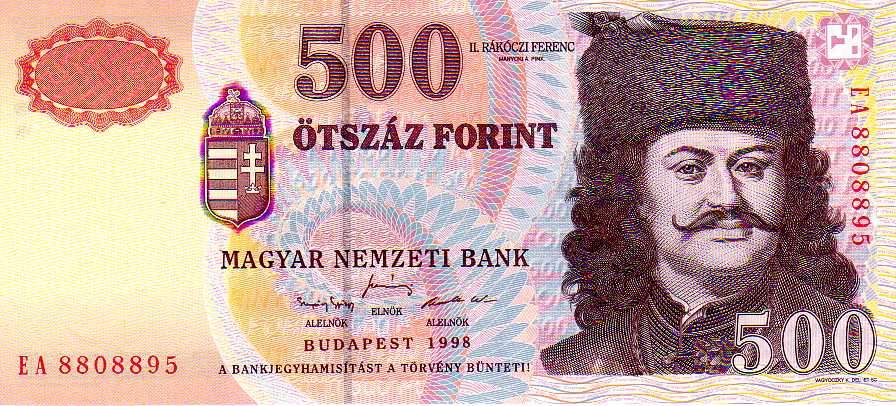
The 500 Ft note depicts on its obverse side Francis II Rákóczi (II. Rákóczi Ferenc), a Hungarian nobleman from the 17th century who led the Hungarian uprising against the Habsburgs in the 1703-1711 war of independence as the prince of Transylvania. The revolution failed, but today he is hailed as a national hero.
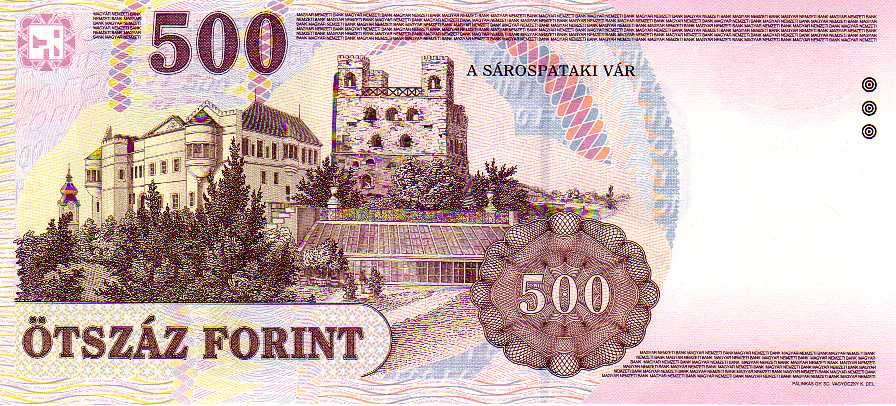
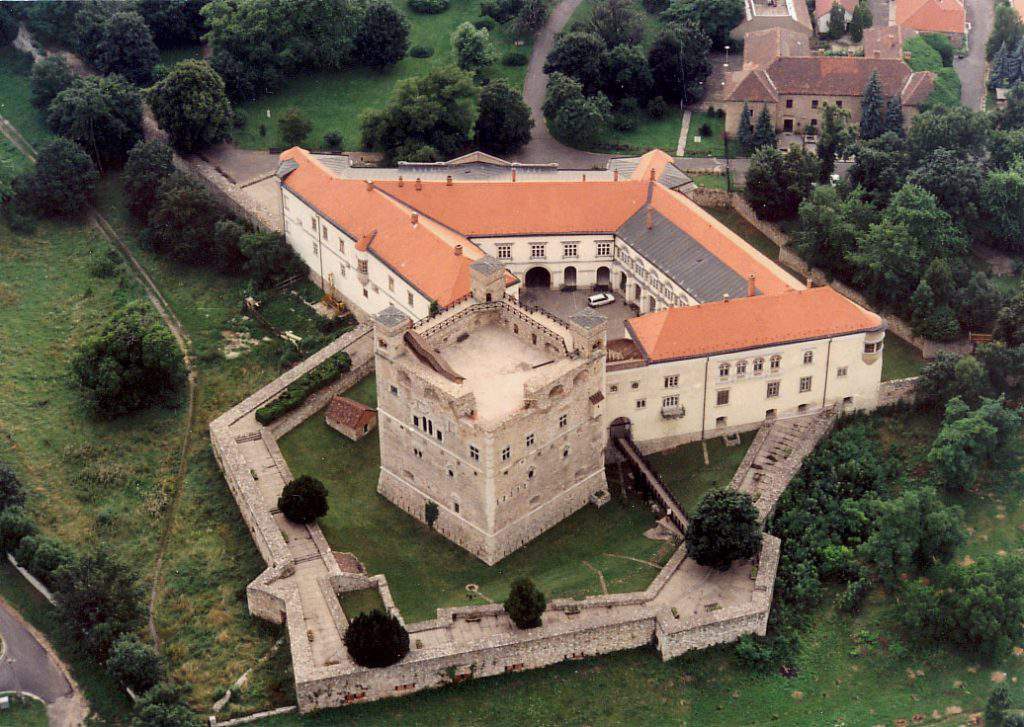
On the reverse of the note, we can see the castle of Sárospatak, also known as Rákóczi’s Castle, the most important piece of late Renaissance architecture, located in northeastern Hungary.
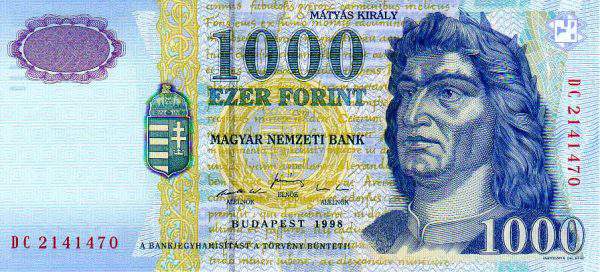
The 1000 Ft note figures Matthias Corvinus (Hunyadi Mátyás), a Hungarian king from the 15th century. He is probably the most popular king in the Hungarian public imaginary, often called Matthias the Just, protagonist of countless folk tales in which he roams the country in disguise and delivers justice to his subjects. He is also known for importing the Italian Renaissance tradition into his court, marrying Beatrice of Naples.
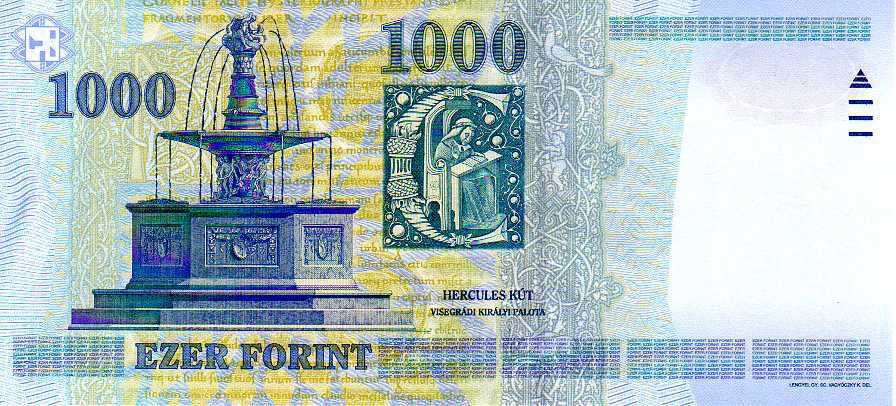
On the reverse of the note, we can see the Hercules Fountain which is found in the Royal Palace of Visegrád, the second residence of several kings during the period, including Matthias, too. Even more famous is the scenic Castle of Visegrád, remaining a popular tourist destination today. But both sights survived only in a reconstructed form, as they were destroyed during the Turkish invasion.