Subscribe to our social channels to get the latest news about Hungary!


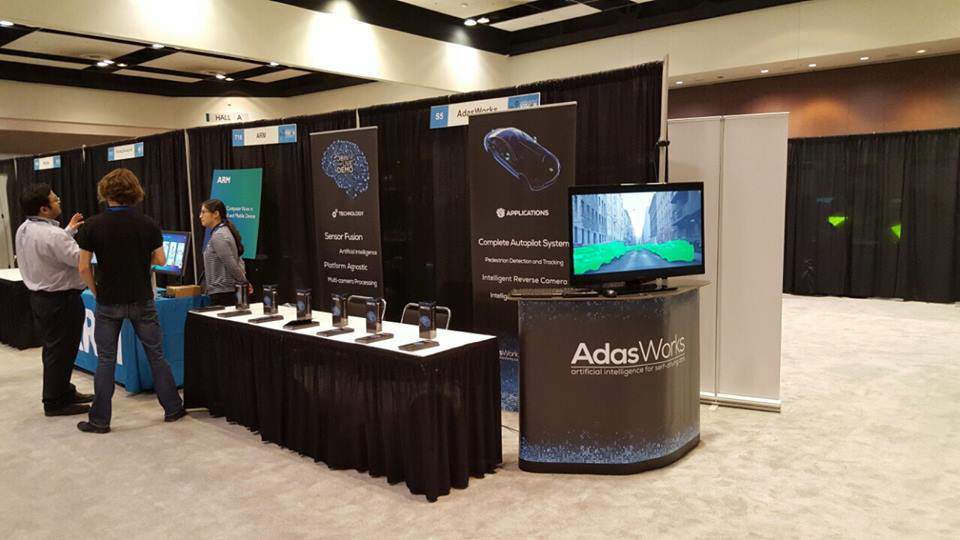
Index.hu reports about a new use of artificial intelligence by Adasworks, because Budapest will host the process of putting together items that will function as the so-called ‘eyes’ of cars in the future. They are necessary for robot drivers to be able to identify everything while moving.
Predictably only electric cars will be allowed to travel with in just a few decades’ time, and, as their structure is rather simple, anyone may join their production. Therefore, the hardware would lose its value, and so the software will take over control on the automotive industry.
László Kishonti, founder and director of Adasworks told the site that they aim to become a really significant participant of this technology in travelling. The company works on the development of computer-based sight, supported by artificial intelligence, which would function as the eye of the car.
The surroundings will be observed through the photos of simple and cheap cameras. Thereafter the on-board computer will decide on where to go, and also what speed the car will go with. Adasworks also initiated a standard by which the system of the hardware would consume energy of less than 10W instead of 500W.
According to their plans, 6 cameras will be implemented in every car to ensure safe travelling, of which 2 will be in the front, in a way that their view could overlap, so in case something goes wrong with one camera that will not affect the driving, nor cause any trouble. Also, when it gets dark sensors using infrared would be activated.
A radar will be used too as a safety backup, but as it is not so trustworthy it would come handy only in extreme cases, when something covers the car completely blocking the view in a way not even a human driver could drive properly. Thus, the task in such cases is to make sure that the car can get aside on the road without crashing into something.
Another option instead of the radar would be the laser radar called lidar, which is used by Google as well, however, it is far too expensive (even the cheap version costs about 2 million HUF) and has a far too short lifespan. Furthermore, it would use gigabytes of data on every kilometre. The lidar’s greatest advantage is that the distance of every pixel is known.


