Subscribe to our social channels to get the latest news about Hungary!


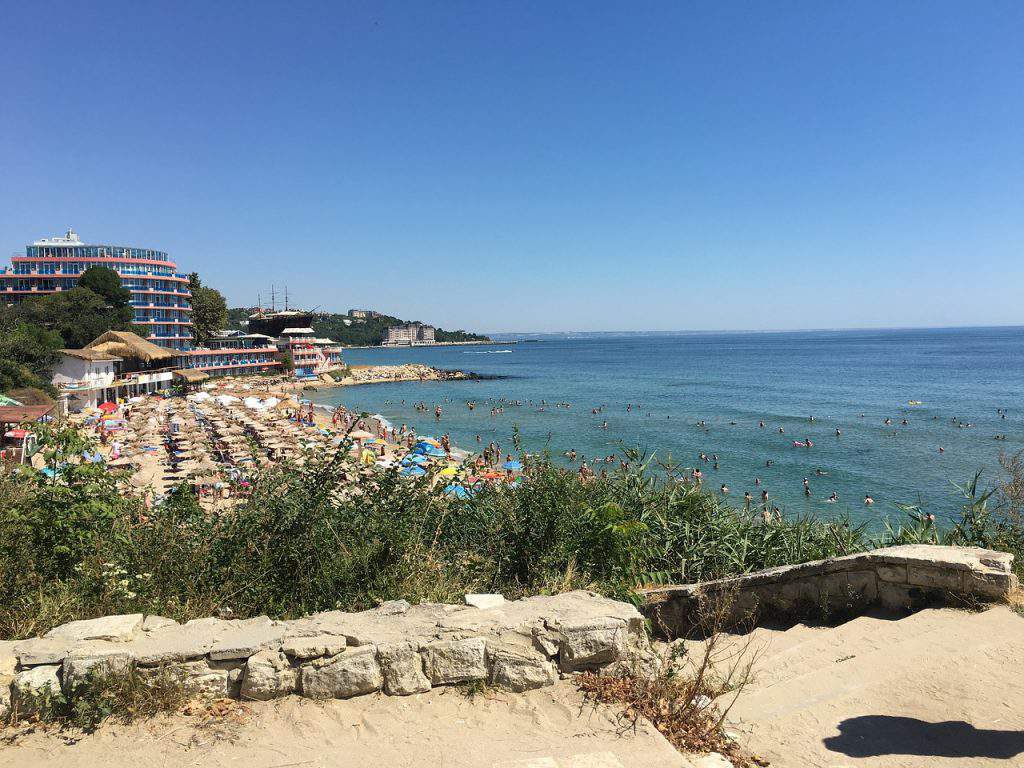
According to Tropical Magazine, one of the hits of the summer is the Bulgarian coast. It is cheap, beautiful, there is golden sand and there is the Zlatni Pjaszaci (which translates to Golden Sands), which gives a retro feeling to parents and gives an opportunity to kids for some family fun. So all that the eye, the mouth, and all the other senses may want is here. It seems like a destination to reach by plane but if you would rather drive, you may bite off more than you can chew. Or, you just use this opportunity to have a joyful ride and get to know the 10 hidden gems of the Balkan.
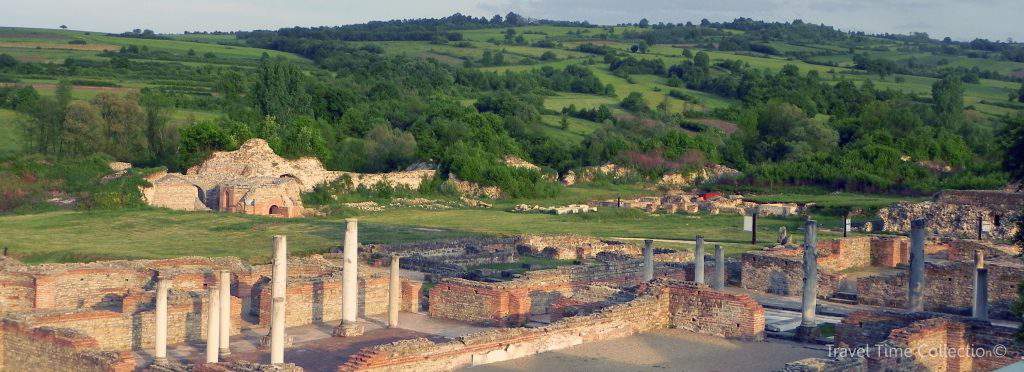
It is a detour to approach the Hungarian – Serbian border from Röszke, but if we want to avoid the crowd and traffic jams, we should cross the border at Tompa, where Sremska Mitrovica, the Hungarian Szávaszentdemeter, is right on our way. It is currently the western gate of Serbia, but it is generally closed. Ever since good old Yugoslavia was over, Serbia and Croatia’s relations have been fluctuating between organized cool and warlike hot. Thus, the capital of Syrmia is not really a popular place. Although it was once the capital, from 103 B.C it was Pannonia Inferior, and in 293, with the introduction of the tetrarchy system, it became the capital of one quarter of the empire. There were huge constructions in the 4th century – a complete imperial palace complex was built, from which the aforementioned region of the Empire was administered. It was only after the second world war, in 1952, that they discovered the palace quarter just below the city centre. The most incredible find, the former hippodrome has not been completely revealed, though it is unique among its kind, because the entire downtown would have to be dismantled to reveal it. But now that the country would like to revive the region’s tourism, a fancy, modern visitor centre was built above the palace.
We must skip Belgrade now; it would be too much to handle. Instead, let us go a little further east. Vinča is 14 kilometres from Belgrade and the village, in all probability, is the longest-inhabited settlement in Europe with 8,000 years of history. What the village is most famous for is not the archaeological park but the Joint Institute for Nuclear Research and the docked boat restaurant serving fresh fished from the Danube. Once there used to be the biggest city in Europe, although this “once” was a really long time ago, approximately around 5000 B.C. when the Vinča culture blossomed and bloomed.
The broadly unified archaeological culture occupied significant areas in the Balkan. Many important sites are known from the Transylvanian Lower Tărtăria to the Southern Serbian Pločnik. Unfortunately, there is nothing to be seen from the former city now. The former city centre, now a grassy meadow, was excavated but had to be buried back to prevent it from falling down. There is a brilliant small museum in Vinča with a well installed exhibition and good English descriptions. Here we can learn about this amazing civilization and its life which is said to be the first golden age of the old Europe.
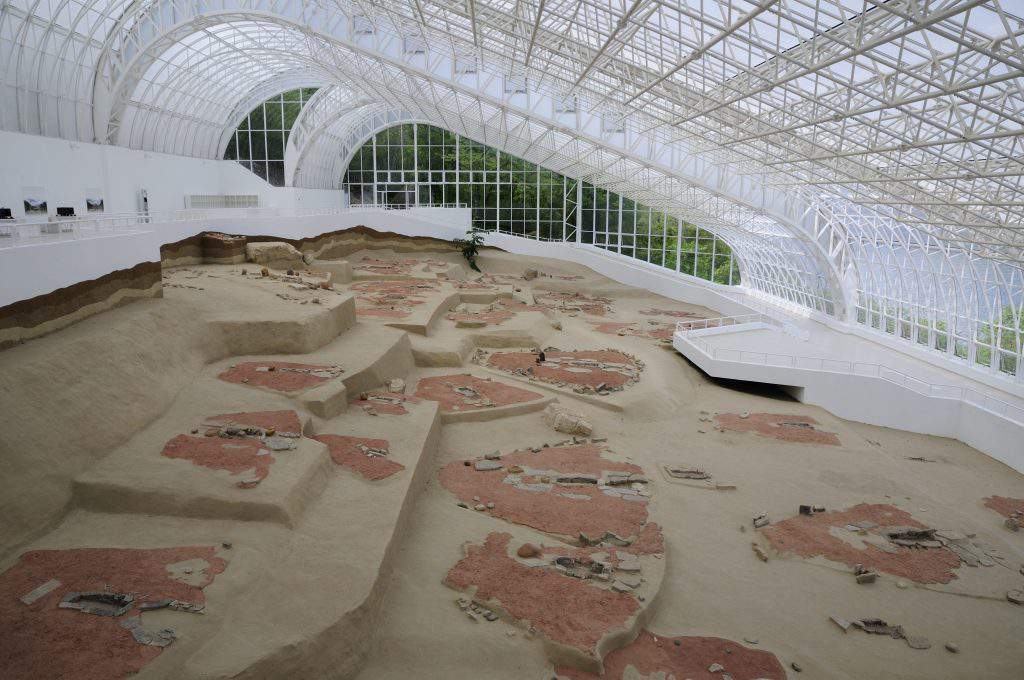
It is a prehistoric site as well with quite unique natural environment which makes it worthwhile to visit. On the way there we can stop by at the Golubac Fortress. It is an interesting place also from the Hungarian history’s point of view; it is worth a quick stop. We are in the Đerdap National Park; whose dominant part is the Danube. It is here that the sloping, lowland river gets between the high mountains, it narrows and speeds up considerably. Its most spectacular part, Kazan Strait, was once the first settled village in Europe beside the Danube. This site was excavated in the second part of the last century and a visitors’ centre has opened to show the found artefacts. The larger part of the visitors’ centre is the former village itself which can be viewed. The slope of the former terrain is also clearly visible. (The cinema and the exhibition is behind / under the former village.) Now only the foundation of the houses can be seen but it can be concluded that they were made with woodcarving and reed roof. A reconstructed house was erected next to the visitor centre.
It is a good idea to stop at the well-known village with uncountable wine cellars, at Rajac to try their fine wine, then a small detour to Serbia’s most spectacular Roman memorial, the Felix Romula. Philipp Kanitz, an Austrian ethnographer, wrote: “Gamzigrad (as the ruins were called in Serbian) is undoubtedly one of the most important works of Roman architecture in Europe.” We have a really amazing sight to see, it is very rare to see such an impressively intact ancient city.
The walls are protected with more or less round-shaped towers, which at some places reach the height of ten metres and, are indeed the most spectacular elements of the whole ruin site. Entering the ornamental gate, we really feel like entering a Roman fort city. Galerius, one of the last pagan emperors of the realm, built this fortress to his mother’s honour – hence the name: Romula’s happiness.