Subscribe to our social channels to get the latest news about Hungary!


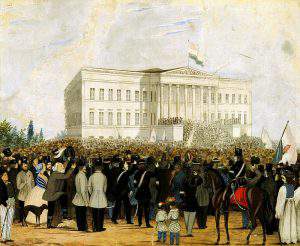
170 years have passed since the Hungarian Revolution of 1848, which was sparked off by the youth of Pest-Buda. Even though the city has changed a lot in the past one and a half century, you can still visit some of the important venues of the events. What better way to bring back Funzine’s Secrets of Budapest series than commemorating these locations? 🙂
The development of Pest-Buda can be mostly owed to Archduke Joseph, Palatine of Hungary, who is frequently referred to as “the most Hungarian Habsburg”. He led the so-called “Beautifying Board” since 1808.
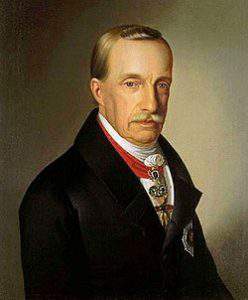
This was the organisation which – among others – decided about the dismantling of the city walls (in the place of today’s Small Boulevard) so that Pest could grow further, and the city centre and the suburbs would not be separated. Joseph Habsburg was not only concerned about the city but also the fate of Hungarians in general. Hence he even supported the claims of the rebels.
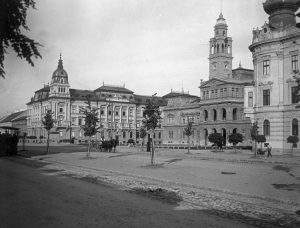
However, the growth of Pest was not as idyllic as contemporary photos suggest. There were basically no covered channels and only a few water and garbage channels, which meant that the streets were filled with all types of rubbish – only a few steps away from the imposing buildings.
Photo: www.egykor. hu – Painting by Miklós BarabásEven though the Chain Bridge was only inaugurated on the 20th of November, 1849 (postponed due to the revolution), the construction works were already started thanks to the campaign of Count Ferenc Széchenyi.
The Chain Bridge was the first stone bridge connecting Pest and Buda, before that, the cities only had a pontoon bridge. The structure was everything but massive, not to mention that it was not able to satisfy the needs of the era since, besides pedestrians, vendors and herders wanted to use it as well.
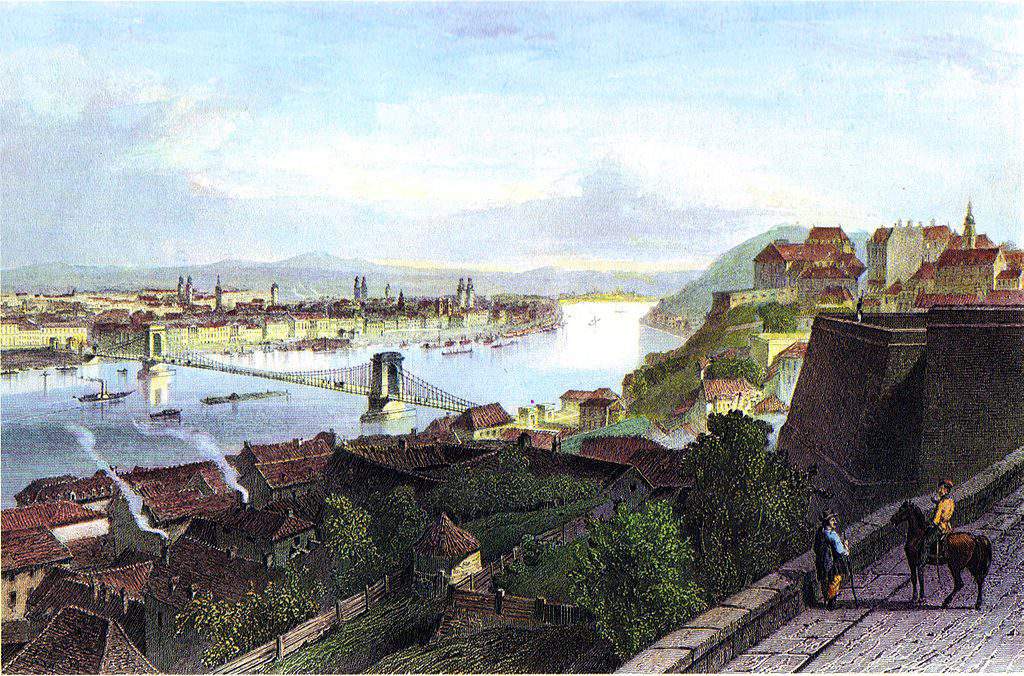
Another curiosity about the Chain Bridge was that everybody had to pay a fee for crossing the bridge – even the nobility! Naturally, they were not too happy about this, since it was believed that people of rank paid taxes “with their life and blood”, not money. This lasted until the inauguration of the Chain Bridge.