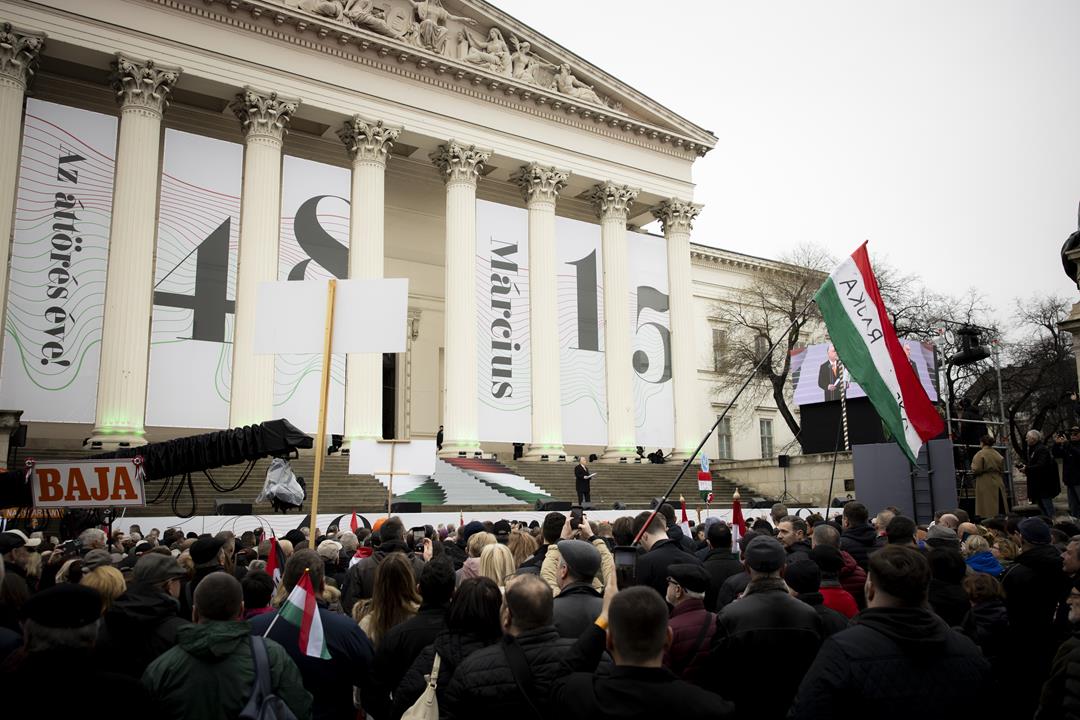
Each year on 15 March, we commemorate the brave Hungarians who challenged the Habsburg Empire in 1848 and created a constitutional state with a government responsible for the parliament and where the emperor’s decrees could not enter into effect without the approval of a government member. Even though the April Laws created a civic, constitutional state, the Habsburg court was interested in unmaking it. Therefore, they asked for the help of the Russian Empire; sadly, Moscow answered the call.
The dream of 15 March: A civic, constitutional Hungary
The Hungarian nation underwent miracles between 3 March 1848, and 11 April, the approval of the so-called April Laws that created a modern, civic, constitutional state abolishing, among others, serfdom, unifying Transylvania with Hungary and ending feudalism once and for all. The Kingdom of Hungary became a semi-independent state within the Habsburg Empire, with an executive branch answerable to the newly-created legislation body, the Hungarian National Assembly. The Batthyány government hoped that a united and modernised Germany would tear away Austria and all other German-speaking parts of the Habsburg Empire. Thus, the royal family would move to Buda, ruling over the country from its capital and making the Kingdom of Hungary one of the great powers of Central Europe.
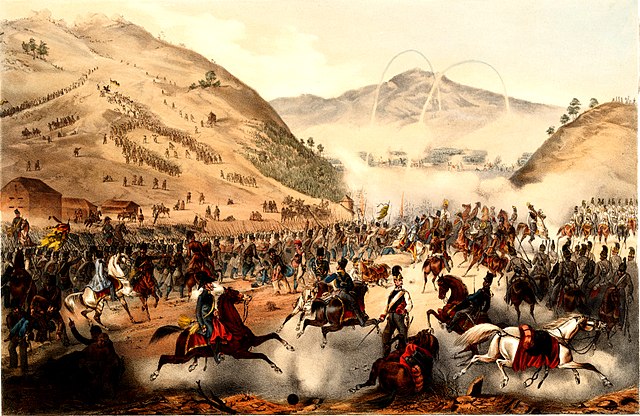
However, things unfolded otherwise. The German unification project was unsuccessful, and the royal family cemented its positions in the Western part of the empire after the pacification of the Northern Italian provinces, the rebellious city of Vienna. By December 1848, they were ready to crush the Hungarian revolution. Before, they turned the Romanian and Serbian ethnic minorities against Budapest, just like in Croatia, which attacked Hungary in September but suffered defeat in the Battle of Pákozd.
The Battle of Pákozd near Lake Velence. Photo: Creative Commons
The Habsburg emperor asked Russia’s help
Miraculously, the newly-formed Hungarian army could defeat the Serbs in the Southern regions and the Romanians (with their Habsburg and Russian allies) in Transylvania, just like the imperial armies in Transylvania and Hungary. By May 1849, the Hungarian Defence Forces won back the Castle of Buda and chased away the Habsburg Army to the Western borders.
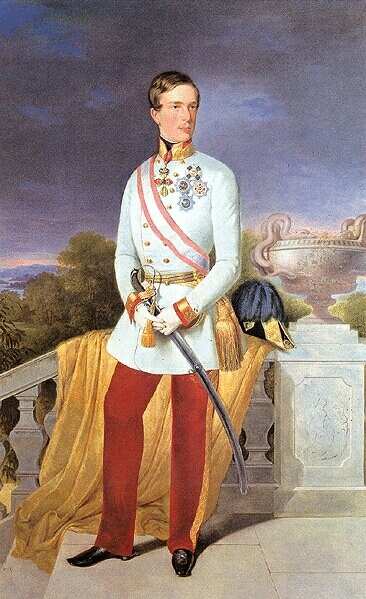
However, the new emperor, Franz Joseph (1848-1916), asked Nicholas I (1825-1855) in May to help him crush the Kingdom of Hungary, which declared its independence weeks before. The Russians invaded Hungary with a powerful army with more than 200,000 soldiers. Hungary had little chance to resist the attack of the Habsburg and the Russian forces.
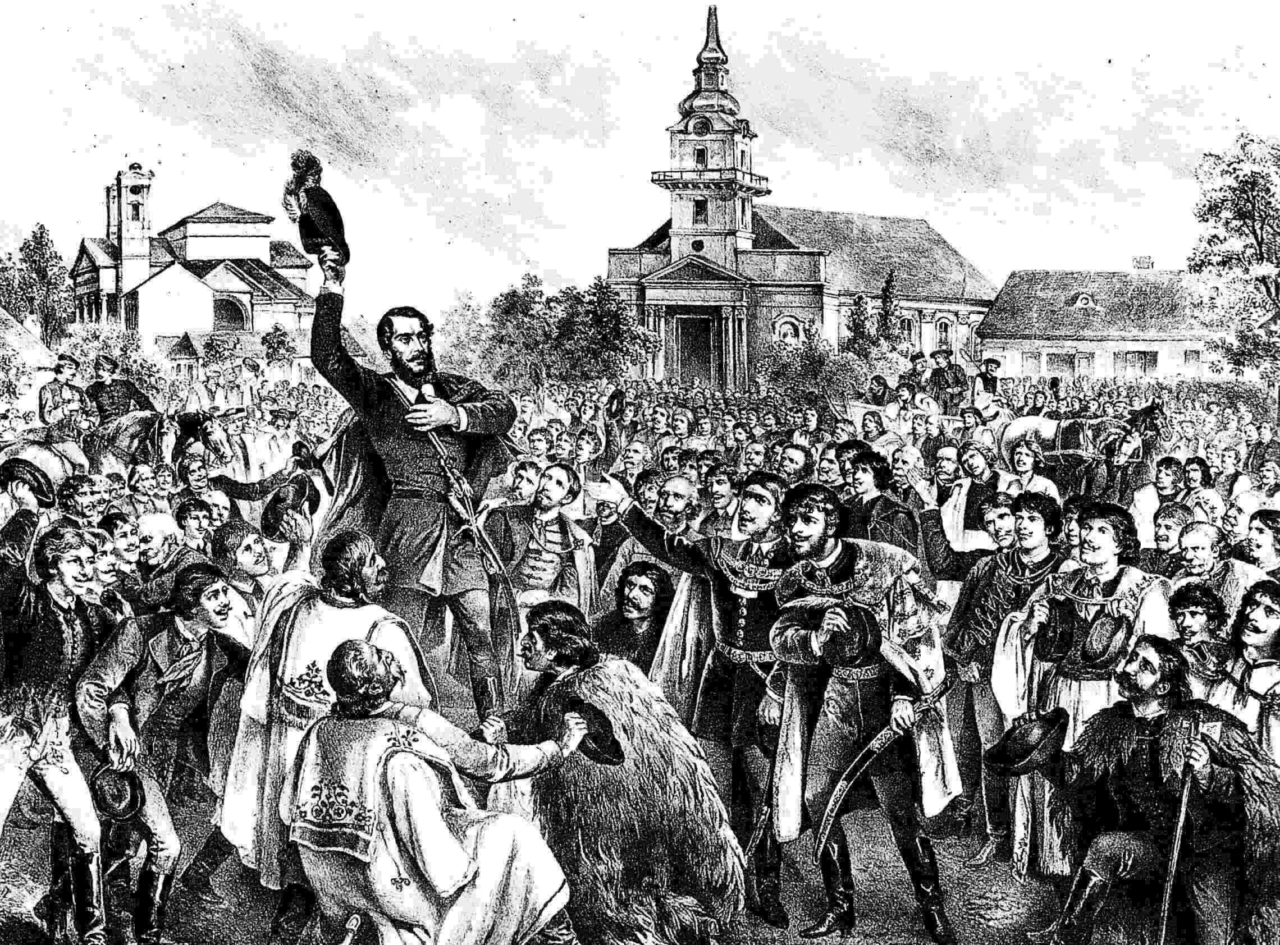
Photo: Wikimedia Commons by F.J.G. LiederKossuth Lajos giving a speechThe young Franz Joseph and Lajos Kossuth speaking in a Hungarian town, recruiting soldiers for the new army.
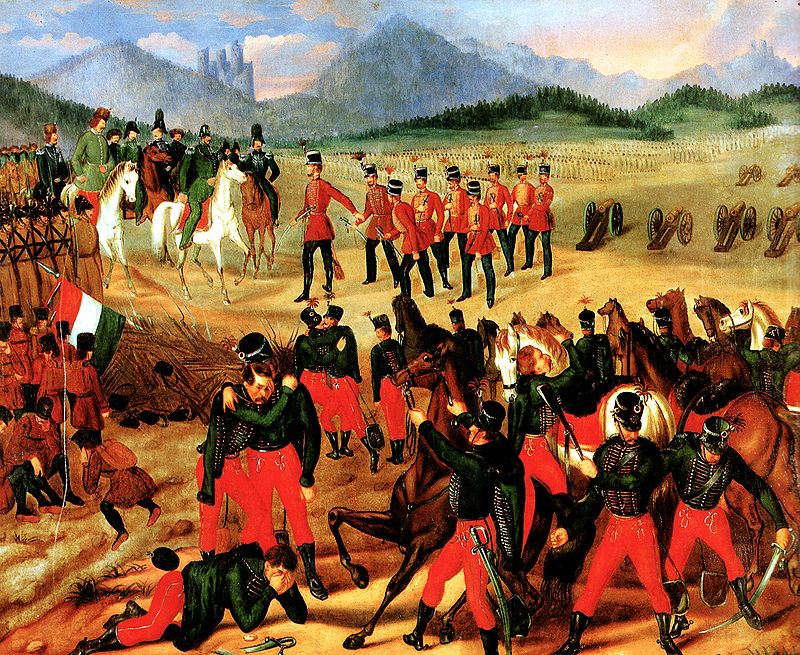
Furthermore, Lajos Kossuth, Hungary’s governor-president, appointed Henryk Dembiński the supreme commander of the Hungarian Army, who made several mistakes in the final weeks of the freedom fight. Having no other choice, Artúr Görgei decided to lay down his weapons and surrender on 13 August 1849, near Világos, in front of the Russian forces to avoid bloodshed and additional losses. The tsar could save Görgei’s life, but despite his advice to Franz Joseph to avoid harsh reprisals, executions started in October. Interestingly, the size of the invading Russian forces was identical to that of the army invading Ukraine in February 2022.
Surrender near Világos. Painting: István Szkicsák-Klinovszky. Source: Wikipedia
Read also:
Things even Hungarians did not know about the 1848 Revolution – read more HERE
The cruel reprisal of the Hungarian revolution of 1848-1849 – details in THIS article