Subscribe to our social channels to get the latest news about Hungary!


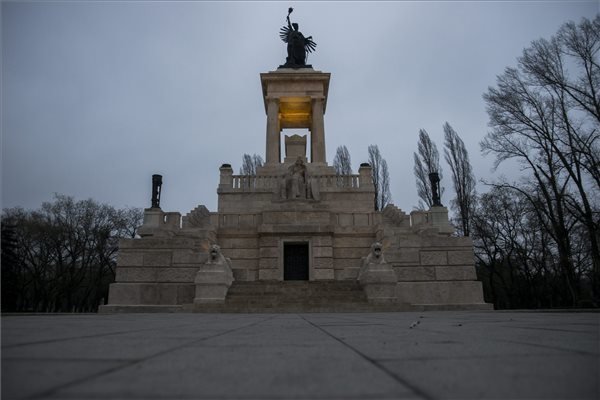
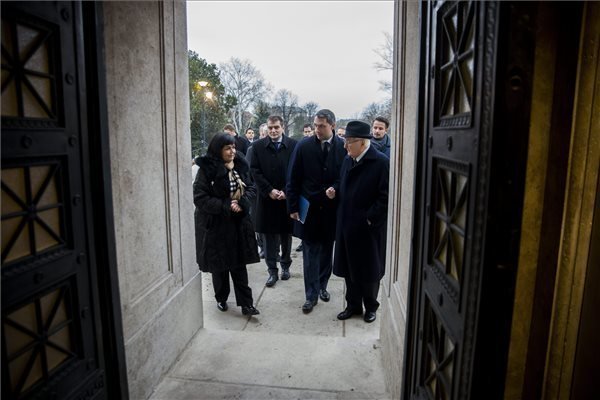
According to travelo.hu, Kossuth mausoleum, which was renovated by the National Heritage Institute, was unveiled in the Fiumei Road graveyard on last Wednesday. The largest burial construction of Hungary can be visited again in guided groups.
Lajos Kossuth was the spiritual leader of the 1848-49 war of independence and the governor of Hungary. After the war, he emigrated, and he eventually died in Turin, Italy in 1894. Budapest wanted to erect a worthy resting place. The capital put up for tender in 1900, which took an unexpected turn, but the final winners were the architect Kalman Gertser and the sculptor Alajos Strobl, supported by Ferenc Kossuth, who was the son of Lajos Kossuth.
In 1903, the construction began and lasted for 6 years. The bronze Genius – who stands on the upper canopy and stops a lion – and the limestone female figure of “Hungaria” placed over the entrance are the works of Alajos Strobl. The stone sarcophagus located under the canopy with Doric columns is a symbolic tomb; Kossuth actually rests in the inside of the mausoleum. The biggest value of the interior, which can remind us of the early Christian Ravenna mausoleum, is the mosaic decoration made in the workshop of Miksa Roth – based on the carton of Dezso Kolber: angels in white robe hold a wreath next to the sarcophagus of the dead statesman, travelo.hu wrote.