Subscribe to our social channels to get the latest news about Hungary!


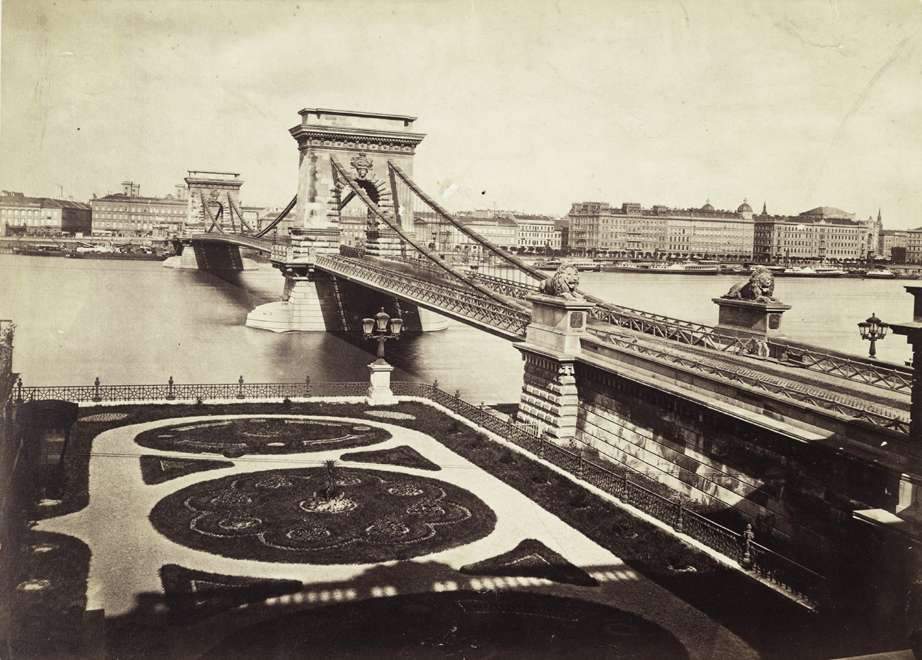
Although today it would be challenging to imagine Buda without Pest and the other way around, the two parts of the Hungarian capital were actually quite distant in social and economic aspects, making up two different cities, until 1873.
Although Buda was the residence of the Hungarian king on several instances, becoming the Kingdom’s capital city, in the 19th century it was Bratislava where (Pozsony) the parliament was held, the king resided in Vienna, while the governor was assigned to Buda. This, however, was not viable, as Bratislava was exposed to attacks both from the west and the east. It seemed reasonable to move the capital city to the middle of the country, given the historical background of Buda and the financial aid the commercial Pest could provide the previous with. Add the Danube as the perfect route for pleasure and business (trade mostly) to the mix, and the argument is done with.
The capital moves to Buda once again.
The population on both sides grew exponentially, numbering 29 thousand residents in Buda and 25 thousand in Pest in the 1800s, and then 50 thousand in Buda and 130 thousand in Pest in 1848. Since Pest was the centre of commerce and trade at the time, no wonder it was flooded by craftsmen from the rural areas. The expansion of the city was needed as well, as to house the newcomers, but helping Pest grow had other reasons too besides the commercial and social ones: the 1838 flood destroyed over half of the city. So in the 1830s and 1840s, the main goal was to restore Pest and to build a solid base for a flourishing European city.
During the 1848-49 Hungarian Revolution, it was necessary to unite the two sides even if they were reluctant at first. Most of the politicians agreed with István Széchenyi – who was one of the prominent political figures of the age, being a member of the ‘Batthány Government’ (the first Hungarian government) – that survival can only be ensured via a union between Buda, Pest and Óbuda.
Even though all three sides weighed in the argument over the union, it was mostly Buda and Pest that lead the quarrel. Despite the shared history of the two cities, their living manners, their traditions and identities could not have been more different. Pest was a city that was moving forward, keeping up with the changes in Europe thanks to merchants, while Buda was neglected infrastructure-wise, it functioned more like a military station than as a modern city, it had serious financial issues, and the locals were less lively and outgoing than in Pest.
This slow development is more than surprising, given that Buda was the capital city for centuries.
The actual reasons given by the two cities could not have been more clear-cut and obvious: Buda did not want to share its position as the ‘leader’, while Pest was afraid of the financial hardships that Buda would bring to the ‘marriage’. But war changes everything, as we have learned from history. Eventually, both sides gave in, and a formal union came into being in the spring of 1849.