Subscribe to our social channels to get the latest news about Hungary!


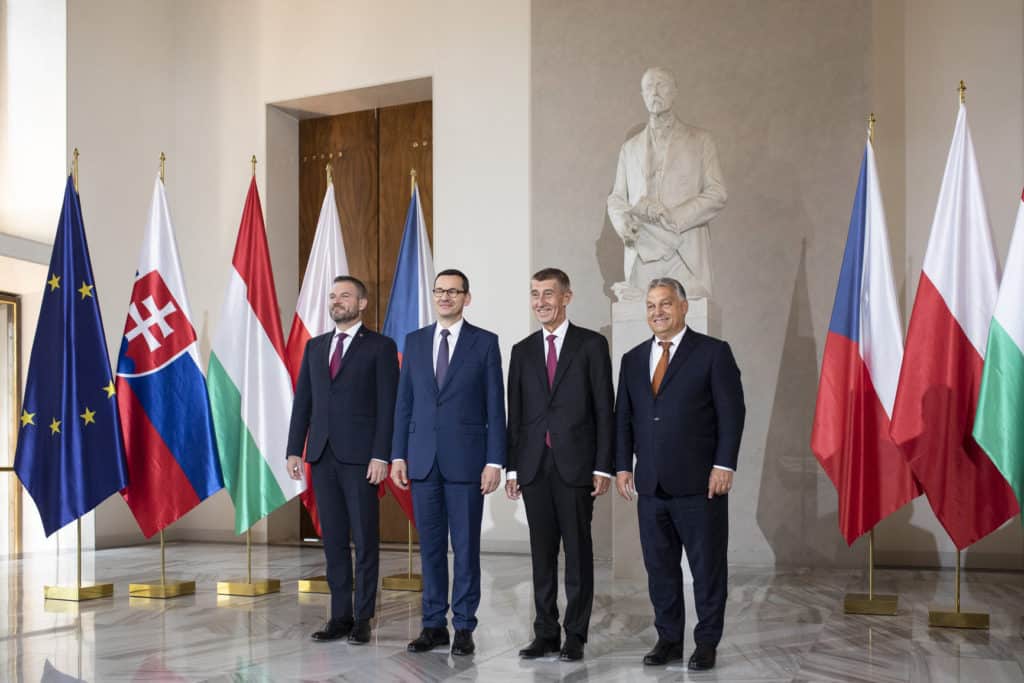
The distribution of top positions in the European Commission reflects the strengthened position of the Visegrád Group, Hungarian Prime Minister Viktor Orbán said on Thursday in Prague, after attending a summit of the V4 and Western Balkan states.
Two vice-presidents in the new commission were nominated by Visegrád Group countries, Orbán noted. The Hungarian commissioner-designate, László Trócsányi, has the “beautiful and big” task of managing the EU’s enlargement, he added.
Trócsányi grasps the complicated aspects of enlargement, he said, adding that, hopefully, the former Hungarian justice minister would receive the backing of the EP.
European Commission President-elect Ursula von der Leyen presented her team in Brussels on Tuesday.
The European Parliament must give its consent to the entire College of Commissioners after hearings of the commissioners-designate in parliamentary committees. Once the EP has given its consent, the European Council formally appoints the commission.
Regarding the bloc’s enlargement, Orbán said had the EU integrated North Macedonia, Montenegro and Serbia earlier, “many millions of illegal migrants would not be in western Europe today”.
“Together, we could have defended the Balkan route,” he said, adding that the space between Greece and Hungary had been left “unguarded”.
“This space has to be filled by integrating the countries located there, and then the EU would be able to protect itself,” Orbán said. He noted that migrants had not arrived in the EU via Romania, a member state. “They crossed non-member states” before being stopped in Hungary, he said.
It is evident from the history of the past few years that enlargement lies in the interest of both the EU and North Macedonia, Montenegro, Serbia, “and if it comes to that”, Albania, Orbán said.
Admission of the Balkan countries is not a burden on, but an opportunity for, the European Union which would then become stronger, Orbán said, assuring the countries in question of Hungary’s support.
Concerning the EU’s next financial framework, he said that new common policies may be opened but funds earmarked for older policies should not be cut on this pretext.


