On the trail of Hungarian memories in Türkiye. Rodostó (Tekirdağ). Rákóczi Museum. Photo: Helló Magyar
Change language:
If you’re a tourist in Türkiye, and you’re not just interested in the Istanbul bazaar and the Turkish Riviera, you should visit the places with Hungarian heritage. Our editorial team has been to some well-known and less well-known places, so let’s discover Hungarian memories far away from Hungary together.
The relationship between the Hungarian-Turkish people could not have been more complicated throughout history. The common ancestors and the similar sounding words in our languages tell us that the two nations have a long history. Although the two nations settled relatively far apart, they have been in constant contact. After the establishment of the Ottoman Empire and its conquests, some Hungarians regarded Constantinople (now Istanbul) as an enemy, others as a political ally, and this continued until the end of the Sultanate.
Türkiye was one of the first countries to sign a treaty of friendship and cooperation with Hungary in 1923, and the latest relationship, now in its 100th year, has begun, with the centenary to be celebrated in 2024 with a series of major events in the spirit of bilateral cultural cooperation.
As the short introduction shows, there are numerous links between the two nations. The easiest way to get to the Turkish biggest city from Hungary is by plane, either with Turkish Airlines or low-cost flights, so perhaps it makes sense to start your journey here.
Istanbul
Hagia Sophia
Perhaps one of the most famous buildings in Istanbul is the Hagia Sophia, once built as a church and an iconic building of Christianity.
Surprisingly enough, you can see Hungarian candlesticks here, collected as spoils of war after Sultan Suleiman’s entry into Buda. Copies of these can be seen today in the Matthias Church, Budapest.
The Hagia Sophia, now a mosque, fortunately retains some Christian features, including the mosaic of Empress St. Piroska/Irene in the south-east gallery and her sarcophagus at the entrance. Piroska, the daughter of King Saint Ladislaus of Hungary, married the Byzantine Co-Emperor John II Komnenos in 1104 and is the mother of the Byzantine Emperor Manuel Komnenos. Piroska led an exemplary life, helping the poor and living a strong ecclesiastical life, and became a saint of the Orthodox Church under the name of Saint Irene. The mosaic painting in Hagia Sophia is the oldest depiction of a Hungarian woman, making it doubly significant.
Hagia Sophia, Istanbul. Photo: Helló Magyar
Hagia Sophia, Istanbul. Photo: Helló Magyar
Hagia Sophia, Istanbul. Photo: Helló Magyar
Hagia Sophia, Istanbul. Photo: Helló Magyar
Blue Mosque. Photo: Helló Magyar
Hagia Sophia History Museum. Photo: MTI
Once out of the building and heading towards the Blue Mosque, we can visit the brand new Hagia Sophia History Museum, where we had a fascinating journey thanks to the excellent graphics. It’s definitely worth a visit, instead of the exhibits that many people find boring, you can learn about the history of the temple/mosque over thousands of years on huge projectors.
Zeyrek Mosque (Monastery of the Pantokrator)
St Irene’s alleged sarcophagus is located at the entrance to Hagia Sophia, but historians believe it may have originally stood in the Pantokrator Monastery, which she founded. We can visit the now Molla Zeyrek mosque, built at the initiative of the Hungarian empress between 1118 and 1136, which served as a church, monastery and hospital until 1453. Interestingly, it is the second largest Byzantine building in modern Istanbul after the Hagia Sophia.
Pantokrator Monastery, Istanbul. Photo: Helló Magyar
Pantokrator Monastery, Istanbul. Photo: Helló Magyar
Pantokrator Monastery, Istanbul. Photo: Helló Magyar
The Topkapı Palace, located next to Hagia Sophia, was the residence of the sultans for centuries and is the home of the Istanbul Antiphonal Codex, a codex of hymns for Christian church rites, which was made in Hungary in the 14th century. When Sultan Abdul-Aziz returned most of the Corvinas to Hungary in 1869 and Sultan Abdul-Hamid II in 1877, it was not among them and remained in the library of the Topkapı Sarayı.
The misconceptions about the harem were dispelled by our guide, Acarkan Emrullah, who explained in excellent Hungarian that the Sultan’s mother selected the ladies who would be placed in the harem and also told him who the monarch could spend the night with. They were paid a decent salary; many of them never met the Sultan. Many were even married off to other high-ranking generals, and thus were kept out of the palace.
There was also an arms exhibition in the palace, where Hungarian swords were on display. You can’t miss them, everyone is in awe of them, as their sheer size makes them stand out from the vast collection.
Topkapı Palace, Istanbul. Photo: Helló Magyar
Topkapı Palace, Istanbul. Photo: Helló Magyar
Topkapı Palace, Istanbul. Photo: Helló Magyar
Topkapı Palace, Istanbul. Photo: Helló Magyar
View from Topkapı Palace, Istanbul. Photo: Helló Magyar
View from Topkapı Palace, Istanbul. Photo: Helló Magyar
Don’t miss the most spectacular spot in Topkapı Palace: the terrace offers a sensational view of the Istanbul of 20 million people. You can see two of the bridges that connect the two banks of the Bosphorus, cargo ships lined up in the canal and millions of houses.
Monastery of Saint Benoît: Rákóczi, Zrínyi
Resistant to the vicissitudes of history, the monastery has been the burial place of many famous Hungarian fugitives. It was here that Ilona Zrínyi was laid to rest in 1703, and his son, Prince Francis II Rákóczi of Transylvania, in 1735. Currently, only a plaque and altar in the disused chapel commemorate them, as their ashes were repatriated in 1906 and are now buried in the St. Elisabeth Cathedral in Kassa. The memorial is open by appointment only.
Monastery of Saint Benoît, Istanbul. Photo: Helló Magyar
Monastery of Saint Benoît, Istanbul. Photo: Helló Magyar
Monastery of Saint Benoît, Istanbul. Photo: Helló Magyar
Address: No: 11, 34425 Beyoğlu/İstanbul, Turkey
Ödön Széchenyi, the father of the Turkish fire brigade
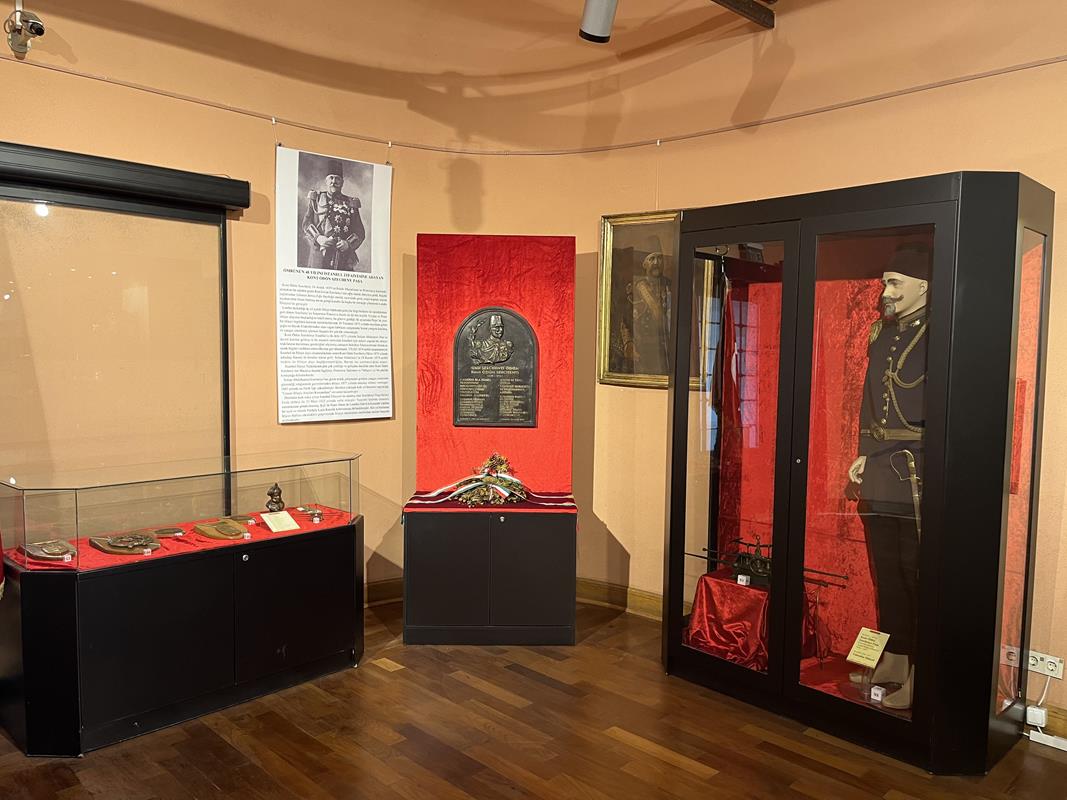
The name of Count István Széchenyi’s son, Ödön Széchenyi, is less known in Hungary, but he is highly respected in Türkiye. Known as the founder of the Turkish fire brigade, the Hungarian man went to Turkey on holiday and offered his services to Sultan Abdul-Aziz following the Great Fire of Istanbul, who accepted. The emperor commissioned him to set up the Istanbul fire brigade. Ödön’s work became such a success story that in 1880, he became the first Christian to be promoted to the rank of pasha.
A special section of The Museum of Firefighting is dedicated to the Hungarian man, and his grave is worshipped every year on the anniversary of its founding.
The Museum of Firefighting, Istanbul. Photo: Helló Magyar
The Seven Towers
Once a city wall and later a prison, the Seven Towers/Yedikule may be familiar from Gárdonyi’s novel The Stars of Eger (Egri csillagok), part of which takes place here. This is not a place of Hungarian glory, as it was used as a prison by the Ottomans, and was the site of hundreds of Hungarian prisoners, including the execution of Gergely Bornemissza (1555). The building is currently under renovation, but is open to the public.
The Seven Towers/Yedikule. Photo: Helló Magyar
The Seven Towers/Yedikule. Photo: Helló Magyar
The Seven Towers/Yedikule. Photo: Helló Magyar
Address: Yedikule, 34107 Fatih/Istanbul, Turkey
Istanbul Military Museum
The Istanbul Military Museum mainly commemorates the Ottoman Empire’s military forces, with several mentions of Hungary, including the glorious Battle of Mohács and the capture of Buda, which was a celebrated battle for the Turks.
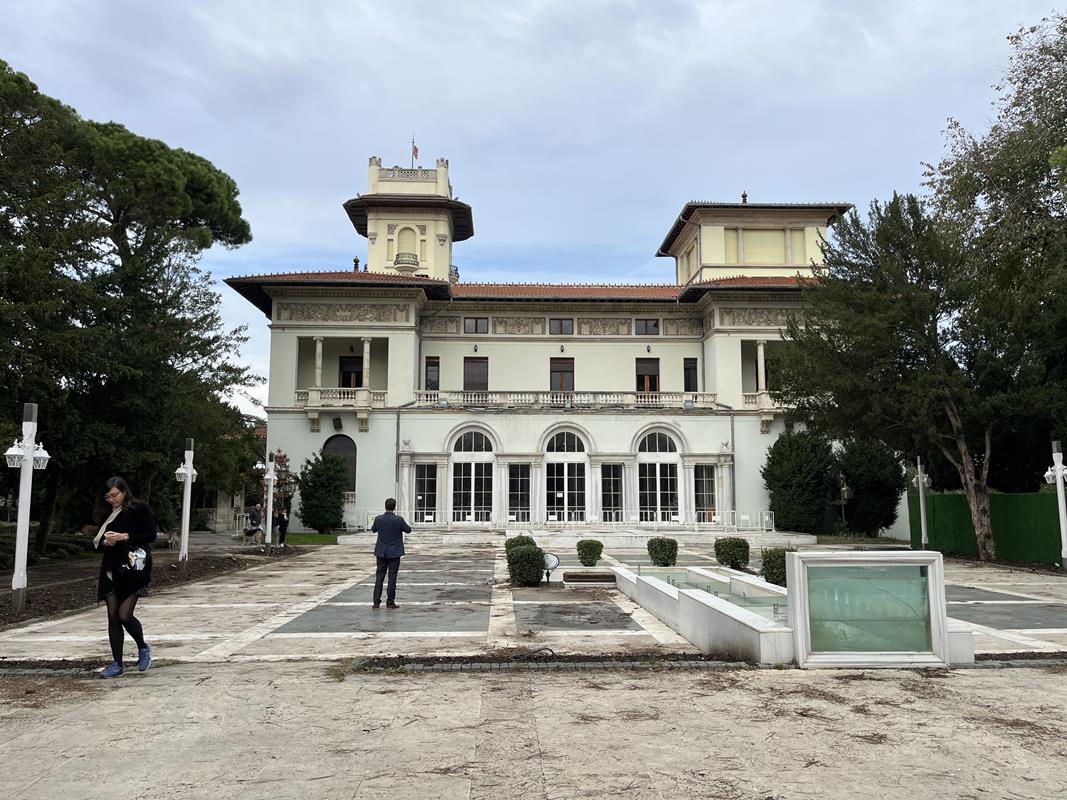
Also not in a very good condition is Khedive’s Palace – Hidiv Kasri, a neo-Renaissance fortress built by Abbas Hilmi Pasha, who married the Hungarian-born Count Marianna Török of Szendrő in 1910. The Philadelphia-born Hungarian writer, pianist and painter lived in the palace until their divorce. The building can only be visited from the outside, but the garden is a pleasant walk.
Khedive Palace – Hidiv Kasri, Istanbul. Türkiye. Photo: Helló Magyar
It is important to point out that there is Hungarian cultural life in this great Turkish city, thanks to the Liszt Institute in Istanbul. The enthusiastic team at the cultural centre is trying to bring Hungarian culture closer to the locals by translating Hungarian literature, teaching languages, temporary exhibitions, performances and concerts.
Liszt Institute in Istanbul. Photo: Helló Magyar
Liszt Institute in Istanbul. Photo: Helló Magyar
Liszt Institute in Istanbul. Photo: Helló Magyar
Rodostó (Tekirdağ)
Anyone who remembers a little of what was said in Hungarian history lessons will be familiar with Rodostó as the “citadel” of Hungarian exiles in Türkiye. Located 120 kilometres west of Istanbul, now known as Tekirdağ, it is a must-see for any Hungarian visiting Turkey. You will be surprised by the pride the locals take in the fact that the Transylvanian prince Francis II Rákóczi lived in their town until his death.
The jewel in the crown of Magyarok Street is the Rákóczi Museum (Rakoczi Müzesi), which was once the ruler’s guest house and dining room. The building has been carefully restored and displays original artefacts from the period. After the fall of the War of Independence, Rákóczi found a permanent home in Turkey, where he lived from 1708 until his death in 1735. He was not alone: the Sultan of the time reserved 23 houses for the Hungarians in a wealthy district of Rostov, and a large delegation arrived with, among others, Kelemen Mikes, Miklós Bercsényi, Antal Esterházy and Mihály Csáky.
From the entrance to the Rákóczi Museum, we can see that this house is a tribute to the Hungarians and the Prince. Hundreds of ribbons in Hungarian national colours are hung from the ceiling, and Ali Kabul, who is in charge of the museum, tells in perfect Hungarian how much the Hungarian connection means to the people of Rodostó. When we were there, a delegation of Hungarian journalists welcomed us, giving us the means to visit. The photo gallery tells the story of the museum’s atmosphere for us:
On the trail of Hungarian memories in Türkiye. Rodostó (Tekirdağ). Rákóczi Museum. Photo: Helló Magyar
On the trail of Hungarian memories in Türkiye. Rodostó (Tekirdağ). Rákóczi Museum. Photo: Helló Magyar
On the trail of Hungarian memories in Türkiye. Rodostó (Tekirdağ). Rákóczi Museum. Photo: Helló Magyar
On the trail of Hungarian memories in Türkiye. Rodostó (Tekirdağ). Rákóczi Museum. Photo: Helló Magyar
On the trail of Hungarian memories in Türkiye. Rodostó (Tekirdağ). Rákóczi Museum. Photo: Helló Magyar
On the trail of Hungarian memories in Türkiye. Rodostó (Tekirdağ). Rákóczi Museum. Photo: Helló Magyar
There are several other Hungarian memorials nearby, including the Csáky House, which is not far from the museum and now serves as an honorary consulate, and a full-length statue of the prince in the Peace and Freedom Park (Barış ve Özgürlük Parkı), which is located in another part of the city. Every year, locals commemorate the Hungarian residents during the Cherry Festival.
On the trail of Hungarian memories in Türkiye. Rodostó (Tekirdağ). Csáky-house. Photo: Helló Magyar
On the trail of Hungarian memories in Türkiye. Rodostó (Tekirdağ). Csáky-house. Photo: Helló Magyar
Full-length public square statue of Francis II Rákóczi in Rodostó. Photo by Helló Magyar
Full-length public square statue of Francis II Rákóczi in Rodosto. Photo by Helló Magyar
Rodostó (Tekirdağ). Photo: Helló Magyar
Nikodémia (Izmit)
Imre Thököly and Ilona Zrínyi spent their exile in Nikomédia, today’s Izmit, and died here. The two iconic figures of Hungarian history were granted permission to settle in 1701, and there are several memorials to the famous historical figures in the town. We were the first to visit the memorial house, whose interiors have been filled with content with the help of experts from the Hungarian National Museum. The fate of Thököly and Zrínyi is a good illustration of the situation at the time, as many alliances were formed in the Transylvanian-Habsburg-Ottoman Empire triangle to supplant the other.
Nikodémia (Izmit). Photo: Helló Magyar
Leaving the memorial house, we had a taste of the Turkish village environment, as we found the well-kept Zrínyi-Thököly relief not far from Izmit in a small village.
Zrínyi-Thököly relief, Izmit, Kocaeli. Photo: Helló Magyar
Zrínyi-Thököly relief, Izmit, Kocaeli. Photo: Helló Magyar
Zrínyi-Thököly relief, Izmit, Kocaeli. Photo: Helló Magyar
There are many more memories to be found in Türkiye
Evidently, we couldn’t visit all the places of interest during our trip, but the Liszt Institute has set up a special website for Hungarian monuments, so if you are interested in learning more about the Hungarian side of Türkiye, you can find detailed information here.
And if you are interested in Türkiye’s historical sites and other attractions, we recommend GoTürkiye.com, where you can find comprehensive information in ten languages.