Boosting competition, strengthening public finances and reforms to education will help to put Hungary on a stronger growth path.
Hungarian economy recovered
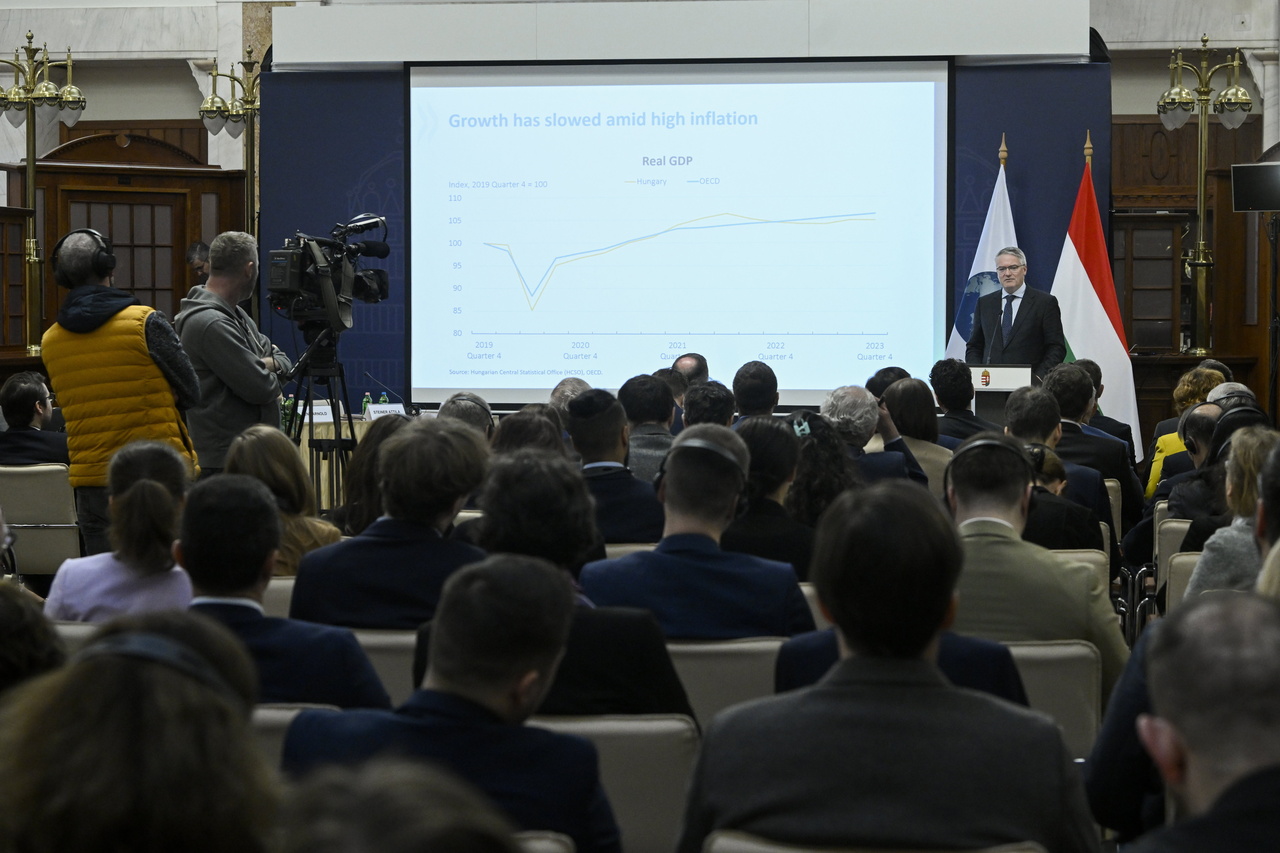
Hungary’s economy recovered strongly from the COVID-19 pandemic before dipping into a mild recession as high inflation eroded households’ purchasing power and high interest rates and low confidence dampened investment, according to the latest OECD Economic Survey of Hungary released yesterday.
Growth has now restarted and is expected to rebound from -0.9% last year to 2.4% in 2024 and 2.8% in 2025. Inflation will continue to decline substantially from 17.1% in 2023 to 3.9% this year and further to 3.4% in 2025. The pace of disinflation, future energy prices, and the delivery of EU funds dependent on rule-of-law reforms, pose risks to the outlook.
Greater competition, especially in the retail, energy, transport and telecommunication sectors and in professional services, and further reforms to the insolvency framework to facilitate the exit of unviable firms can bolster Hungary’s business dynamism. Recent significant anti-corruption and public integrity reforms should be fully implemented to bring Hungary closer to OECD standards, strengthen the rule of law and boost investor confidence.
(Rrom right to left) Finance Minister Mihály Varga, OECD Secretary General Mathias Cormann and Tibor Tóth, Minister of State for Macroeconomic and International Affairs of the Ministry of Finance at the presentation of the country study on Hungary of the Organisation for Economic Cooperation and Development (OECD) at the Treasury Hall of the Ministry of Finance on 6 March 2024. MTI/Koszticsák Szilárd
Poverty in Hungary considered low
Poverty in Hungary, at 12%, is low compared with other OECD countries thanks to social transfers, but these should become better targeted towards the lowest-income groups to become more cost-effective. At the same time, Hungarians face difficulties in moving up the income ladder from one generation to the next. Reforms to ensure equality of opportunity in education by shifting more public spending to schools where students have a more disadvantaged socio-economic background could improve income mobility. Improving access to quality childcare such as for childcare facilities for children under the age of three, as well as more flexible working arrangements, would help women to bridge existing wage and employment gaps.
“Hungary was hard-hit by surging prices, but decisive action by the central bank has helped to bring down inflation and stabilise the exchange rate. It is appropriate to continue the gradual and moderate pace of monetary easing initiated last year, while remaining vigilant to renewed price pressures,” OECD Secretary-General Mathias Cormann said, presenting the Survey alongside Hungary’s Minister of Finance Mihály Varga. “Reducing the fiscal deficit and public debt, boosting productivity and business sector activity through smarter regulations and more competition, and better targeting support towards vulnerable families are necessary steps to durably reinvigorate growth and prepare for future challenges around population ageing and climate change.”
OECD Secretary General Mathias Cormann speaks at the launch of the Organisation for Economic Co-operation and Development (OECD) Country Report on Hungary at the Treasury Hall of the Ministry of Finance on 6 March 2024. MTI/Koszticsák Szilárd
Reducing emissions and supporting energy security
An accelerated roll-out of renewable energy production would reduce emissions and support energy security. Beyond existing regulations and standards aimed at advancing the green transition, carbon pricing should also be progressively expanded beyond the sectors covered by the EU Emissions Trading Scheme that only include 32% of emissions. A comprehensive climate strategy to reduce emissions should include restructuring energy support, moving from price caps to targeted cash transfers to support vulnerable households. While protecting the most vulnerable, this would increase incentives for energy savings and improvements in the energy efficiency of dwellings and reduce the exposure of public finances to fluctuations in global energy prices.
While current plans to develop low-carbon energy focus on expanding nuclear and solar there is also scope for unlocking the potential of geothermal and wind energy, including by removing restrictive rules on windmill installation. As Hungary currently imports around 60% of its energy needs, an accelerated development of renewables is needed to improve energy security, but this will require massive investments in the electricity grid, both from public and private sources