Subscribe to our social channels to get the latest news about Hungary!


Coming relatively late compared to Croatians or Poles the first Armenian settlers arrived in Hungary in the 13th century. At least that is what the first records about a settlement named Terra Arminium suggest. Some chronicles also mention Armenians coming to the Carpathian Basin alongside Árpád’s army, but probably only in smaller numbers.
The first direct contact between Hungarians and Armenians was when King Andrew II’s crusaders reached Armenia. After the conquest, Andrew II intended to marry his son to the daughter of Armenian king Levon II. The Hungarian king returned to his homeland, bringing a considerable number of Armenian settlers to the area of Esztergom: that was the region where Terra Arminium was founded.
The most obvious signs marking Armenian population can be found in the names of settlements, like the famous Örményes (“örmény” means Armenian in Hungarian).
Another wave of Armenian immigrants worth mentioning came to Transylvania between the 11th and 14th centuries — though there are not too many sources about them. They fled to Hungary from the disasters striking their homeland: the Seljuq assault in 1064, the Mongolian raids in 1236 — which reached Hungary as well, only five years later — and an earthquake destroying the city of Ani. The population of the City of 1001 Churches moved to the Caucasian region first, continuing their journey through Crimea and Moldavia, finally ending up in Hungary.
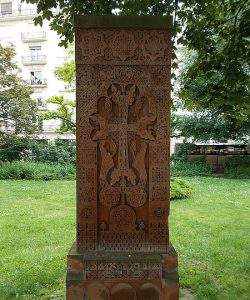
The first time when Armenians were considered full members of the Hungarian society was after 1672 when they received a right to settle and certain privileges from Prince Mihály Apafi. The main reason for their flight was the attempted uprising against Romanian Prince Gheorge Dúca, which was defeated with Ottoman help, and many Armenian officers took part in it. The cruellest reprisal threatened them, so they sought shelter in Transylvania.
The largest number of the immigrants came during the 18th century, when Armenians arrived in great masses from Moldavia.
Concerning their professions, most of the Armenian settlers were mostly craftsmen, e.g. skinners, tanners and merchants. The skills of Armenians on the field of tanning was legendary, and they have dominated almost the entire skin market in Hungary, especially in Transylvania. Thanks to their contribution to building the Hungarian economy and their professionalism in commerce, more than 50 Armenian families received or purchased noble rank by the end of the 19th century. Their society, however, had different customs from the customs of the Hungarian population, as the Armenian communities were partly ruled by the priesthood, who represented not only clerical but also political power.
The greatest Armenian participation in the Hungarian history was probably the War of Independence in 1848-’49, when more than 200 soldiers fought on the Hungarian side. These include officers Ernő Kiss and Vilmos Lázár, who were both executed in Arad among the Thirteen.


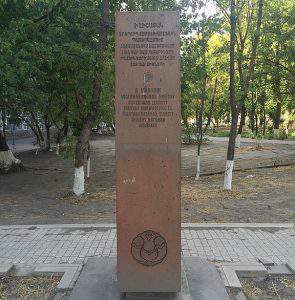
[…] Coming relatively late compared to Croatians or Poles the first Armenian settlers arrived in Hungary in the 13th century. At least that is what the first records about a settlement named Terra Arminium suggest. Some chronicles also mention Armenians coming to the Carpathian Basin alongside Árpád’s army, but probably only in smaller numbers, Daily News Hungary reported. […]
I speak Western Armenian since I am a Lebanese Armenian living in Hungary. All the Armenians I met in Hungary speak Eastern Armenian, so I guess the article should be edited for saying Armenians in Hungary speak West, it should be Eastern dialect.
Thank you.
Your first paragraph needs to be rewritten. Andrew II never conquered Armenia (as can be interpreted from what is written). However, on the way back to Hungary, he stopped in Cilicia, where Andrew II and the Armenian king Levon II betrothed Andrew’s son Andrew Levon’s daughter Isabella.