Subscribe to our social channels to get the latest news about Hungary!


Hungary has given a great number of talented geniuses to the world, whose inventions contributed to numerous scientific fields. Oszkár Asbóth, László Bíró, Ányos Jedlik, Tivadar Puskás, Ernő Rubik, or Ede Teller are just a few of the most outstanding Hungarian inventors, whose names are known all over the world. Nonetheless, there are several lesser-known Hungarian geniuses whose outstanding achievements left their mark on the technologies we utilise today.
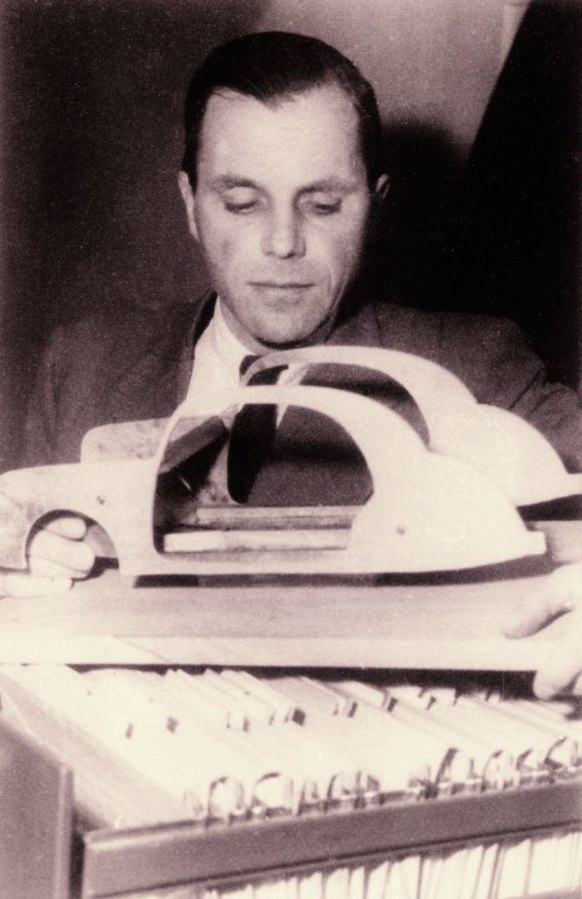
The Austro-Hungarian engineer was a prolific inventor − more than 2,500 patents originated from him − and a defining figure of automotive engineering. Barényi was born in an era when the presence of automobiles on the streets was rather uncommon, and these vehicles were unaffordable for most people, writes Mercedes-Benz on its website. In 1924, he enrolled as an engineering student at the Viennese Technical College of Mechanical and Electrical Engineering. As a student, he already thought about the “future people’s car” and, based on the sketches he made in 1924−25,
Barényi is considered the intellectual father of the “people’s car” or “Volkswagen”.
He was first employed by the Gesellschaft für Technischen Fortschritt (GETEFO, Society for Technical Progress) in Berlin, and he registered over 150 patents during the time he worked for the company. After he lost his job at the beginning of 1939, Barényi applied to Mercedes-Benz. He was rejected at first, but he did not give up. During his second application, Barényi was interviewed by chairman Wilhelm Haspel, who immediately recognised his potential: “Mr Barényi, you are fifteen to twenty years ahead of your time. You will be put under a bell jar in Sindelfingen. Everything you invent will go straight to the patent department”, said the business executive.
One of his main goals was to design vehicle interiors without dangerous components, and he urged Mercedes manufactures to put more emphasis on safety in automotive manufacturing. In 1925, Barényi developed the telescoping safety steering shaft to prevent the steering column from impaling the driver during a collision.
He achieved his biggest breakthrough in 1951 when he registered patent DBP 854.157 – commonly known as the “crumple zone” – and revolutionised the entire automotive industry with his discovery.
Crumple zones are areas of a vehicle that are designed to deform and crumple in a collision to absorb some of the kinetic energy of the impact, thus preventing the forces from being transmitted to the passengers. The first Mercedes-Benz vehicle with bodywork developed according to this patent was the 1959 W111 series. Barényi retired in 1972. He became Honorary Member of the Deutsche Aktionsgemeinschaft Bildung-Erfindungen-Innovationen (the German Action Group for Education, Inventions, and Innovations) and was awarded a professorship by the Federal President of Austria. In 1994, Barényi was inducted into the Detroit Automotive Hall of Fame in Detroit.

Ottó Titusz Bláthy was born in Tata, and he studied as a mechanical engineer at the Technical University of Vienna. He began working at the Ganz factory as a mechanical engineer in 1883, and the factory provided an ideal environment for Bláthy to unfold his remarkable talent. After studying Faraday’s experiments and Maxwell’s work,


Béla Barényi’s father was Hungarian but Béla was born in Austria, educated in Austria and worked in Austria and then Germany. I hardly think that makes him a Hungarian inventor. Credulity is being stretched here!