Subscribe to our social channels to get the latest news about Hungary!


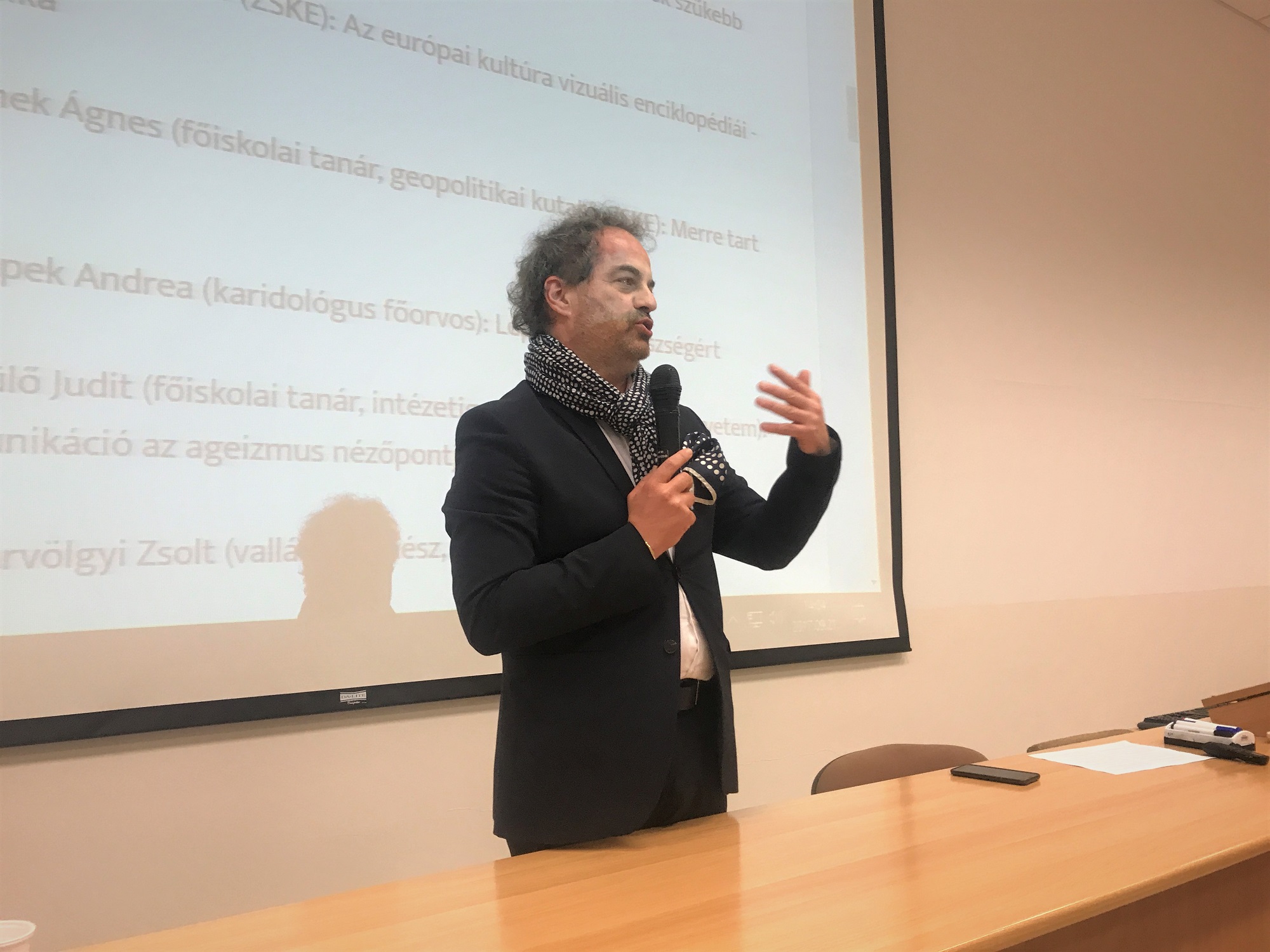
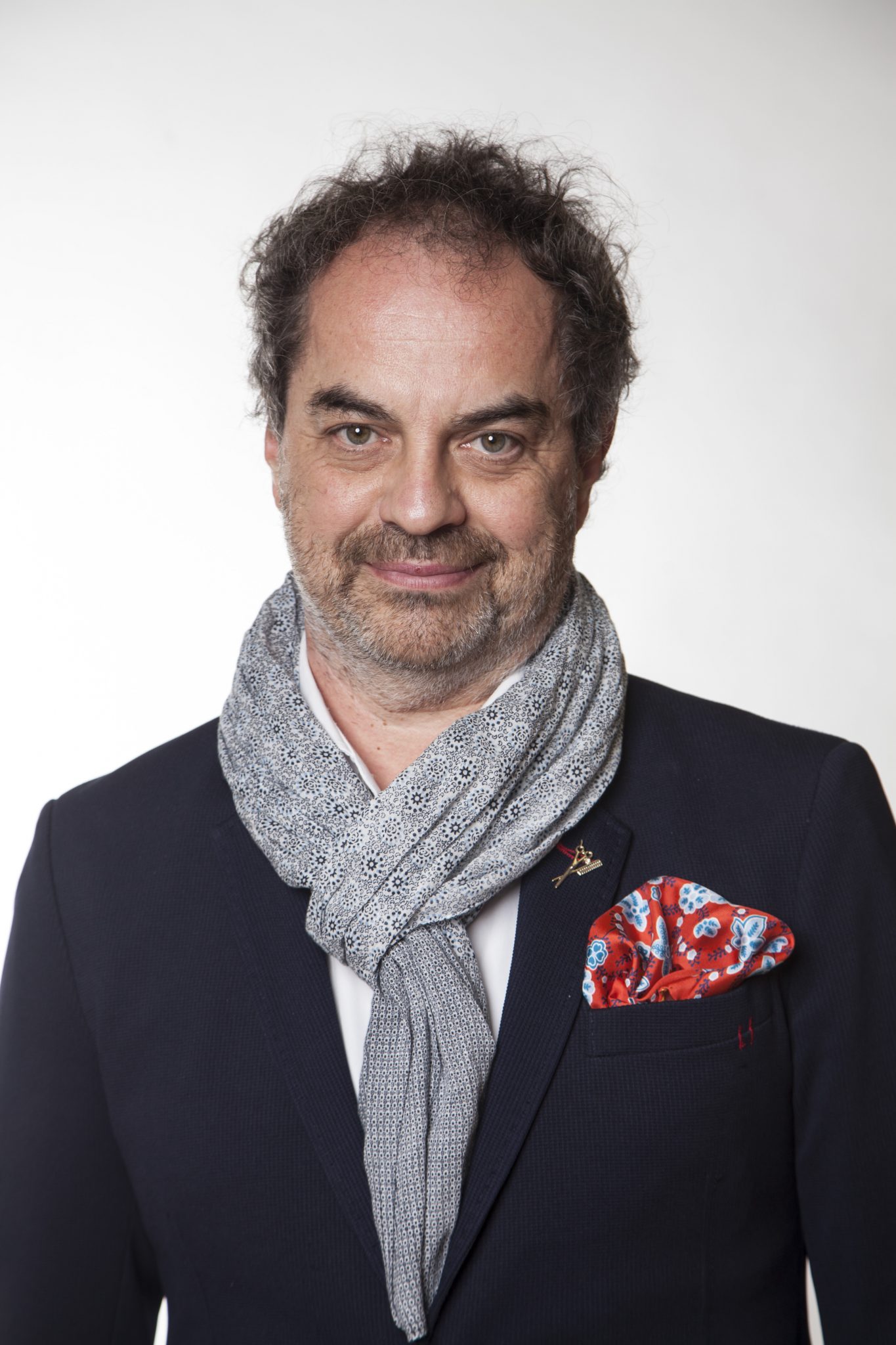
The new name of the King Sigismund University is Milton Friedman University, which will also have a new role in the higher education market. Dr. Péter Szatmári, the Rector of the university, works for the institution for more than a decade. In the beginning, he was a college instructor. Today, he is the rector. Thereby, he has a very close perspective of the college and university education. In his opinion, the work in innovation and education will decisively influence the economic development of Hungary for the coming years and the progress of our competitiveness – GLOBS Magazine.
GLOBS: You have been working at the University for more than a decade. In the beginning, you were a college instructor. Today, you are the rector. How much has the higher education system changed during this time?
Rector Péter Szatmári: The higher education system has changed a lot, just like our institution. In the 2000s, a fundamental change has begun in the Hungarian higher education market. Ecclesiastical institutions showed up, along with private institutions. In the beginning, there was a significant struggle among these institutions, in order to gain reputation. People had to understand that private institutions don’t sell degrees, but they do sell services. It is very important. 18 years ago, that was our basic principle, when the institution was opened. I joined this team 16 years ago. Since then, we managed to build up a very solid and well-going brand. This work showed its results. In 2016, we got the “University of Applied Sciences” status from the higher education governance.
GLOBS: How did the university change after receiving this status? Therefore, it is very important in the perspective of competitiveness as well…
Szatmári: We had no problem with the transformation. Providing professional academic knowledge was already a part of our philosophy. On the other hand, we tried to channel our students to the labour market. This status is the confirmation of the successful work we achieved. According to our experiences, nearly 90% of our graduates manage to find job within 3 months in the area of their qualifications. The payment category of our students is very close to the Corvinus University of Budapest and the Eötvös Loránd University. I think, the “University of Applied Sciences” status is an opportunity, which further strengthens our portfolio.
GLOBS: Is the world of sciences interchangeable with the world of practicality?
Szatmári: It is interchangeable only if we provide massive academic knowledge to our students since the beginning of the training. Besides, we introduce them to the labour market in the first semester. We invite professional and practical specialists, who instruct their daily profession during the training. Our students spend at least one semester with professional practice.
 GLOBS: Do students expect to find a place in the labor market immediately?
Szatmári: In the case of this type of institutions, it is a clear expectation. They expect outstanding quality service, in exchange for the tuition fee. My responsibility is to open for our students the labour market. We developed a competence training right in the beginning of their studies. We are trying to measure and observe the needs of each student, as well as their personal qualities. However, students are free to change their mind and choose a different path of education in the meantime.
GLOBS: How much have the interests of the students changed during this one and a half decade?
Szatmári: On the one hand, the popular courses remained popular. For instance, the business course is always the favorite. Interestingly, the popularity of the communication course is not always confirmed by the labour market. It is not easy to find a job. We had to develop relevant brands and specializations for the students. There is one more conspicuous change. The diversity of students has changed completely, just like the way to instruct and educate them. Reading habits changed fundamentally. Knowledge became virtualized. The content gets processed through a very different system of tools. Therefore, we are expected to change as well.
GLOBS: In the case of a university instructor, what are the necessary qualities and abilities to be able to address a student?
Szatmári: We have to be excellent educators. Now, the university provides the framework for the students, just like the elementary school and the high school before. This is the “family” where they can feel safe. We pay special attention to that. It is important to provide a safe environment for them, and we have to enforce that. We have to act as mentors. Moreover, the good presentation skills are very important. Today, it is not enough to provide content, but it has to be delivered professionally for the students. It is very important to know this space for providing the proper orientation of our students.
GLOBS: How did you personally manage to adapt yourself to this?
Szatmári: Luckily, I have 3 children who always keep me under control. The other important standpoint is to be very knowledgeable, and to be present in in all kinds of information sets constantly. It is required because we need to provide orientation. We have to possess information in politics, economy, society, sport, etc. We have to read and gather knowledge. We also have to train ourselves and practice the presentation techniques regularly. Although I am the head of the institute know, I did not stop teaching. I did not put that aside. I think, one cannot understand what’s going on around him and in the minds of students without this impulse. It is required to know the needs and feelings of every age group. No matter if the person is 18, 25, 40 or even 60 years old. It is required to know the needs, desires, thoughts of every age group, in order to keep the attention during your lecture. The static and textual presentation is useless for today’s children. We need to use more and more visions, images and moving pictures, in order to keep their attention.