Subscribe to our social channels to get the latest news about Hungary!


You don’t have to travel all the way to Egypt to see a pyramid—just head to the picturesque village of Iszkaszentgyörgy, at the gateway to the Bakony Hills, to marvel at Hungary’s own pyramid, which has a fascinating history. Remarkably, like its ancient counterparts, this pyramid is even visible from space.
Pyramids have been built by various civilisations throughout history, though their purpose has differed. While the Egyptian pyramids served as tombs for pharaohs, Mesoamerican cultures used their pyramids for religious ceremonies, occasionally involving human sacrifices.
The Hungarian pyramid in Iszkaszentgyörgy, however, has an entirely different origin. Its story reflects Hungary’s tumultuous 20th-century history.
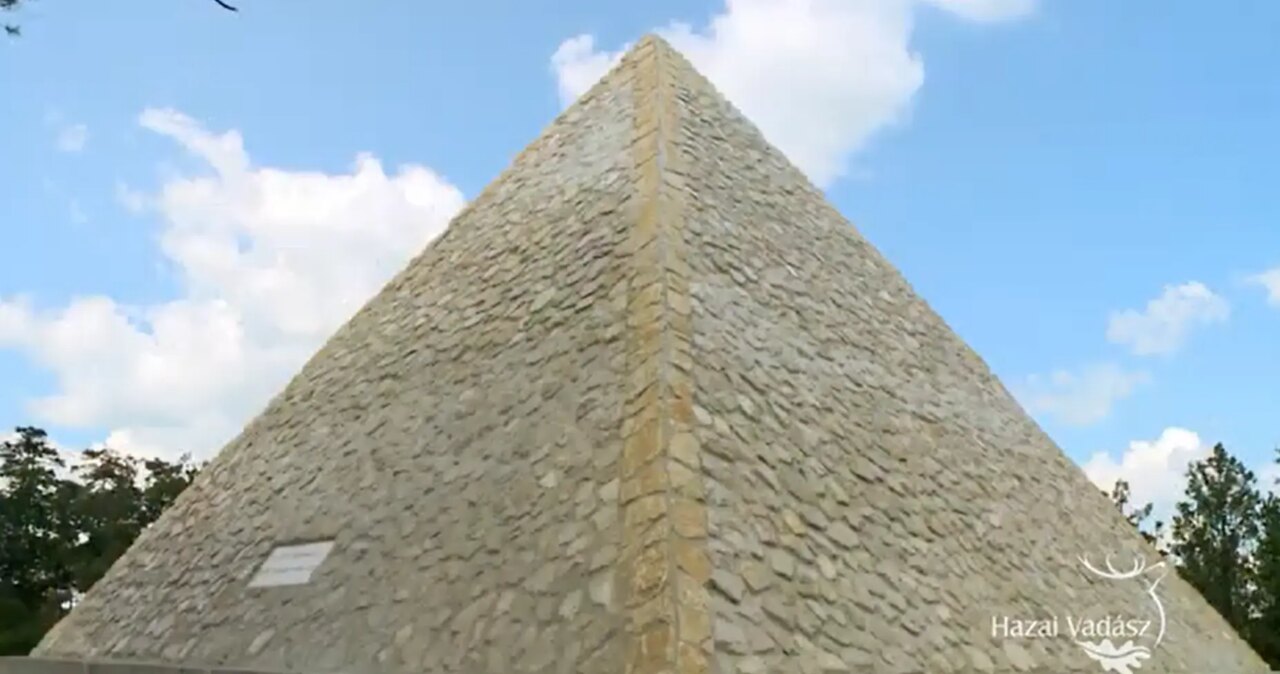
The popular account suggests that the builder of this pyramid—clearly visible on Google Maps satellite imagery—was Siegfried Pappenheim. But the tale behind it is a sad one.
The pyramid was built in memory of Pappenheim’s nephew, who had fallen in love with a maid and wanted to marry her. His aristocratic family, however, vehemently rejected the match. Heartbroken and unable to find another way out, the young man took his own life.
A passionate admirer of ancient Eastern culture, Siegfried Pappenheim constructed the pyramid in his nephew’s honour. However, its fate was far from secure. In the 1960s, the valuable building materials were scavenged by local residents, leaving nothing of the original structure, which had been built in the 1910s.

The pyramid was eventually reconstructed—this time by the VERGA Veszprém Forestry Company. Completed in 2014, the modern version stands on a concrete foundation and houses a time capsule containing newspapers and objects from 2014, according to Turistamagazin.
While visiting the area, it’s also worth exploring the partially restored Amadé-Bajzáth-Pappenheim Castle. The oldest parts of this historical building date back to the early 18th century, and its current design owes much to the Pappenheim family.
The family lived there until the end of World War II, even providing shelter to the Finnish embassy during the bombing of Budapest. After the war, however, despite their lack of collaboration with the Nazi occupiers, the family fled to Germany, and the castle was repurposed by the socialist regime in ways that led to its decline.


