Subscribe to our social channels to get the latest news about Hungary!


Do you remember the first time you heard about Hungary and what it was about? The answers to this question are quite diverse; however, our small country of Hungary probably still remains unknown to a lot of people. What is the reason behind this and why are the answers to the first question diverse? Daily Fail Centre put together a fun guide about Hungary, which might answer the questions.
So let’s talk a bit about Hungary with the help of basic data, our complicated language, fun facts, Hungarian inventions and some historical information. This is Hungary in a nutshell!
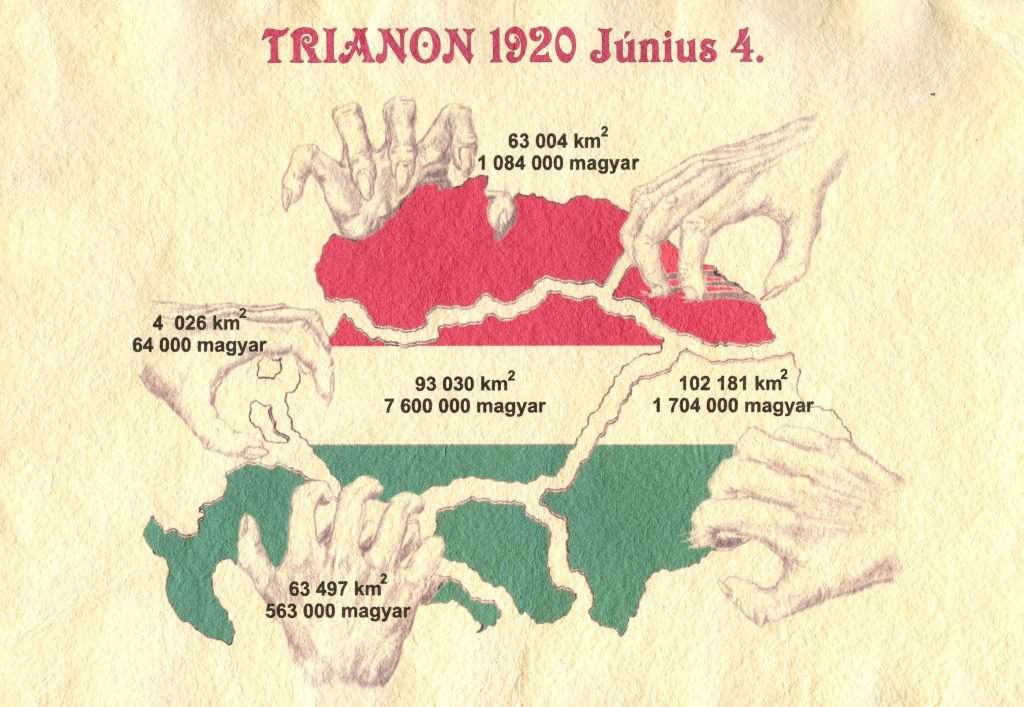
First off all, if you’ve never heard of us, that’s okay. After all, we’re not even as big as the state of New York (New York: 141,300 km2 / 54,55 sq mi and Hungary: 93.030 km2 / 35.919 sq mi) and we only have about half the population (New York: 19.5 million and Hungary: 9,9 million).
We don’t really have a typical national colour, emblem or symbol like most countries, although we do have dogs where you can’t tell which end is which and they perfectly blend in with rugs. They are the Hungarian Pulis:

Mark Zuckerberg’s puli, Beast
Let’s just say that our language is really weird, complicated and utterly difficult to learn. The Hungarian language belongs to the Uralic language family and is one of the few languages in Europe that are not part of the Indo-European family. Our language is agglutinative – which means that the way words and sentences work is completely different from the English language for example.
We have two vowels, ‘ő’ and ‘ű’, which don’t exist anywhere else. Coincidentally “ő” means both “he” and “she”. We also have some funny words that are very long, grammatically correct but are not really used in everyday speech: “megszentségteleníthetetlenségeskedéseitekért” (44 graphemes) and “elkelkáposztástalaníthatatlanságoskodásaitokért” (47 graphemes).

Unlike most of the world, our names have the family name first, which makes sorting much easier (e.g. Kovács Helga). Some people find our language so weird that it’s sometimes used as throwaway gibberish in movies (e.g. Iron Man, eXistenZ, The Usual Suspect, Blade Runner).
We are very proud of the many inventions that come from Hungary, like the dynamo (Ányos Jedlik, 1861), holography (Dénes Gábor, 1947), Vitamin C (Albert Szent-Györgyi, 1931), the ball-pen (Lászó Bíró, 1931) and the Rubik’s cube (Ernő Rubik, 1974).
These achievements have earned us 12 Nobel Prizes so far. Enrico Fermi’s answer to the question whether or not extra-terrestrial beings exist is the following: “Of course, they are already here among us: they just call themselves Hungarians.”
We’re also pretty good at sports too: looking at the all-time aggregated medal table of Summer Olympic Games between 1896 and 2016 (in the order of the top 10 countries’ number of gold medals), we see that our small country of Hungary is still in the amazing 8th place, behind countries like the USA, Russia, Germany, U.K., France, China and Italy. And with our 495 medals won at Summer Olympic Games, Hungary is the most successful nation never to have organised Olympic Games.