Subscribe to our social channels to get the latest news about Hungary!


Thanks to a government decree, since July last year, workers from already eleven non-EU countries can come to work in Hungary on simplified terms. The relevant provision expectedly will be maintained after the end of the pandemic emergency, since in order to keep Hungarian jobs, maintain the investment rate and the operation of production companies, workers arriving from third countries within a regulated framework are required – as it was said at the professional event about the shortage of skilled labour and the employment of foreign workers, organised jointly by WHC Group and the German-Hungarian Chamber of Industry and Commerce (DUIHK).
Employment in Hungary is close to 4.7 million people, which amounts to almost a 74% rate. In parallel, unemployment rate has fallen to a record low of 3.5%. One of the most crucial problems of the Hungarian economy has been the lack of skilled labour force for years. There was some reorganisation in the labour market during the coronavirus epidemic: some sectors, such as hospitality and tourism, have stalled and workers have migrated to other sectors, thus temporarily reducing labour shortages. However, by the beginning of 2021, the situation of the labour market had almost returned to pre-pandemic levels, labour shortage reappeared, which was then aggravated by the war in Ukraine that erupted in February this year.
“Workers from Ukraine have been able to come to work in Hungary on simplified terms since 2014, because the inhibitory effect of labour shortage on economic growth was already felt in several areas. Hungarian companies, especially production companies, took advantage of this opportunity, as there are now about 54,000 Ukrainian employees working in Hungary.
However, due to the war, this source of labour has become vulnerable and insecure, so it is an economic necessity that other non-EU workers could get jobs in Hungary on simplified terms,” drew attention Péter Berta, CEO of WHC Group at the event.
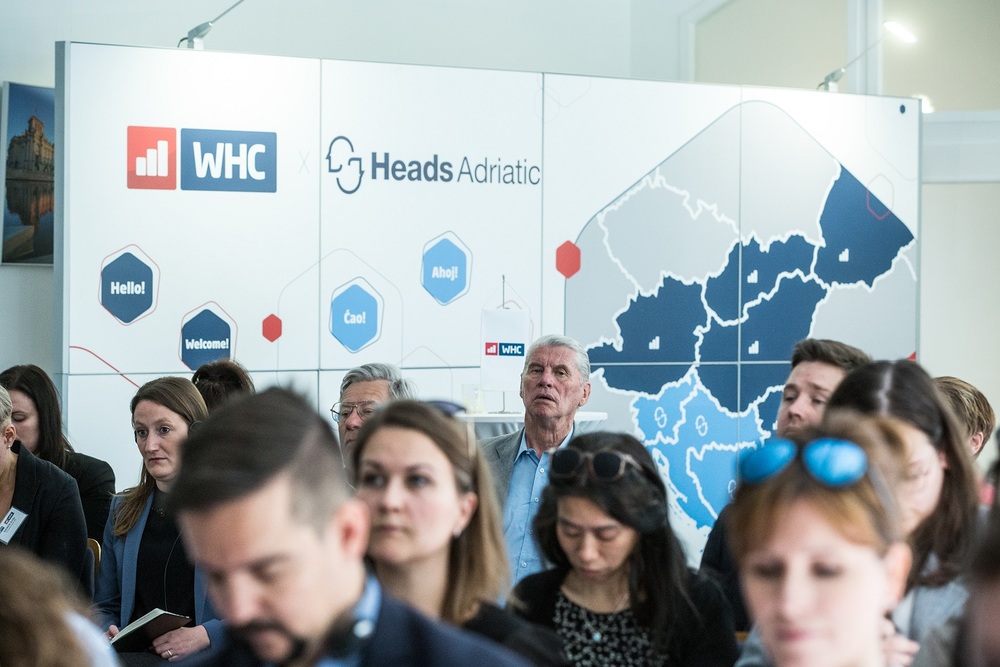
At the workshop organized primarily for member companies of the German-Hungarian Chamber of Industry and Commerce, Barbara Zollmann, Member of the Executive Board of DUIHK highlighted in her welcome speech, that the shortage of skilled labour is present in all segments, is a lasting challenge and has a significant impact on the day-to-day operation of companies. Therefore, DUIHK itself has launched several initiatives to ease the problems of supply of professionals – for example, they have introduced a dual vocational training system at several of their member companies, based on the German model.
Representing the corporate side, Ákos Kalmár, the national HR director of Continental Group, also participated at the event. He told that as a first step, Continental recruited labour from Ukraine to Hungary in 2017, relying also on WHC Group, then not long afterwards, they started to employ workers arriving from the Philippines as well, in some respects, as a pioneer in our country.
“When we recruited Philippine workers four years ago, we took advantage of our global organization, as at that time Continental decided to close its plant in Manila.


I think the shortage of skilled labor has something to do with the salaries that especially outsourcing companies offer to skilled labor. I have applied a few jobs in Hungary that had very specific native level foreign language requirement and a long list of technical and soft skill requirements. But the salary turned out be about the same as you would get as a factory worker… I hope skilled people do not have to take these slave offers but rather find different means of making income.