Subscribe to our social channels to get the latest news about Hungary!


12th September is a very shameful anniversary in Hungarian history. On this date in 1849, Lajos Kossuth (former Finance Minister and Governor of Hungary) wrote his letter to the Hungarian emissaries of France and England, in which he condemned Artúr Görgei (general and commander in chief of the Hungarian army) for laying down arms and ending the Freedom Fight.
In his exile, Lajos Kossuth stayed for one year in Vidin (Ottoman Empire – today in Bulgaria) after the Habsburg and Russian empires broke down the long-lasting Hungarian Freedom Fight. 170 years ago, he wrote the Letter of Vidin (more like a memorandum). His purpose was to get himself and his escort under English patronage to avoid living as a prisoner on a Turkish Island. At the time, the details of the Hungarian campaigns were not entirely clear in Western-Europe (György Klapka was still holding the fortress of Komárom), so he reported about the events from his point of view.
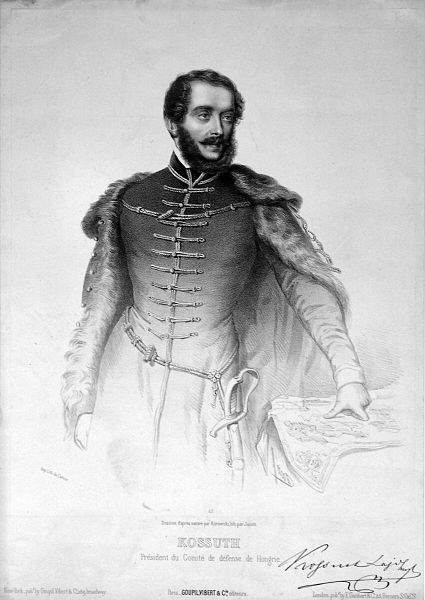
In the letter, he publicly blamed General Görgei for laying down arms and ending the Freedom Fight against the Habsburg Empire. He accused him of betraying the Hungarian freedom as a coward because he thought that the army would have been capable of continuing the fights – he listed the numbers of the Hungarian forces in the letter and argued for continuing the war of independence.
“Our poor hapless homeland fell. It did not fall because of our enemies’ strength, but because of betrayal and evil. Oh, I lived long enough to see this, and I am still not allowed to die. I elevated Görgei from the dust to gain eternal glory for himself and freedom for his homeland. And yet, he became the executioner of his country instead, like a coward.”


