Subscribe to our social channels to get the latest news about Hungary!


The idea that Hungary’s Holy Crown was altered is becoming increasingly widespread, with many pointing to the Habsburgs as the culprits. Emperor Joseph II, the so-called “Hatted King,” allegedly had the crown taken to Vienna, where it was modified. But was the alteration of the Holy Crown truly carried out on the orders of the Austrian royal house?
The history of the Holy Crown has spawned numerous theories over the years, often creating a deep divide between public perception and scholarly research. By the late 19th century, the prevailing belief—based on some historical sources—was that the Holy Crown was commissioned by Pope Sylvester II and used for the coronation of Saint Stephen.
In 1880, scholars were given the opportunity to examine the crown scientifically. A committee led by Arnold Ipolyi conducted the investigation, with prominent Hungarian experts such as Imre Henszlmann, Károly Pulszky, and József Hampel participating. Their findings cast doubt on the widely accepted narrative regarding Saint Stephen’s crown.
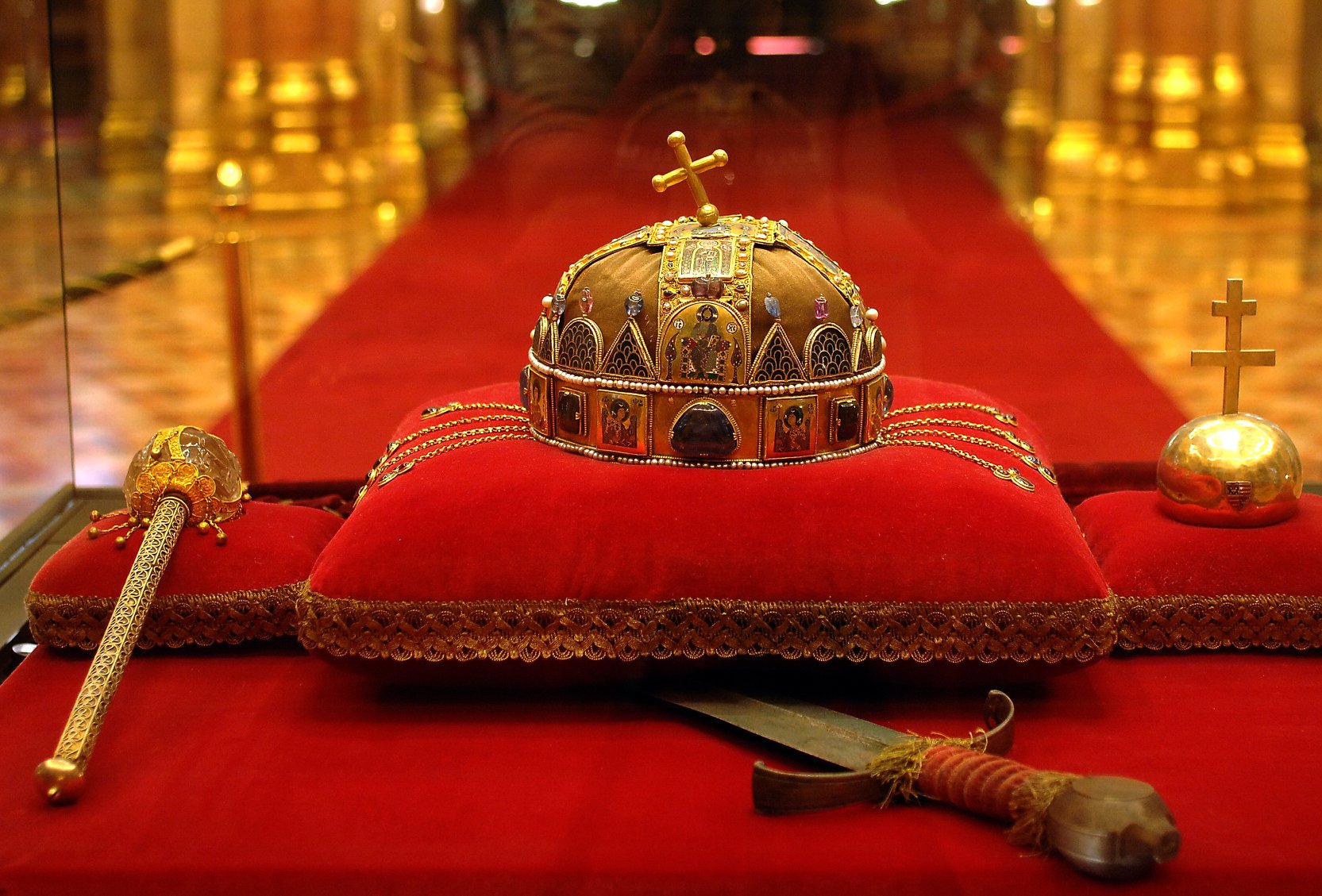
The leaked details of the study ignited fierce debates in Hungarian newspapers. However, the most explosive revelation came from French archaeologist Jean de Bonnefon, who published an article in the Parisian Le Journal on 3 April 1907. In his piece, he wrote:
“The fake crown that I speak of is in Buda, the sacred capital of Hungary… Our fake crown is simply the Holy Crown of Hungary, which the people have quietly revered for centuries.”
“What is shown in Buda—more precisely, what is carefully concealed—is a heap of enamels, stones, and metalwork of completely different origins and ages.”
“…With the obvious intent to deceive. The legend is not naive. It is premeditated, like a crime.”
The article, which many Hungarians found insulting, sparked significant controversy. Some even accused Hungarian scholars of aiding foreign interests by entertaining the idea that the crown was a papal gift instead of an original Hungarian royal artefact. In response, authorities attempted to obscure the crown’s details, as it was fundamental to legitimising the Habsburg claim to the Hungarian throne. However, this secrecy only fueled further suspicions.
Over time, as emotions settled, the theory that the crown was a direct papal gift to Saint Stephen lost credibility. Both professional historians and amateur crown researchers eventually dismissed the idea that Stephen was the first to possess the Holy Crown.
After a long exile, the Holy Crown returned to Hungary in 1978, offering researchers the chance to study it with modern tools. However, instead of answers, the investigations raised more questions. Today, two main theories dominate research on the Holy Crown’s history.
Most professional scholars support the view that the crown consists of two distinct parts, with debate centring on when and how they were combined. The opposing camp, however, believes the Holy Crown was originally designed as a unified piece, and that any contradicting details are the result of later modifications—allegedly ordered by the Habsburgs. While opinions vary on the specifics, supporters of this theory uniformly blame the Habsburg dynasty.
Gábor Pap, a modern theorist of the crown’s alleged forgery, claims that the Habsburgs deliberately replaced certain elements, particularly the enamel images of Byzantine emperors Michael Doukas, Constantine, and Geobitzas, thereby altering the original iconography. Supporting his claim, Pap points out that Crown Guardian Péter Révay described an image of the Virgin Mary in 1613, whereas historian István Weszprémi, in 1790, noted the presence of the three imperial portraits. Based on this timeline, Pap argues the switch must have occurred while Joseph II had the crown in Vienna. Another researcher, Lajos Csomor, even suggests that the original Virgin Mary icon is the same one found on the Khakhuli triptych.


