Subscribe to our social channels to get the latest news about Hungary!


Harry Houdini, son of a Rabbi from Budapest, was not only a pioneer in his discipline of entertainment but also a master in breaking the chains of countries’ boundaries as he gained truly international fame.
Houdini is among the most known people in the history of American entertainment. In many ways, his persona may be a convenient symbol of the fate of Central European émigrés. There is even a striking similarity to the one of another American Hungarian Jew, Robert Pulitzer, who turned American media mogul and the founder of a famous journalism prize.
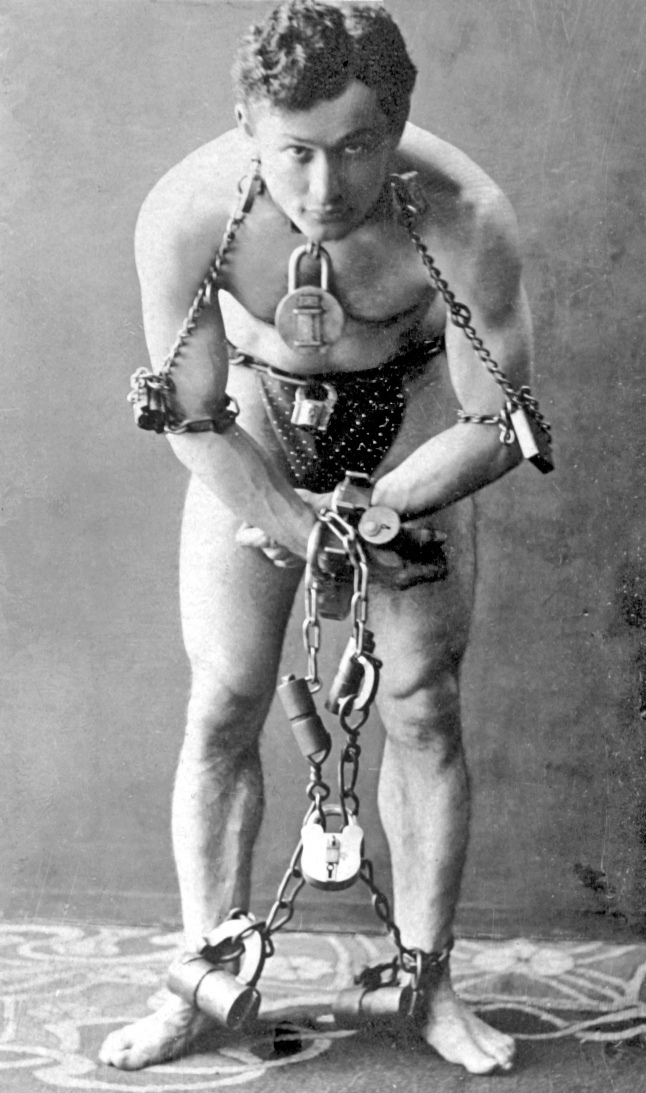
Harry Houdini was born in the late 1880s in New York City when teenager Erik Weisz took on performing as a magician and had to find an artistic pseudonym. His choice was to create one after his French colleague Jean-Eugèn Robert-Houdin, then an already dead performer and an important figure in the trade.
Weisz (also known in the American version as Ehrich Weiss) was already a somewhat experienced stunt performer, and it seems that he was driven by the motivation to learn this art. He arrived in the USA as a four-year-old with his parents in a typical way for Central or Eastern European émigrés: aboard a transatlantic ship from Hamburg to New York City.
The Weisz family, headed by Erik’s father Sámuel with his wife and seven children, experienced severe poverty in America and have been in pursuit of happiness in a few regions of the country. Finally, they came back to New York City, and this is where Weisz, or Weiss, as a nine-year-old, took a career as a trapeze artist. Back then, he was known as “Ehrich, the Prince of the Air.”
But he was neither prince nor especially high (career-wise) when he became Houdini, nor was he successful in the first years of his acting. The groundbreaking moment was when he met Martin Beck, a theater owner, and a booking agent; he decided to take on the task of filling the seats for young Houdini. Six years Houdini’s senior, Beck arrived in the USA virtually the same way Erik Weiss did: he was a Hungarian teenager of Jewish descent. He with his family boarded a transatlantic ship from Bremen.
Having seen Houdini in one of his performances, Beck telegraphed him: “You can open Omaha, March twenty sixth, sixty dollars, will see act probably make you proposition for all next season.” “This wire changed my whole Life’s journey” – added Houdini on the telegraph, in handwriting, and kept it as a souvenir.