Subscribe to our social channels to get the latest news about Hungary!


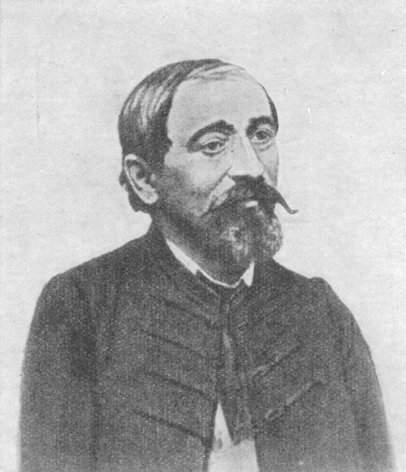
He never talked about his revolutionary activities; he avoided journalists, he only let his photo taken once – making it possible for us to know what his face looked like. It is János Irinyi, the inventor of the non-explosive and noiseless match.
János Irinyi was a Hungarian inventor and chemist, born on the 17th of May in 1817 in Albis, Erdély. Many people believe he was the inventor of the match. It is not true, but he did invent the non-explosive, noiseless match, indeed.
Irinyi came from a Calvinist noble family. His father, János Irinyi was an agronomist. He studied in Debrecen, Hungary, but he received most is his education regarding chemistry in the Politechnikum in Vienna. Pál Meisser, one of Irinyi’s teacher, conducted an unsuccessful experience,
which made János Irinyi think, and eventually find out the solution for the noiseless and non-explosive match.
Having researched for a long time, he took out a patent for the noiseless and non-explosive match in 1836. He achieved the final result by mixing the phosphorus with lead dioxide instead of the potassium chlorate used previously.
Irinyi needed money for his studies abroad, so he decided to sell his invention. Eventually, he acquainted himself with a match manufacturer, called István Rómen, who was also one of the pioneers of general and special chemistry in Hungary. Despite the age difference, they became close friends. Irinyi even assumed to teach Rómer’s daughter Hungarian.
The actual price Rómer paid for Irinyi’s patent has not been recorded.
Some sources mention 60 forints, some know about 80, but the memoir of one of Irinyi’s fellow university students states 7000 forints.


