Orbán cabinet would build new dormitories, boost economy, review rental and Airbnb regulations in Hungary
Change language:
Hungary wants to stay out of the “cold trade war” declared by Brussels and Western Europe and adopt a policy of economic neutrality, Gergely Gulyás, the head of the Prime Minister’s Office, said at a press briefing during a cabinet meeting in the renewed Tisza Castle in Geszt, in the southeast of the country, on Thursday. The government also talked about how to boost the economy and the need of new regulations concerning the rental and short-rental, Airbnb markets.
Gulyássaid that such a trade war presented “extraordinary risk” to Hungary’s export-driven economy, cutting off the country from markets and investment opportunities. He added that a policy of economic neutrality would help achieve the government’s GDP growth target of 3pc-6pc.
If that level of growth can be achieved, wages will rise, budget revenue will climb and the success of the government’s economic policy will be validated, he said.
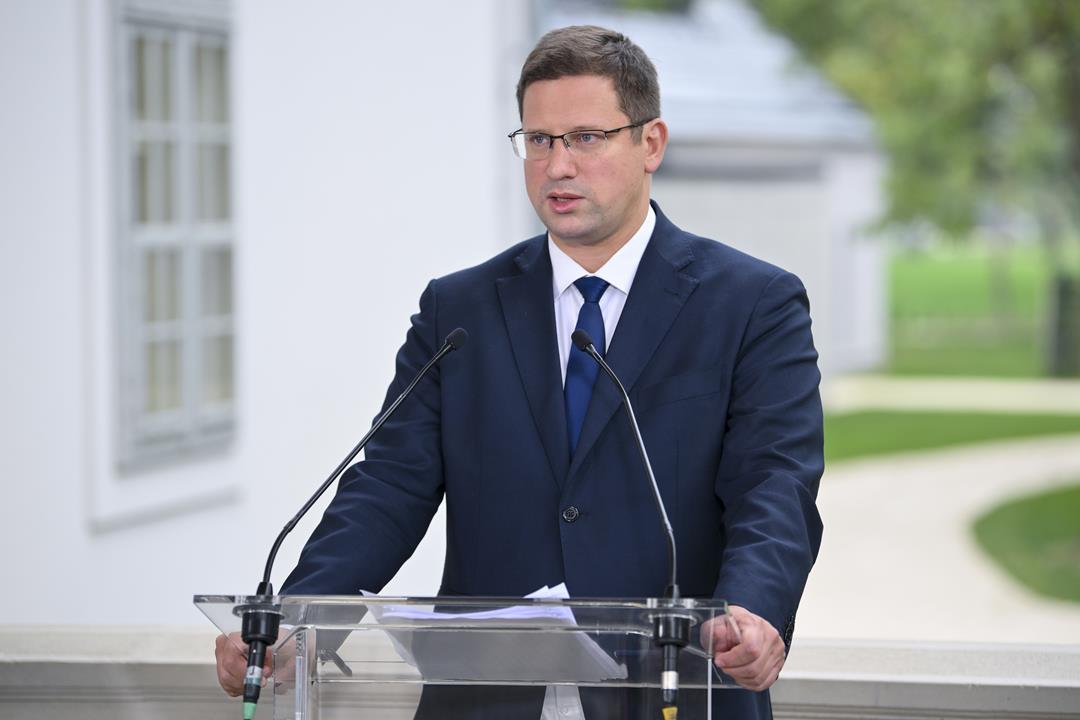
Gergely Gulyás in the Tisza Castle in Geszt briefing press after the government meeting finished. Photo: MTI
Stimulating economic growth top priority
He said the cabinet meeting had assessed and weighed the outlooks for the Hungarian and the European economies over the past three days. He added that the fundamental changes to the global economy brought on by the pandemic and the impact of the war in Ukraine required new responses and a new economic policy.
He noted earlier announced government decisions to introduce a credit scheme for young blue-collar workers and a capital programme for SMEs, as well as doubling the tax preference for families with children by January 1, 2026. He said the government would also make a priority of affordable housing, wage increases based on economic growth, and advances for SMEs. Related measures will be drafted in detail by the end of October and submitted to lawmakers with the 2025 budget bill early in November, he added.
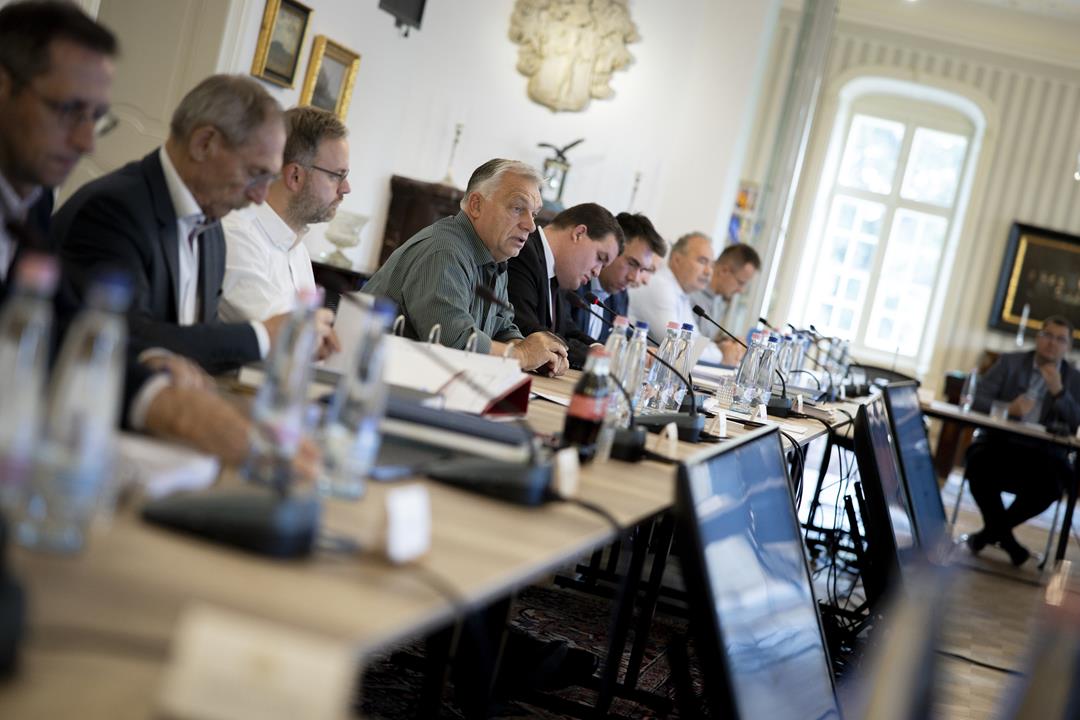
The Orbán cabinet in the Tisza Castle in Geszt. Photo: MTI
Orbán cabinet wants to ease housing problems with regulating Airbnb?
He pointed to programmes supporting dormitories and housing for young people and acknowledged the higher rate of home ownership in Hungary in comparison with Western Europe. He said the appreciation in home values in recent years had resulted in a housing challenge, especially for young people. He added that the economy ministry had been tasked with reviewing international practices regarding rental regulations, including those for Airbnb-type short-term rentals.
He said the government would make accelerating home construction and ensuring affordable housing a “priority task” over the next two years.
He said the government wanted employers and unions to reach a multi-year agreement on minimum wage rises that would feed through to the average wage.
Gulyás said the economy minister also had a mandate to draft measures on further incentives for improving the position of SMEs in the coming 2-3 weeks.
Fielding questions, Gulyás said a HUF 500bn increase in the deficit target was “technical”, noting that the 4.5pc target relative to GDP was unchanged and “achievable”.
He said the forint’s recent weakening was mainly due to external political and economic factors, such as the situation in the Middle East. The government has no concrete exchange rate target, rather the goal is to avoid volatility, he added.
Significant minimum wage increase will come
Asked to comment on National Economy Minister Márton Nagy’s projection that the minimum wage would reach EUR 1,000/month by the start of 2028, Gulyás said it was “completely realistic”.
He said a number of proposals had come before the government on regulating short-term rentals, but a decision on the matter hadn’t been taken yet. The issue requires careful consideration as it involves complex legal problems, he added.
Gulyás said the state’s acquisition of a controlling stake in regional railway company GYSEV was of “great significance” and the company could serve as a paradigm for levels of service in public transport.
10pc minimum wage rise would be ‘manageable’ for construction industry, trade union says
A 10pc minimum wage rise for 2025 would be “manageable” for construction industry companies, the National Federation of Hungarian Building Contractors (ÉVOSZ) said on Thursday. Talks between employers, unions and the government on next year’s minimum wage increase are ongoing. ÉVOSZ said that an annual 10-11pc minimum wage increase in 2026-2027 could only be implemented parallel with a number of economic development measures, more favourable lending conditions and an improvement in industrial efficiency.
ÉVOSZ noted that wages in the construction sector had risen 17.5pc, on average, in 2023 and were set to climb by 12pc in 2024. It added that wages in the sector were still just 80pc of the national average for the business sector. ÉVOSZ said order stock was under 80pc of last year’s levels at around 90pc of businesses, adding that redundancies couldn’t be excluded given the circumstances. It also pointed to the impact of exchange rates on the sector.
Read also:
State-owned Hungarian energy company can conquer Romania’s market after large-scale acquisition – read more HERE
Hungary’s NATO membership at risk? German-French démarche after PM Orbán’s political director’s cowardly words – details in THISarticle