Subscribe to our social channels to get the latest news about Hungary!


Replacement of old buses in Budapest public transport is getting more and more urgent. Data requested from the Centre for Budapest Transport (BKK) by the Hungarian Union for Public Transport Users (Közlekedő Tömeg Egyesület) shows the seriousness of the situation.
Based on the list of all breakdowns and failures that happened between 1 June and 3 August, G7 summarised that on average, there were 207 mechanical failures per day, in the examined period. Since 2.5 thousand public transport vehicles run in the Hungarian capital, this means, every 12th vehicle – including trams, trolleys and buses – breaks down for some time on an average summer day. Fixing them typically took 64 minutes.
The situation is not only pretty inconvenient for all; it also raises the costs of operating the public transport system of the capital. Actually, the transport services of BKK are provided by different companies. The Budapest Transport Privately Held Corporation (BKV) operates the trams, metros, and trolleys, but buses have more than one operator. Approximately, out of the 1600 buses in the capital, only 1000 belongs to BKV; VT-Arriva operates 450 and Volánbusz approximately another 200.
Out of all the vehicles, on average, 145 buses broke down per day. Due to this high number, 2-3 dozens of vehicles, as well as drivers have to be on standby to help, plus replacement buses have to cross the city without passengers which all raise costs. So the total of bus costs is mostly spent on bus breakdowns.
In 2020, BKK will pay 150.7 billion Forints to BKV and the other bus operators for operating the public transport system, but how the total amount is split among bus, tram, metro and additional costs is unknown. Since BKK’s overall performance is around 125 billion Forints, the external service providers’ could be 25 billion, and we also know that one-third of the total performance of BKV is from buses, so it can be calculated that the total cost of bus transport in the capital should be around 66 billion Forints this year.
Vehicles from VT-Arriva (that is the shared company of Videoton and Deutsche Bahn) and Volánbusz (which belongs to MÁV) are getting old enough to be replaced too, but BKV’s vehicles are by far the oldest and these have the most defects. But it’s actually not just about age, since BKV buses fail more than five times more often than vehicles by external operators.


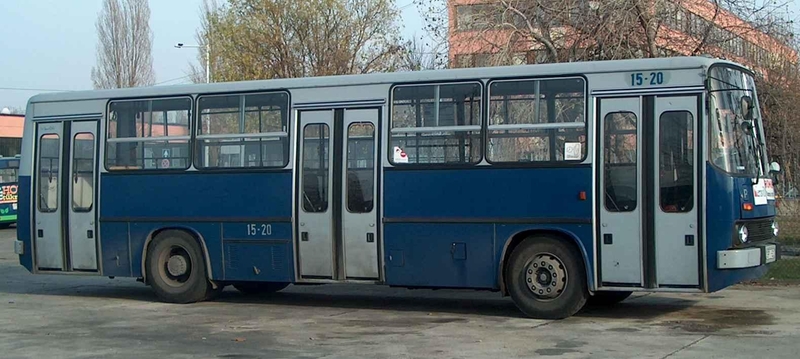
Bus 16 – mini bus service to Buda Castle, not surprised at there un-reliability.
The quality of the suspension – the “knocking” metallic sound, when they encounter rough and holed roadways, through the inferior quality of the suspension – shock absorbers, of these buses, makes for passengers, a discomfort of travel.
Concerning, that these buses – mini buses – purchased just to run the relatively short distant of service, that Bus 16 operates, that, who ever signed the contract for their purchase, didn’t exercise there job with greater diligence and thoroughness.
The mini buses that “hold up” are the backbone of the running Bus 16 route, will not have longevity of public service.
They are a “lemon” – a mechanical time bomb for maintaining and mechanical upkeep.
Stay Safe & Well – ALL.