Which place in Europe do you think has the highest number of people with university degrees? It isn’t a city in Finland or the United Kingdom. In fact, a region in Eastern Europe has the highest rate of residents with a bachelor’s degree or higher.
According to data from Eurostat, Europe’s statistical agency, the Lithuanian region known as Sostinės regions, which surrounds the area of the capital Vilnius, has the highest percentage of the population with a university degree in Europe, Erudera.com reports.
Eurostat analyzes the percentage of the population with a tertiary education in NUTS regions (Nomenclature of territorial units for statistics), a geographical classification dividing the economic territory of the EU. These regions are categorized in three levels: NUTS-1, NUTS-2, and NUTS-3.
For this analysis, it looked at NUTS-2 regions, which have between 800,000 and 3 million residents. In this article, we will look at 10 of the most educated places in Europe.
Sostinės regionas, Lithuania — 62.1 percent
Eurostat’s report identifying most highly educated places in Europe, reveals that 62.1 percent of Sostinės region (Capital Region) residents, aged 25-64, completed higher education in 2022.
The Capital Region is home to several universities, including Vilnius University, one of the oldest universities in Central and Eastern Europe.
OECD data indicate that the share of people aged 25-64 in Lithuania with a bachelor’s degree or equivalent is among the highest worldwide where data is accessible, standing at 30 percent. This share has placed Lithuania third out of 45 countries in 2022.
Walloon Brabant, Belgium — 60.7 percent
Second on the list is Walloon Brabant, a municipality in Belgium where 60.7 percent of the population (25-64) has completed higher education. Walloon Brabant is a small province but one of the wealthiest areas in Belgium.
According to Statbel, the Belgian statistical office, one in two people aged 25 to 34 in Belgium received a higher education diploma in recent years.
Stockholm, Sweden — 57.5 percent
Sweden’s capital city ranks third among cities / areas in Europe, with the most higher education graduates. In Stockholm, 57.5 percent of the population aged 25 to 64 earned higher degrees in 2022, up from 56.1 percent in 2021.
Stockholm is home to dozens of high-quality universities, such as Stockholm University, which enjoys a reputation worldwide.
Official data show that, in 2022, 48.5 percent of 25-64-year-olds in Sweden obtained higher education degrees.
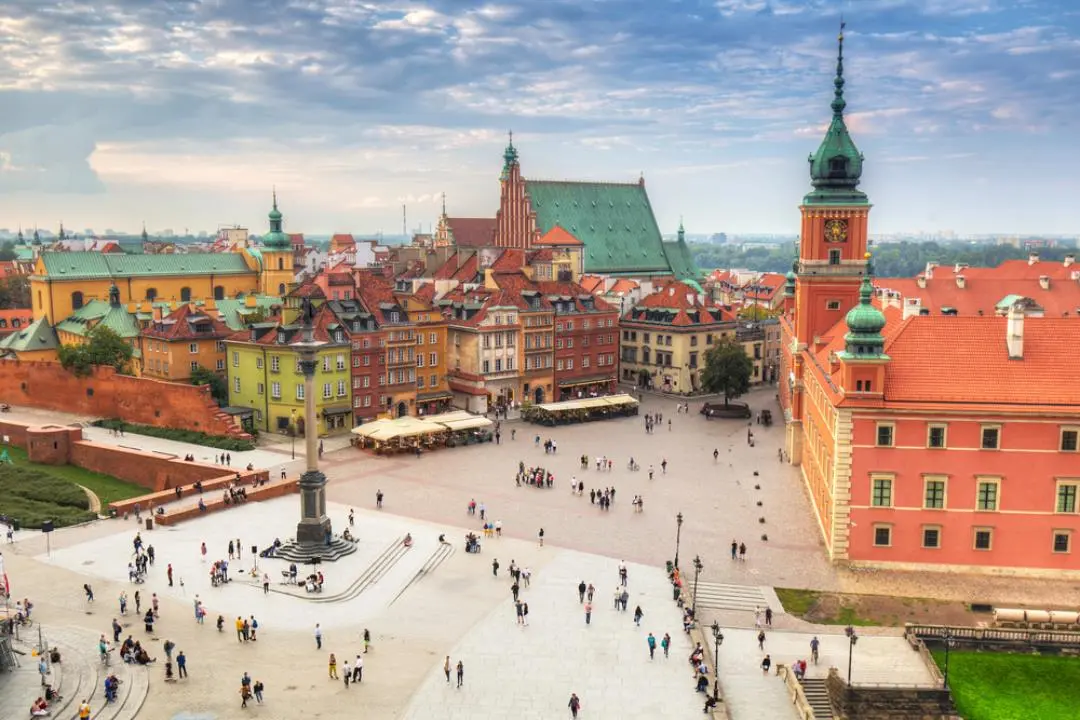
Warsaw, Poland — 57 percent
57 percent of 25 to 64-year-olds in Warsaw received higher education degrees in 2022, placing the city fourth among the most highly educated places in Europe.
Poland’s capital is considered one of the most important cities for education in the entire country. It is home to top universities, including the University of Warsaw, the largest institution of higher education in Poland.
Source: depositphotos.com
Eastern and Midland, Ireland — 57 percent
About 57 percent of people in the Eastern and Midland region, which is part of Ireland, earned a bachelor’s degree or higher in 2022.
Some of the best universities in Ireland are Trinity College Dublin, University College Dublin, and Dublin City University, also home to thousands of international students.
The Eastern and Midland Region in Ireland has been recognized as a region since 2015, which covers the following territories:
Longford
Laois
Offaly
Westmeath
Pais Vasco, Spain — 56.4 percent
According to Eurostat’s data, 56.4 percent of the population in Basque Country, an autonomous region in northern Spain, have completed tertiary education. This region is known for having one of the oldest cultures in Europe and one of the oldest languages spoken in Europe today, Euskera.
Utrecht, Netherlands — 56.1 percent
Known as one of the best student cities in the Netherlands, Utrecht has a quite well-educated population.
Data shows that 56.1 percent of the population in Utrecht earned higher education diplomas in 2022.
According to rankings, the best universities in Utrecht for 2024 are:
Utrecht University
HU University of Applied Sciences Utrecht
Utrecht School of the Arts
Tio University of Applied Sciences
Budapest, Hungary — 55.9 percent
In Budapest, 55.9 percent of people between the ages of 25–64 obtained a degree from a higher education institution in 2022.
Meanwhile, in the same year, Hungary’s percentage of the population with a higher education degree was 32.9 percent, one of the lowest rates compared to the EU average of 41.2 percent.
The number of individuals applying for higher education in Hungary has declined in the 2022/23 academic year. Over 99,100 people applied to universities, 2,689 fewer than the previous year and 13,000 fewer than three years ago. This decline has been attributed to stricter entry requirements.
Budapest, Hungary. Source: depositphotos.com
“In 2020, the number of applicants fell sharply due to stricter entry requirements: a higher passing score and the advanced-level matura,” the EU Commission states in its report “Education and Training Monitor 2022.”
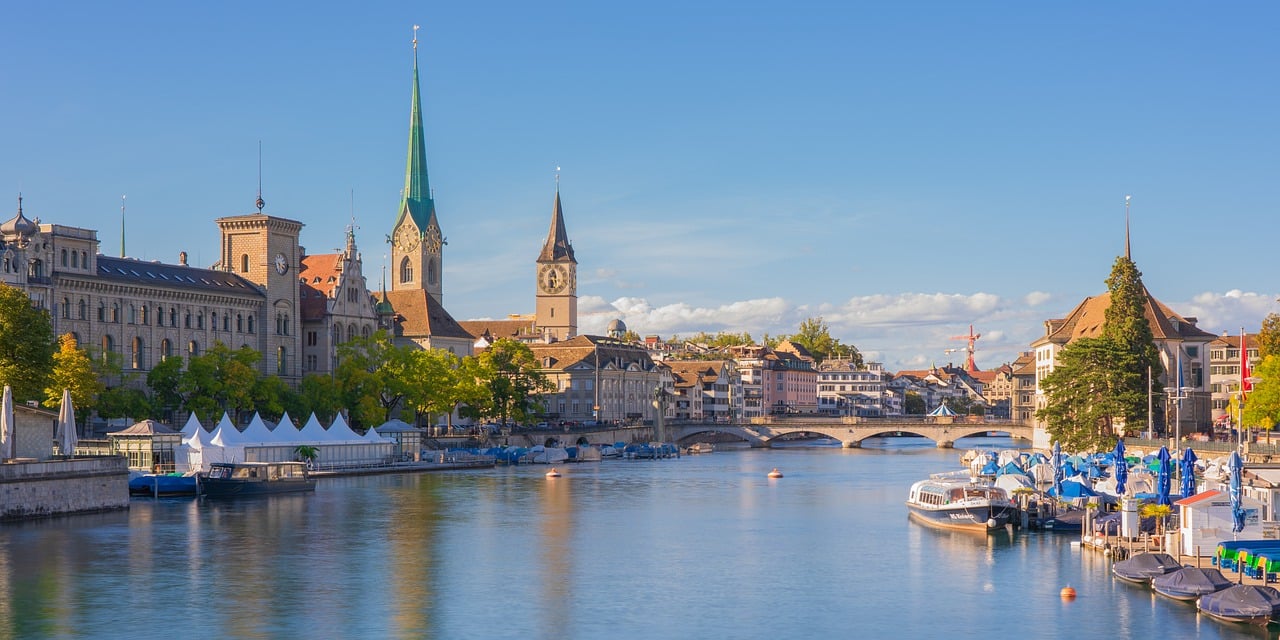
Zürich, Switzerland — 55.5 percent
Zurich is the ninth most highly educated place in Europe, with 55.5 percent of people having a higher education qualification.
This is also supported by the fact that Switzerland has one of Europe’s most prestigious higher education systems. Last year, a study by the Swiss government found that the number of people with university degrees has doubled since 2000.
Most recent available data show that 52 percent of people in Switzerland aged 25–34 have completed higher education. It has been projected that almost half of the population in Switzerland between the ages of 25 and 65 will have completed higher education by 2037 – whether it be a university degree or an advanced professional diploma.
Zurich, Switzerland. Source: Pixabay
Ile de France, France — 55 percent
Ile de France, the most populated region in France, is in the top 10. In this region, over half of the population have received a higher education degree in 2022.
OECD data shows that the proportion of 25-34-year-olds with a bachelor’s or equivalent degree is one of the lowest among OECD and partner countries where data is available, standing at 13.9 percent in 2022.
Read also:
Budapest among world’s best destinations, saysConde Nast Traveler
A bookworm’s dream: Budapest among best cities for literature lovers – Details in THISarticle
The top places where you can’t find a plumber, car mechanic or anyone to do anything useful or practical but plenty of people who can recite literature and recall historical dates. Wow! Sounds great.
University education has it’s place and of course we need doctors, lawyers and accountants but if we’re sending more than 20% of young people to university then we are creating massive problems for the future. Because we have a far greater need for more people who can build homes, roads and infrastructure, fix cars, take away trash etc.
We have to stop putting such emphasis and credibility to these type of stats. They are meaningless and counterproductive in a well rounded functioning society.






The top places where you can’t find a plumber, car mechanic or anyone to do anything useful or practical but plenty of people who can recite literature and recall historical dates. Wow! Sounds great.
University education has it’s place and of course we need doctors, lawyers and accountants but if we’re sending more than 20% of young people to university then we are creating massive problems for the future. Because we have a far greater need for more people who can build homes, roads and infrastructure, fix cars, take away trash etc.
We have to stop putting such emphasis and credibility to these type of stats. They are meaningless and counterproductive in a well rounded functioning society.