Subscribe to our social channels to get the latest news about Hungary!


Anna Borbála Kitlinska and Dávid Varga experienced a lifetime adventure during their Scandinavian expedition. Far away from civilisation, the Hungarians faced several exciting and daunting challenges under the open sky.
Fjällräven Polar Arctic expedition enjoys great popularity in Hungary since several Hungarians apply for the extraordinary tour to move out of their comfort zone. This is an ideal adventure for the bravest ones, adrenaline addicts, and those who would like to experience the limits of their tolerance. During the five-day-long tour, participants complete their Arctic tour on sleighs led by dogs and surrounded by extreme conditions.
Last year, Hungary and all of Central Europe was represented by a Hungarian adventurer, Kitty Zaja, who received the most votes in the territory, by which she became the third most popular candidate worldwide. The young girl’s life has been completely changed by the five-day-long tour, just like in the case of this year’s explorers, Anna Borbála Kitlinska and Dávid Varga.
The popularity of Polar is also reflected in the number of applicants, which was 41 this year, out of which two fortunate ones managed to acquire the exceptional opportunity that is only provided to 20 people worldwide.
Dávid Varga recruited voters so enthusiastically that he became the first in the Central European region with more than 55,000 polls, by which the Hungarian boy received the third most votes globally. Meanwhile, his partner, Anna Barbara Kitlinska, participated in the adventurous experience as a result of the international jury’s decision.
Dávid and Anna completed the extremely challenging, but undoubtedly exciting expedition in April, and afterwards recalled their Scandinavian memories and experiences to the Hungarian news portal, szeretlekmagyarorszag.hu.
Accordingly, hikers were well-prepared for the extraordinary challenge thanks to the one-day-long theoretical training which took place in Sigtuna, the oldest city in Sweden. Within the framework of the training, participants received detailed information about the weather forecast, the necessary means of subsistence, the appropriate clothing, and other technical issues. This was followed by another one-day-long practical preparation in northern Norway, where the adventurers could practice how to pitch their tent in the high snow, got to know the usage of gas cooking and met the most important Arctic vehicles, their sleighs, for the first time. They soon became friends with other participants, which led to the atmosphere of the expedition becoming even more cheerful.
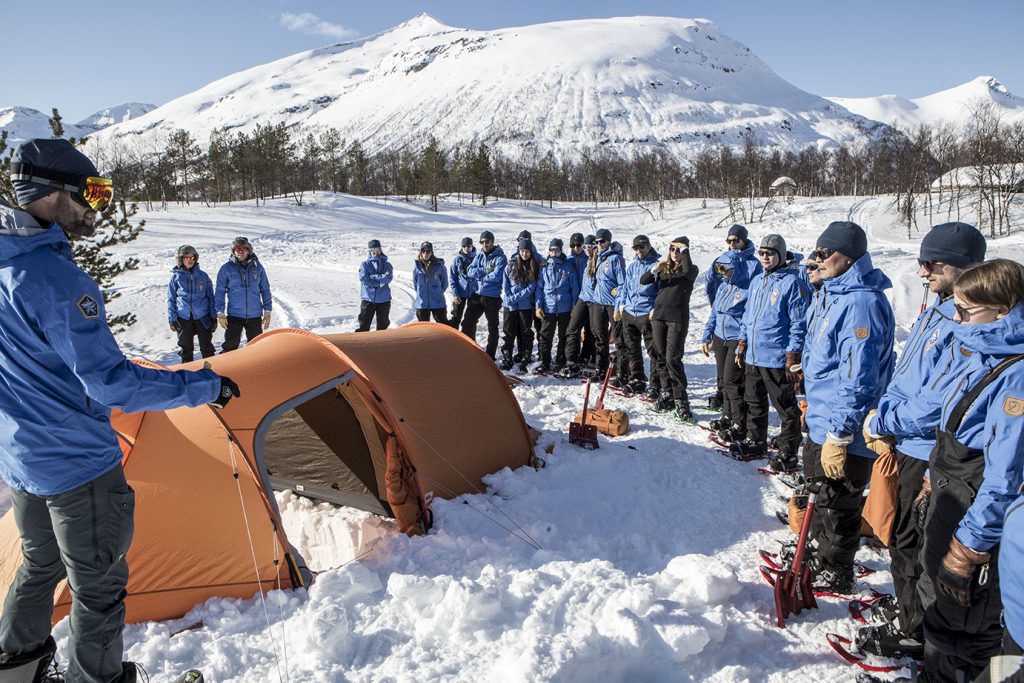
As Anna said, English knowledge was a requirement for participation. Therefore, their friendship can mostly be attributed to their personality rather than language knowledge. There was an instinctive co-operation between the members creating a strong team.
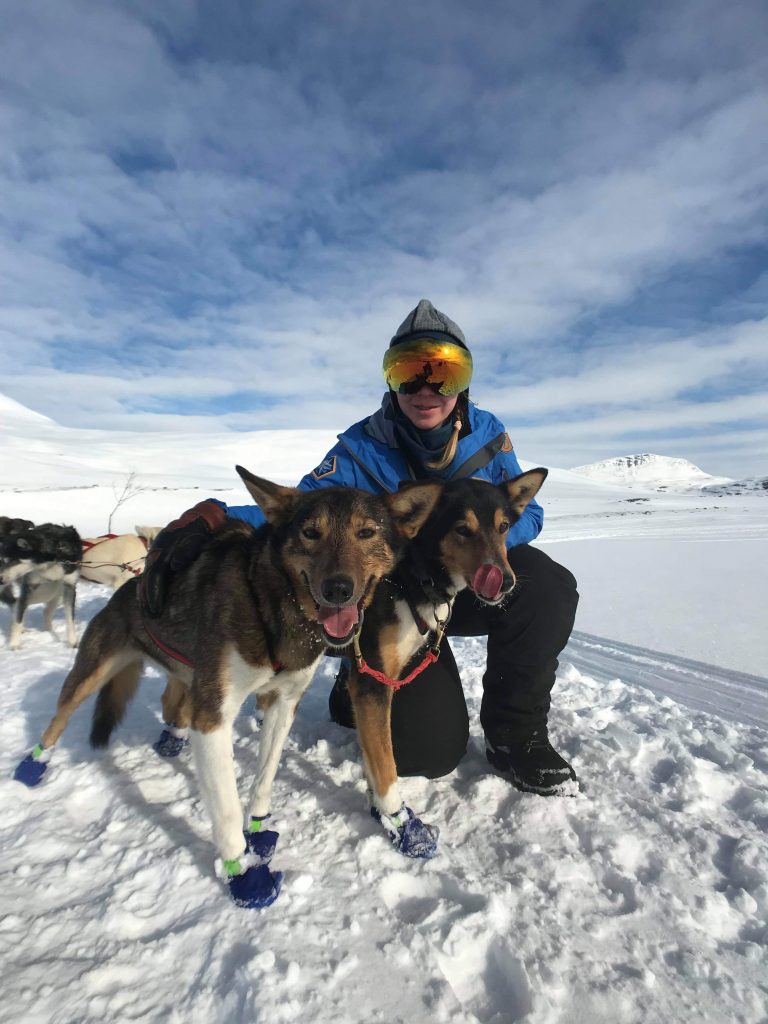
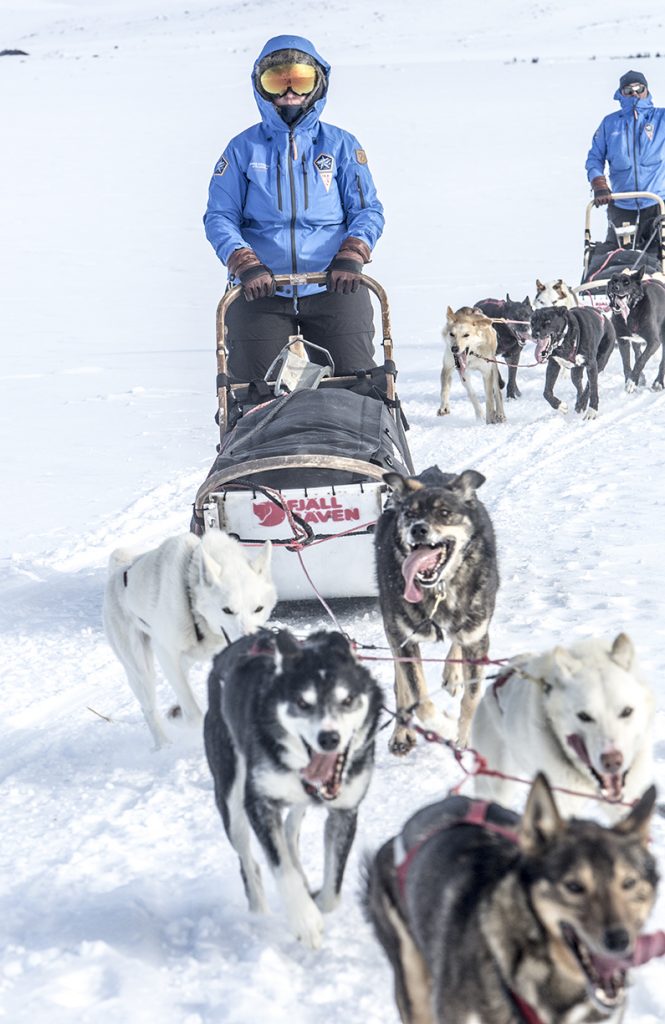
Besides becoming friends with their human companions, they also needed to get on well with their animal partners. Both of them were satisfied with the guide dogs who pulled their sleighs throughout the whole journey. According to the Hungarian adventurers, these five days brought them closer together with the accompanying animals, and this strong link could get realised as a result of respecting their four-legged helpers’ well-being and needs.
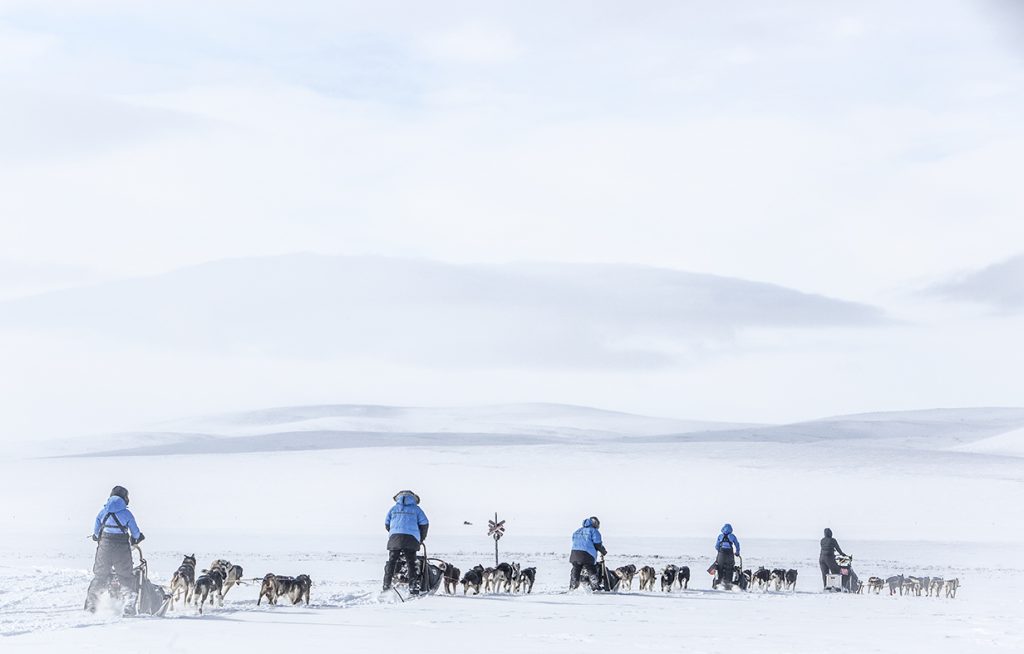
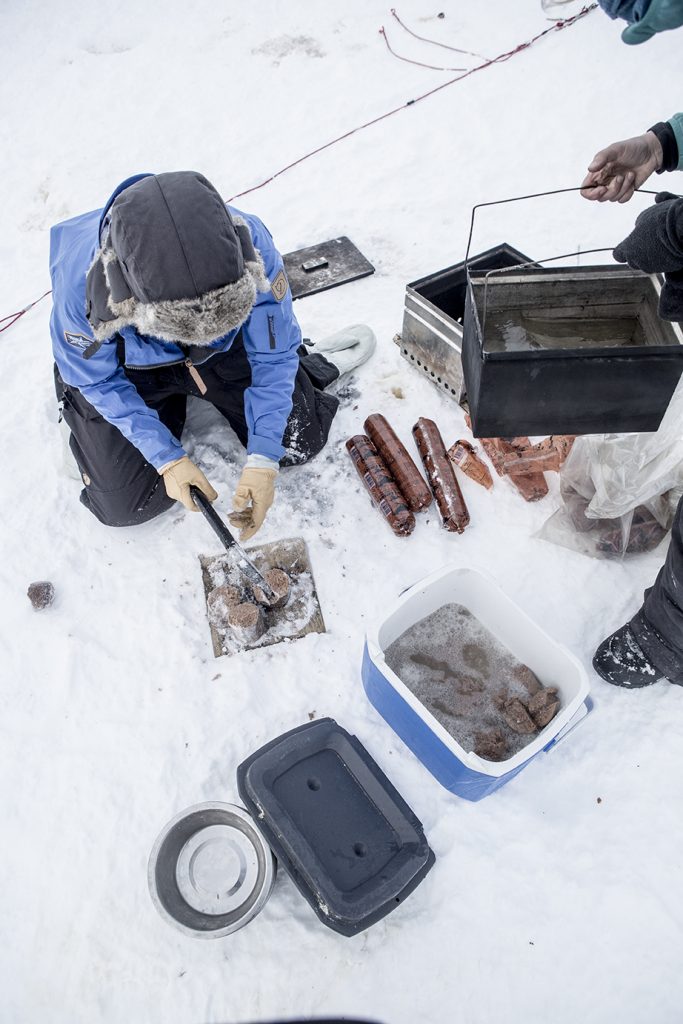
Every morning, participants started at 6 am. According to David, the coldest part of the day was when they climbed out of the sleeping bag. This was followed by the morning preparations, which lasted for three hours. First, they prepared food for the dogs: they boiled water which was poured onto sliced sausages. Then they prepared their own breakfast as well. The necessary water supply was acquired from snow or by trepidation and was stored in thermos bottles. Then, they put their equipment on the sledge, prepared their dogs, and started to sledge for a period of 7-8 hours per day which was only interrupted by a lunch break. Once they arrived in the evening campsite, the most important thing was to feed the dogs, and then they could start setting their tents, boiling water, and making dinner for themselves.