Subscribe to our social channels to get the latest news about Hungary!


Several foreigners live in Hungary, who have contributed to the country’s development with their intellectual and financial capital. The “Study In Hungary” education service made an interview with Julia Buxton, the Acting Dean and Professor of Comparative Politics in the School of Public Policy (SPP) at Central European University
 Study In Hungary: Dear Julia, please introduce yourself to our readers.
I am the Acting Dean and Professor of Comparative Politics in the School of Public Policy (SPP) at Central European University. My geographic area of specialisation is Latin America. Thematically, and in terms of my academic and policy experience, I work broadly on security, development and public health covering issue areas such as narcotic drugs, violence and gender based violence, democratization and post-conflict reconstruction.
Study In Hungary: How would you briefly define CEU in 3-4 sentences?
CEU is a young and incredibly diverse graduate institution that delivers high quality, research based teaching in the social sciences and humanities. In the Times Higher Education World University Rankings, I was proud to see CEU ranked 7th for its international outlook. The School of Public Policy at CEU was established in 2011 with a practice focus; in addition to academic learning we provide training in applied skills that are fundamental for effective engagement with the policy and advocacy worlds.
Study In Hungary: What are the competitive advantages of your university compared to other Hungarian and European universities?
There are many. CEU is a relatively small university – 1400 students. This enables us to maintain a very favourable faculty to student ratio while creating a sense of community rather than anonymous existence. CEU facilities are world class, our new campus – and in particular the library – is state of the art, as well as aesthetically stunning. I stress again our tremendous diversity of faculty and students, which makes for a unique learning experience and exposure to a range of views, values and perspectives. Of course our location in Budapest, a vibrant and beautiful city is a major advantage. We are positioned at an internationally connected bridging point between East and West, North and South and this facilitates travel for guest speakers, hosting of international conferences, internships, and of course ease of family reunion for a global faculty and student body. We live in a volatile and unpredictable world but are fortunate that in Budapest we do not experience the security concerns of other countries. While of course Hungarian, European and also US universities are competitor institutions, we also see them as partners in research, education and knowledge generation, so we emphasise collaboration as much as competition.
Study In Hungary: Which programs does CEU offer for foreign students and what are the languages of instruction?
CEU is an English language institution, with our programs accredited in the US. In the School of Public Policy we offer a one year theory focused Masters in Public Policy (MAPP), a two year practice oriented Masters in Public Administration (MPA), the two year Mundus MAPP, which provides for a second year of study in York or Barcelona and a doctoral track, as well as a host of professional short courses delivered by the School’s Global Policy Academy. CEU more broadly delivers one and two year masters programs in disciplines that include Nationalism Studies, Gender Studies, History, International Relations, Legal Studies, Political Science, Philosophy, Economics, Environmental Sciences, Business, Medieval Studies, Heritage Studies, Mathematics, Sociology as well as PhD programs, a range of language training options, certificated courses and summer school programs.
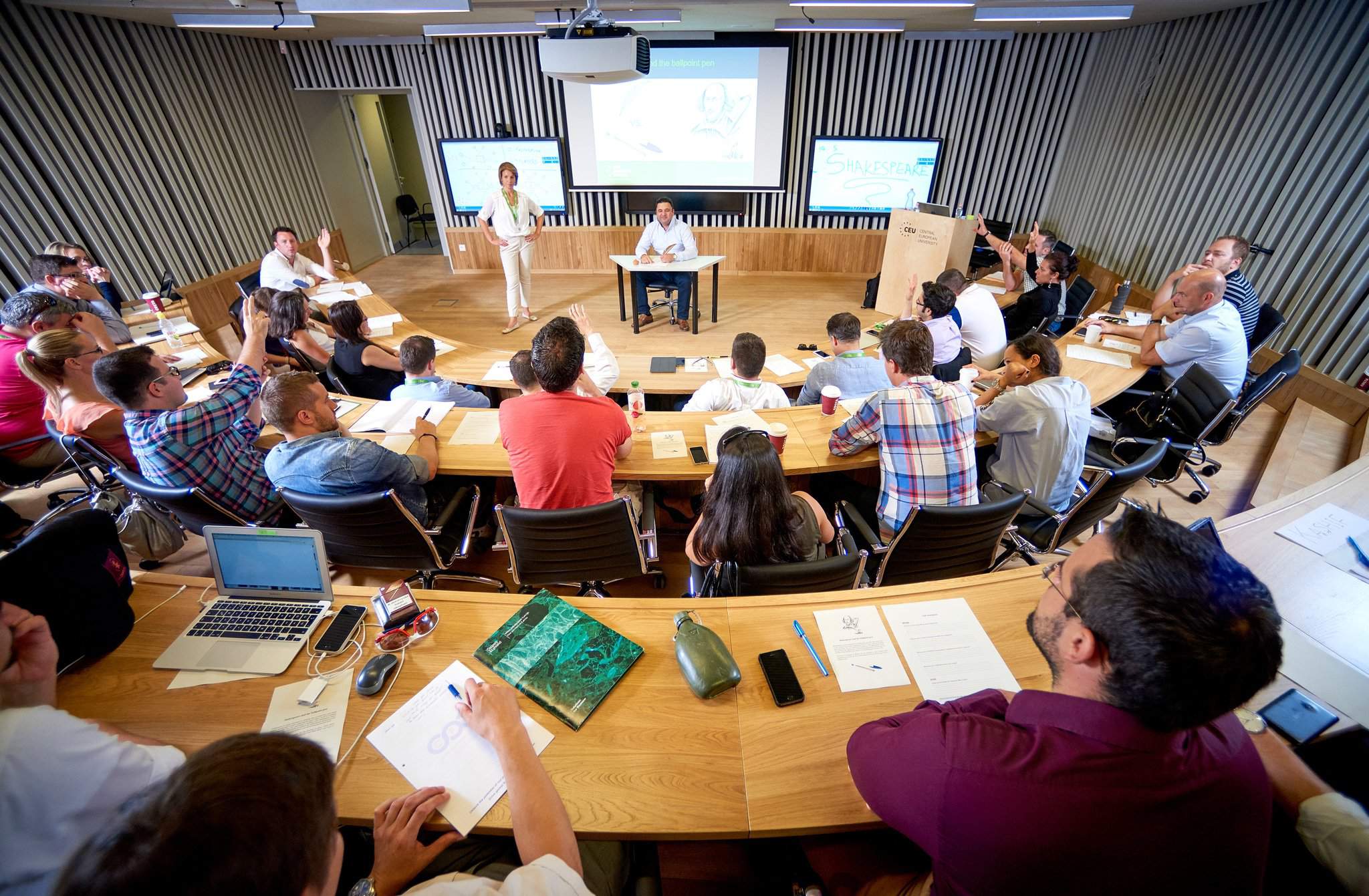
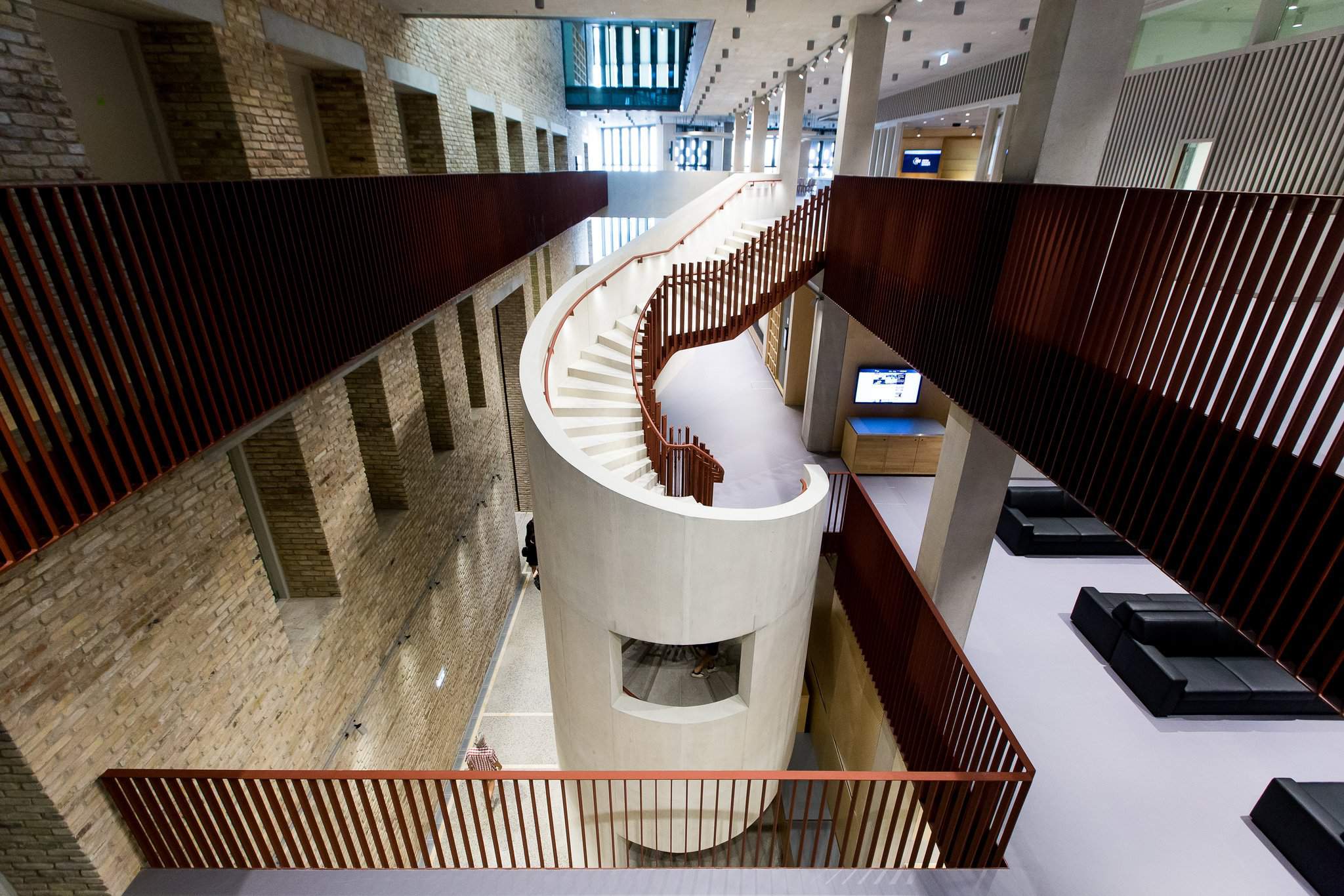
Study In Hungary: Could you give information about the university campus to us? We got information that the new and renovated CEU campus was open to students few weeks ago.
It is pretty extraordinary. Designed by the Irish architecture firm O’Donnell and Tuomey the RIBA Royal Gold Medal winner in 2015, the redevelopment will create a sustainable, and cohesive urban campus that provides sufficient space for study, teaching and research; easy interaction between the university and local community, and it serves as a showcase for best practices in urban renewal in Budapest. It includes a 450-seat library with multimedia collaboration labs, a 400-seat auditorium suitable for lectures and performances, an international conference center, including a suite of six flexible-use spaces; technology-enabled teaching facilities and classroom space; a sky-lit atrium for community events, and a public rooftop café and garden with nearly 2,000 plantings of native species. The cakes in the café are also very nice.


