Subscribe to our social channels to get the latest news about Hungary!


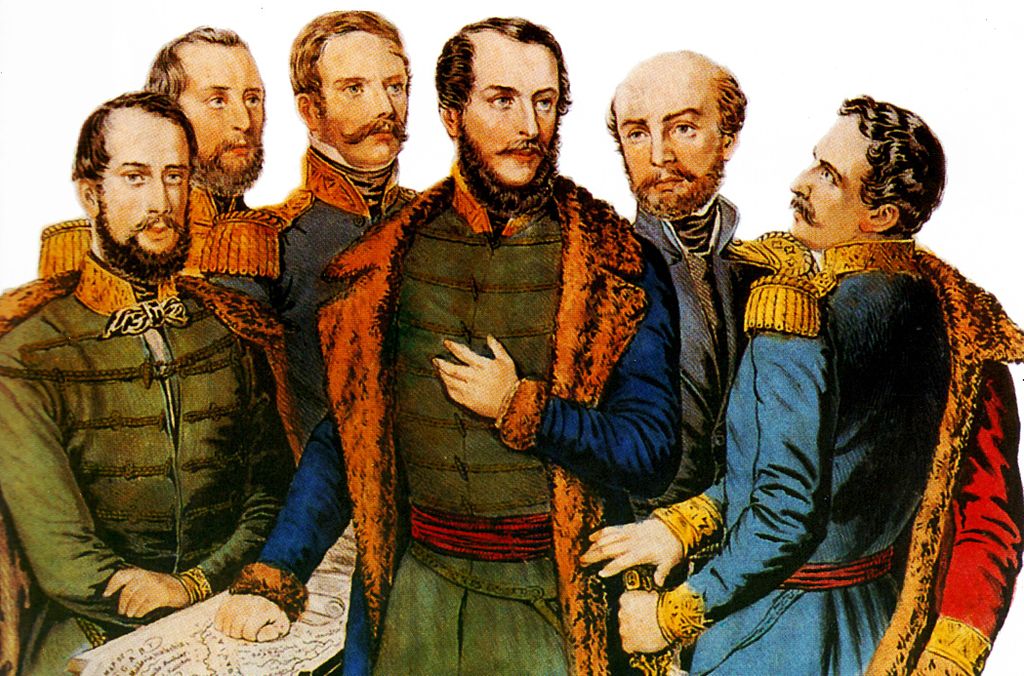
Lajos Kossuth, one of the most influential figures of the Hungarian Revolution and War of Independence of 1848-49, has few surviving depictions. Although his voice has been preserved for posterity, visual documentation is limit.
One of his most valuable and oldest surviving photographs is a daguerreotype that was returned to Hungary from the United States. According to the Hungarian National Bank’s Youtube channel, this unique portrait not only depicts an iconic historical figure but also bears the imprint of an important period in history.
A daguerreotype is one of the earliest forms of photography, developed in the late 1830s. The process uses a silver-plated copper plate to capture the image, resulting in a highly detailed but unique and irreproducible photograph. In the mid-19th century, this technology was considered the most modern photographic technique, and the images produced using it are particularly valuable.
In 1852, while Lajos Kossuth was in the United States, a daguerreotype of him was taken in Boston. The photograph was taken by Albert Sands Southworth and Josiah Johnson Hawes, one of the most renowned photographer pairs of the time. The portrait is of outstanding importance as it is one of the earliest surviving photographs of Kossuth. He is depicted with a serious expression and in black clothing, which adds to the historical and aesthetic value of the image.
In the early 1850s, Lajos Kossuth enjoyed enormous popularity in the United States. When he arrived in New York in December 1851, he was greeted by tens of thousands of people and 31 cannon shots in the harbour. A proponent of liberty, he made a great impression on the American public and was received as a guest of honour in many cities. According to Index,, Kossuth hats and Hungarian clothing became fashionable, and thousands of children were given his name as a middle name. Although he was ultimately unable to secure political support from the US government, his visit contributed to the international visibility of the Hungarian cause.


That’s a fascinating story for the picture.
He was quite a figure over his 91 years, and there’s even a bit more to add about his popularity in the U.S.
In our Capitol Building, where he gave a joint address to our Congress, there is a bust of him, which is quite seldom of an occurrence for a foreign Statesperson.
Also, in my home State of Iowa, there is a county (megye) named after him in the northwest. It’s about twice as big as any other one so it’s easy to find even on a map without labels (Iowa became a State in 1846 but the counties were set up sometimes somewhat later).
It’s a pity that he never made it back to Hungary but his influence was quite profound and inspired many.