Subscribe to our social channels to get the latest news about Hungary!


Hungarian teenage girls are among the heaviest drinkers in Europe, according to a recent article in The Times based on a new report from the Organisation for Economic Co-operation and Development (OECD). The study found that Hungarian girls aged 15 are more likely to get drunk frequently than their peers in almost all other European countries, with only Denmark and the UK showing similar trends.
This revelation places Hungary at the forefront of a concerning European trend where teenage girls are increasingly surpassing boys in alcohol consumption. Over a third of 15-year-old girls in Hungary reported being drunk at least twice, significantly higher than the European average of 23%.
Historically, teenage boys were seen as more likely to drink heavily, but the OECD report highlights a reversal in this trend in 12 European countries, including Hungary. This pattern reflects broader European statistics, where the gap between male and female adolescent heavy drinking rates is narrowing. According to Euronews, heavy episodic drinking among Hungarian adolescents was 44% in boys and 39% in girls, indicating that gender differences in this age group are far less pronounced than among adults.
The findings align with the results of a Hungarian study published in Students in Danger: Binge Drinking Behaviour and Associated Factors in Hungary, which analysed binge drinking behaviours in 2,449 Hungarian students. This study found that 30.5% of Hungarian students were classified as binge drinkers, with notable gender dynamics: among secondary school students, male and female binge drinking rates were nearly identical, but among university students, males significantly outpaced females.
According to a 2019 survey, Hungarian teenagers consumed alcohol for the first time at an average age of 13 years, with girls starting somewhat later than boys, at 13.5 years old.
Moreover, heavy drinking rates among adolescents in Hungary remain alarmingly high. In 2019, the ratio of heavy drinkers among adolescents to adults was over three times higher in Hungary, consistent with findings in Slovakia, Bulgaria and Austria.
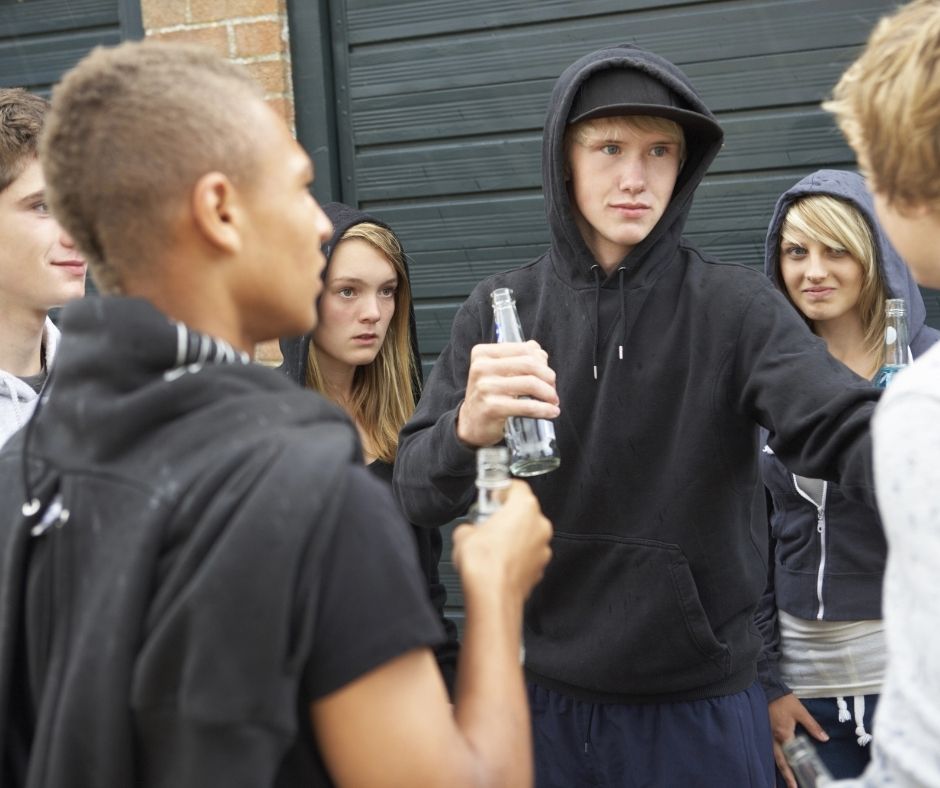
The OECD report underscores the role of parental behavior in shaping teenage drinking habits. This is corroborated by the Hungarian study, which highlighted that the family environment and socioeconomic factors strongly influence alcohol consumption patterns. Parental attitudes toward alcohol, early introduction to drinking, and the normalisation of drinking at family gatherings often lead to higher rates of early alcohol use.
The Hungarian study revealed that students with poorer school performance are significantly more likely to binge drink, a correlation especially strong among secondary school students. Additionally, smoking and drug use were found to be the strongest predictors of binge drinking, indicating a broader culture of risky behaviour among teenagers.



Hungarian “culture!” for you. Definitely room for improvement?