Both the Minister of the Prime Minister’s Office, Gergely Gulyás, and National Economy Minister Márton Nagy, talked about stricter rules concerning Airbnb and accommodation rentals in Budapest. They said there was a housing crisis in the capital, so the government had to intervene to solve it. Therefore, they want to introduce an Airbnb moratorium, stricter rules and higher taxes. Is that the end of the Airbnb sector and a painful blow to the flourishing Hungarian tourism?
Total Airbnb ban in Budapest district
Budapest’s 6th district banned Airbnb-type short-term flat rentals in a referendum in September. We wrote then that experts agreed tourists coming to spend their holiday in an Airbnb-type accommodation in the Hungarian capital will not choose to stay in a hotel instead. They will go to another Central European city like Cracow or Prague, where prices are similar, but Airbnb is not restricted.
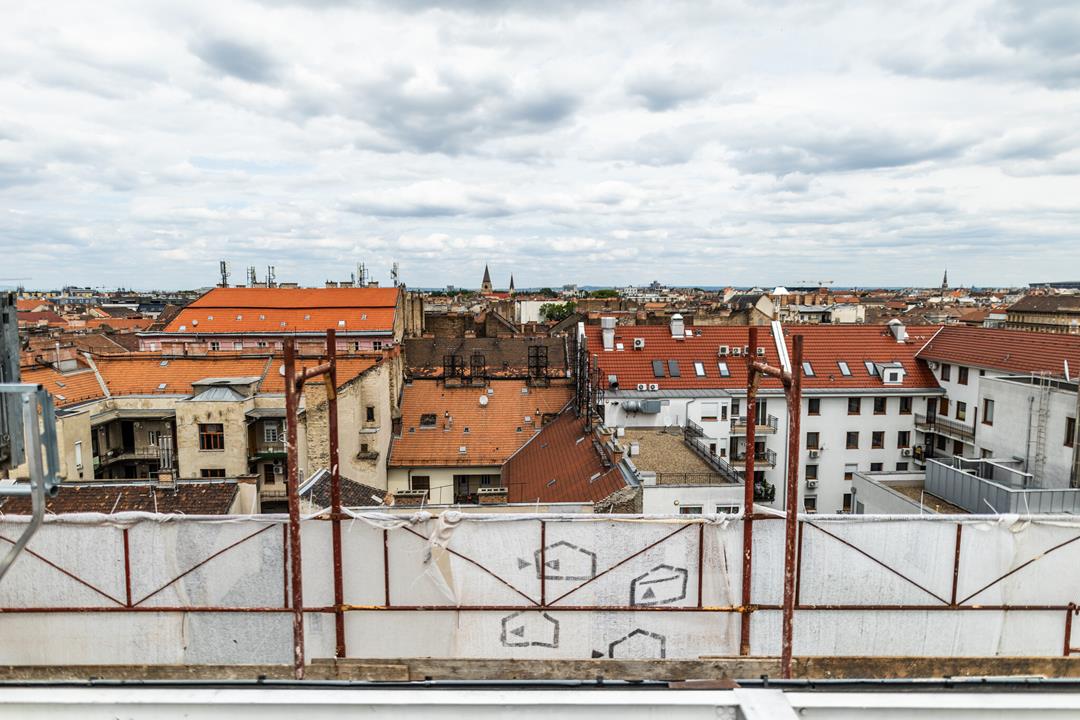
Total Airbnb ban in the 6th district. Photo: FB/Soproni
Housing crisis in Hungary
In response to the referendum’s shocking result (of course, some were probably not shocked since even the district’s mayor said he would vote for the ban), the Hungarian government decided to rewrite the rules concerning the sector. They said there was a housing crisis in Hungary, so Budapest needed immediate intervention.
National Economy Minister Márton Nagy said short-term, Airbnb-type rentals would be regulated only in the capital, adding that the government was in agreement with the industry insiders on applying a moratorium on the issue of new homestay permits while raising taxes on the activity.
Mr Nagy added further details while presenting a 16-point deregulation package concerning tourism. First, he stated that the tourism sector was “performing very well”, generating 12pc of GDP and over 10pc of tax revenue.
Moratorium, higher taxes and stricter rules on Airbnb in Budapest
However, he said young people had to pay over 50% or 60% of their income for rent, so there was a housing crisis. He added that the government had to intervene because local councils had not resolved the issue. In reality, local councils in Hungary neither had the means nor did they obtain the money to solve such problems generated mostly by the Hungarian government’s policies. Instead, they warned the government about the situation, which the Orbán cabinet neglected until now.
Nagy said the government planned to announce a two-year moratorium on licences for short-term rentals in the capital while raising the tax on Airbnb-type activity by a factor of “four or five”.
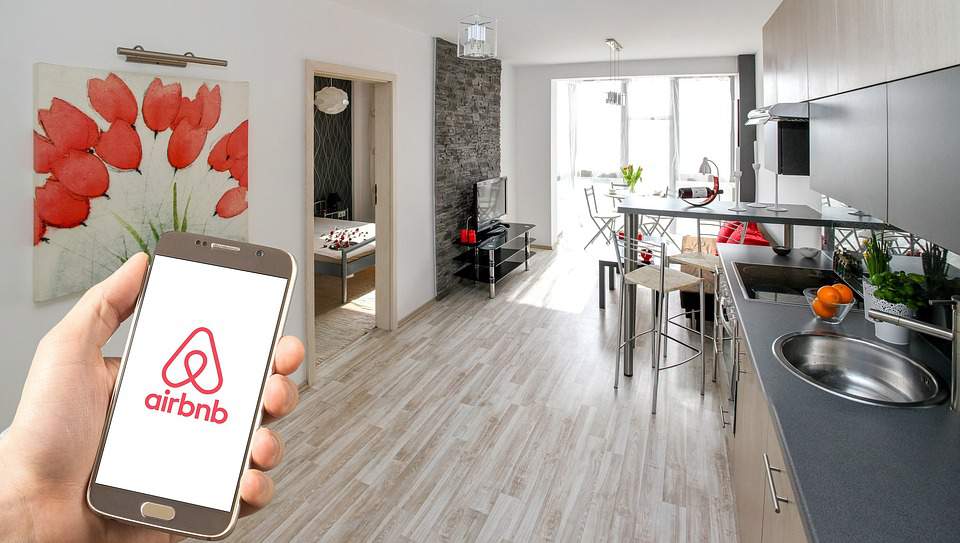
Higher taxes or closed Airbnb. Illustration. Source: Pixabay
Gergely Gulyás, the Minister of the Prime Minister’s Office, said the government would assess the extent to which Airbnb contributed to growing rents in the capital before making their final decision about the sector. And whereas flat rentals and related contracts were also in the government’s sights, there was no desire to follow “communist practices” seen in some Western European countries, and the government fully respected property rights, he added. That may mean they will not modify rules concerning long-term rentals in the capital.
Family association happy for stricter regulations on Airbnb
Young family association Ficsak has welcomed the national economy ministry’s plans to tighten regulations on short-term, Airbnb-type rentals. Ficsaktold MTI on Friday that the ministry’s planned regulations were an important step in making housing more affordable for Hungarian families. They said that in recent years a significant number of homes in Hungary had been put on the short-term rental market, which had driven up rent and reduced the number of properties available for the long term.
Ficsak said the new regulations could lead to investment properties being placed on the long-term rental market, thereby easing the housing crisis. Rising housing costs have made life difficult for young people and large families in recent years, the association said, adding that the new regulations aimed to give families the chance to find affordable, stable housing. They pointed out that several major cities in Europe have introduced restrictions on short-term rentals, and “these examples show that these kinds of measures have a positive effect on the housing market”.
“Ficsak is convinced that tightening regulations on Airbnb and other platforms like it will contribute to easing housing problems in Hungary and give families a chance to find affordable and secure homes,” the statement said.
Opposition Jobbik also wanted new rules
Dániel Z Kárpát, a lawmaker of Jobbik, said they would provide rent subsidies of 50,000-100,000 forints per month until the housing problems in Hungary were resolved. They would also re-regulate Airbnb-type flat rentals and restore earlier home savings schemes to solve the housing crisis.
UPDATE: Fidesz’s Szentkirályi asks economy minister to address housing crisis
Alexandra Szentkirályi, the Budapest group leader of the ruling Fidesz-Christian Democrats, said on Friday that she had asked Economy Minister Marton Nagy to discuss plans for reducing the housing crisis in Budapest. Szentkirályi said on Facebook that despite promises by Budapest Mayor Gergely Karácsony to deal with the problem, nothing had happened in the past five years. A housing crisis has developed in Budapest, she added.
“I have contacted Economy Minister Marton Nagy in a letter. I am initiating coordination talks on preparing an action plan for housing in the capital in order to address the accommodation difficulties affecting Budapest residents,” she said. Szentkirályi said that she had proposed giving special focus to home purchase options for young people, expanding student accommodation capacity, short-term home rental, Airbnb, the situation of rental homes in the capital, and rents.
Read also:
How would an Airbnb ban affect Budapest’s rental market? – read more HERE
Ufff. So much content here but it’s all theory and assertions, a lot of it contradictory. For instance, how is there a housing crisis if there is also a demographic crisis? Why does everyone want to live in Budapest and isn’t the solution, at least in part, to discourage it and steer people toward smaller towns and the country?
Let’s see some actual data pertaining to all these claims, and then we’ll be able to make up our minds.




Ufff. So much content here but it’s all theory and assertions, a lot of it contradictory. For instance, how is there a housing crisis if there is also a demographic crisis? Why does everyone want to live in Budapest and isn’t the solution, at least in part, to discourage it and steer people toward smaller towns and the country?
Let’s see some actual data pertaining to all these claims, and then we’ll be able to make up our minds.