Hungary’s road development project: Massive upgrades announced
Photo: MTI
Change language:
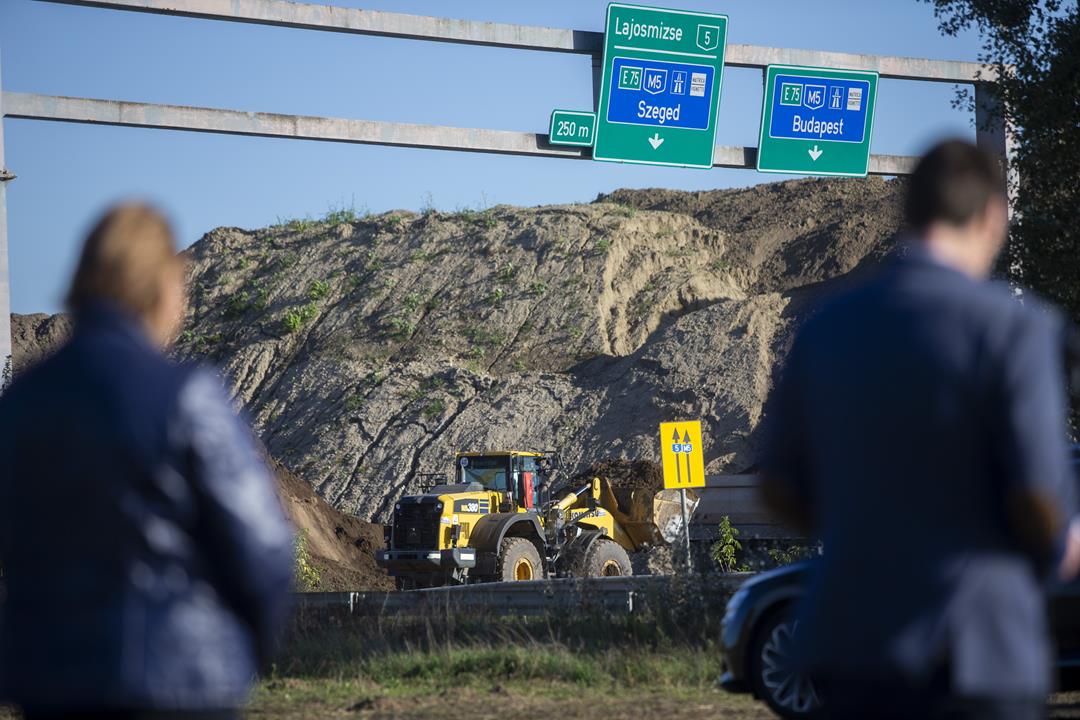
The Hungarian government unexpectedly announced massive road development plans on Wednesday evening. These include projects to connect cities in the Carpathian Basin, but there is a strong emphasis on upgrading secondary roads as well.
Major road development project
As reported by Világgazdaság, an important issue of the Magyar Közlöny („Hungarian Gazette”) was published, outlining government decisions through 74 pages, including the approval of the concepts of public construction investments until 2035.
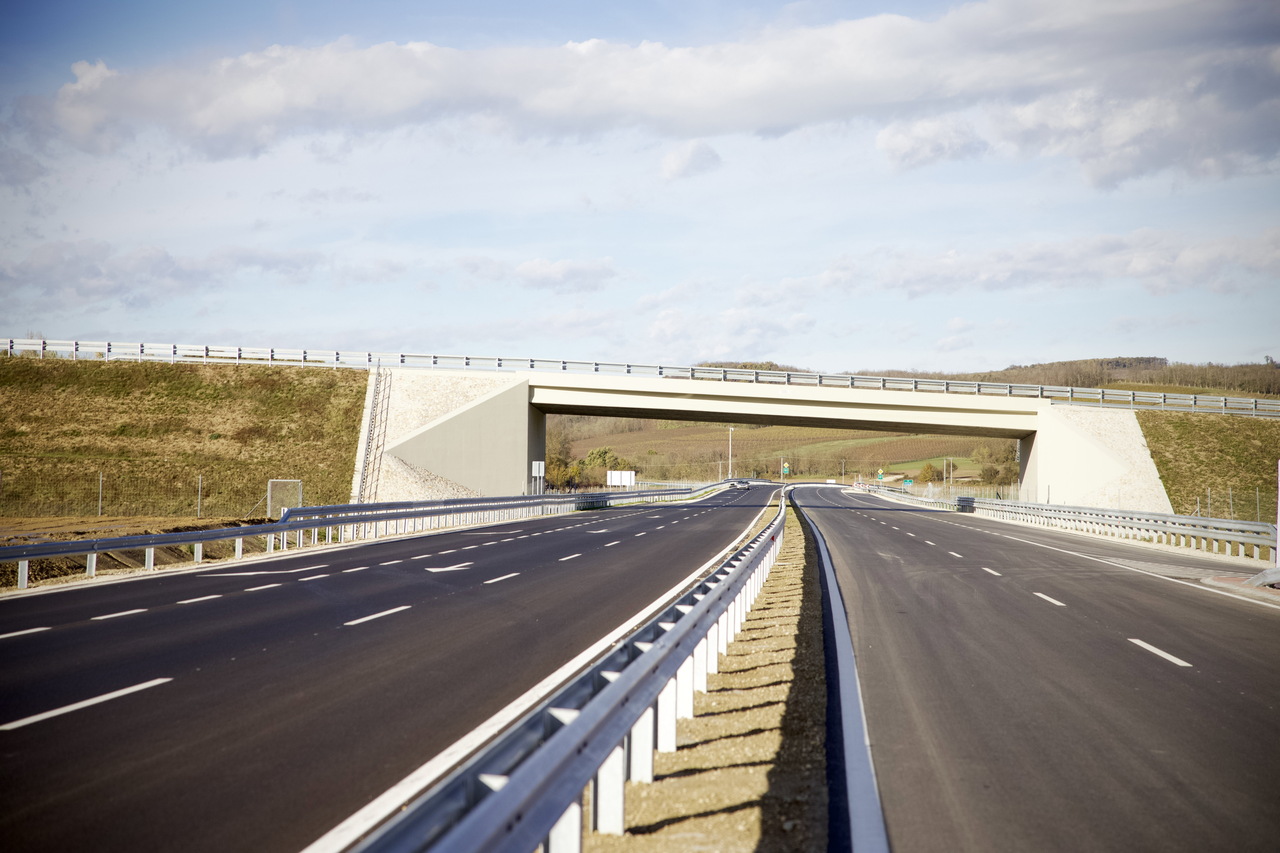
The bulk of the document focuses on railway improvements, such as the planned purchase of new trains. However, it also includes important road development initiatives, encompassing expressway upgrades and the expansion of 4-lane, two-way public roads.
Photo: MTI
The appendix to the government decision lists the following investment packages, according to Világgazdaság.
Improvements to connect the cities of the Carpathian Basin – a total of 16 projects (four of which are concessionary) will cover nearly 610 km of controlled-access highways and 4-lane, two-way roads. Of these, about 360 km will be newly constructed, with the public-sector elements estimated to cost around HUF 2.9 trillion (roughly EUR 7.2 billion). Additionally, 160 km of secondary and local roads, worth HUF 550 billion (EUR 1.37 billion), will be developed to strengthen economic and social cohesion in border regions.
Investments to promote the development of the network in the west-east direction within the national borders – 12 projects (three of which are concessionary) will cover approximately 850 km of controlled-access highways and 4-lane, two-way roads, with around 540 km of new infrastructure planned. The state-funded elements are expected to cost roughly HUF 3.8 trillion (EUR 9.47 billion).
Road developments planned for Nagyvárosok Magyarországa („Hungary of the Cities”) – 25 associated projects (four of which are concessionary) will include nearly 280 km of controlled-access highways and 4-lane, two-way roads. Around 100 km will be new infrastructure, with the state-funded components estimated to cost approximately HUF 2.3 trillion (EUR 5.73 billion).
To ensure access to the highway and primary main road network within 30 minutes for all residents by 2035, the network of secondary main roads and side roads is planned to be extended and its service quality improved. The improvements would cover 1,750 km of the network, and they would also include 30 interchanges, 14 bridges, 39 bypasses, and 8 engineering stations, for a gross value of HUF 5.7 trillion (EUR 14.2 billion). Also by 2035, 140 km of road network elements are planned to be upgraded to improve road access to industrial and technological centres, for a gross value of roughly HUF 440 billion (EUR 1 billion).
Source: MTI
Government decision on road renovations
Another significant aspect of the aforementioned concepts is renovation. Since the deterioration of main roads is faster than that of side roads due to the high traffic load, a twenty-year lifetime can generally be achieved assuming standard maintenance procedures. Based on a twenty-year renovation cycle, an average of 5%, 350 km of the 7,018-km network needs to be renewed every year. To bring the roads up to modern standards, 3,726 km will need to be upgraded over the next decade, averaging 375 km per year—far exceeding the standard renovation target.
Photo: FB/Magyar Közút
Side roads are typically subject to lower traffic loads, so with proper maintenance, the pavement can be kept in an acceptable condition for approximately 30 years. This means that, under a 30-year renovation cycle, 3.3% of the 23,116 km network, or around 770 km, needs to be renewed annually. However, to bring these roads up to current standards, 11,193 km of the network will need to be upgraded over 10 years, requiring an average of 1,120 km per year—considerably higher than the standard target of 770 km annually.
Municipal roads present a separate issue. Investments into the local road developments managed by municipalities would be supported in the form of tenders that local authorities would be able to apply to, up to a determined limit. These calls for proposals would be launched and managed by the Minister of Public Administration and Regional Development (Tibor Navracsics), as the government member responsible for local governments.
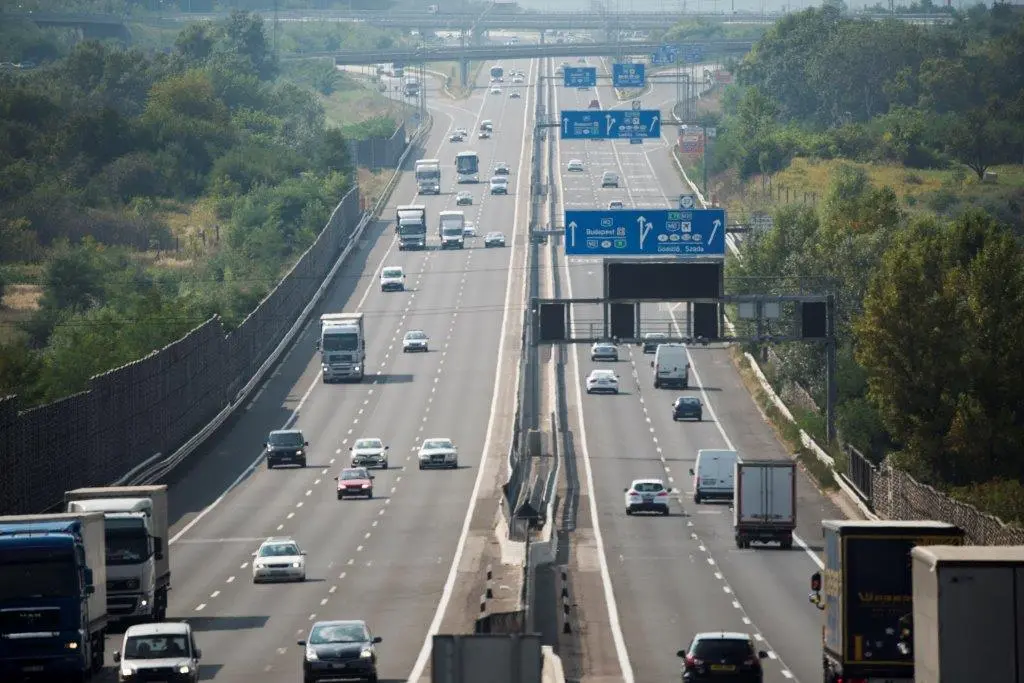
The sums involved are dizzying, my first question is where is this money going to come from when the budget deficit is so large? Also, is it wise to spend so much money on roads when other areas of public life are in such dire need of funds? It’s not as if Hungary is the land of traffic jams, other than a few overburned roads, such as the M1 and M5 motorways. The widespread adoption of the County and Country passes is encouraging Hungarians en masse onto public transport which is laudable, yet all the investment appears to be taking place in roads. Encouraging a veritable army of people to abandon their cars without providing public transport with the necessary funding is going to build up enormous pressure points.
The explanation of the road building program is incomplete without a map, as it is not possible to visualize by the reader all the intended road building program.
The editor of the article needs educating.
Dear Nick, we understand your frustration, however, the reason why we didn’t include a map is simply the absence of any available one. As you’ve read in the article, it’s a fairly recent announcement. Once there will be one available, we’ll make sure to update the content.




The sums involved are dizzying, my first question is where is this money going to come from when the budget deficit is so large? Also, is it wise to spend so much money on roads when other areas of public life are in such dire need of funds? It’s not as if Hungary is the land of traffic jams, other than a few overburned roads, such as the M1 and M5 motorways. The widespread adoption of the County and Country passes is encouraging Hungarians en masse onto public transport which is laudable, yet all the investment appears to be taking place in roads. Encouraging a veritable army of people to abandon their cars without providing public transport with the necessary funding is going to build up enormous pressure points.
The explanation of the road building program is incomplete without a map, as it is not possible to visualize by the reader all the intended road building program.
The editor of the article needs educating.
Dear Nick, we understand your frustration, however, the reason why we didn’t include a map is simply the absence of any available one. As you’ve read in the article, it’s a fairly recent announcement. Once there will be one available, we’ll make sure to update the content.
To: “Eleonora Jobst”
Thanks for your response.