Next year, significant railway track renovations are set to begin across Hungary, aiming to reduce delays and improve service reliability for the Hungarian State Railways (MÁV). According to MÁV Group CEO Zsolt Hegyi, the summer season on the Balaton line saw considerable disruptions, prompting the company to revamp schedules for the 2025 peak season to mitigate similar issues.
Punctuality is a major challenge for MÁV
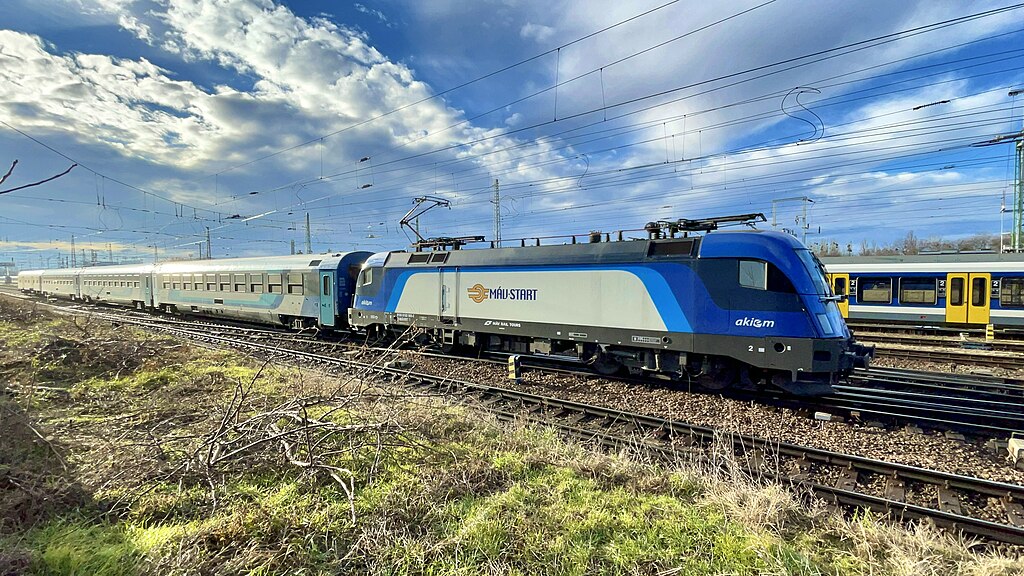
An Eurostart arriving at Keleti Station. Photo: Wikimedia Commons
The punctuality of trains has been one of the major challenges for MÁV. Despite some improvements, recent data from September shows that only 75% of trains arrived on time, far short of the 90% target. This has led to frustration among passengers, with many associating MÁV with delays. As Hegyi noted in InfoRádió, such delays tarnish the company’s reputation, as they suggest the service provider is failing to meet expectations. To combat this, MÁV has begun analysing data to pinpoint where interventions are most needed to improve adherence to schedules.
In addition to schedule adjustments, track and infrastructure upgrades are essential. Hungary’s railway network spans approximately 7,000 kilometres, with nearly all routes requiring ongoing modernisation. Over the past 15 years, several suburban lines around Budapest have been upgraded, primarily funded by the European Union, with significant refurbishments on some long-distance routes as well.
Major, EUR 2 billion modernisation project
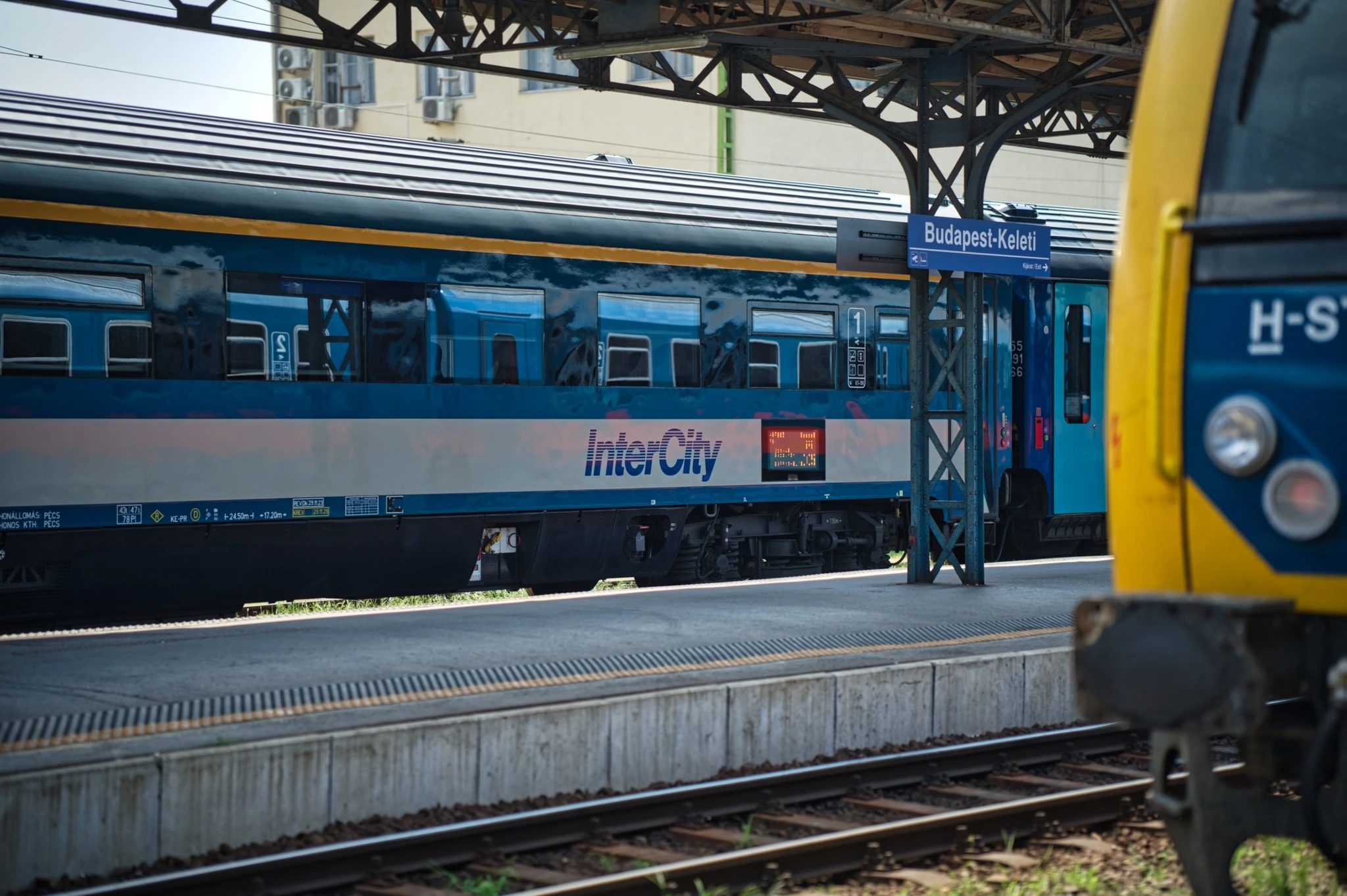
Photo: FB/MÁV
Looking ahead, a EUR 2 billion railway development program will unfold over the next five years. This ambitious project will be funded equally by a EUR 1 billion loan from the European Investment Bank (EIB) and another EUR 1 billion from the national budget. Alongside major renovations, several lines will undergo maintenance work to ensure the continued safety and efficiency of services. Hegyi emphasised that while not every line needs to be rebuilt from scratch, regular maintenance is crucial to keep the system functioning smoothly.
The company is still negotiating the loan with the EIB, but if all goes as planned, the first projects will begin in the summer of 2025. Initial renovations will target 15 key lines, with notable projects including upgrades to the Cegléd–Szeged railway between Kiskunfélegyháza and Szeged, the Székesfehérvár–Boba line that cuts through the Bakony mountains, improvements at the Szolnok station to speed up train throughput, and the reconstruction of the Gubacsi Bridge to facilitate freight transport.
Balaton routes especially affected
Source: mavcsoport.hu
Hegyi highlighted that delays were particularly troublesome during the summer months, especially along the Balaton routes, which suffered from an influx of passengers. In fact, the demand for train travel to Lake Balaton reached unprecedented levels this year, largely due to the introduction of nationwide and regional travel passes, as well as a fare reform. Over 2.5 million people travelled to the popular holiday destination by train this summer alone. However, these routes, many of which are single-track, are especially vulnerable to cascading delays when issues arise.
Reflecting on the summer’s challenges, Hegyi acknowledged that timetable adjustments would be necessary. Many trains were unable to depart on time because of the extended boarding and alighting times caused by the large number of passengers. These operational challenges will be carefully considered in planning next year’s schedule to better accommodate the high volume of travellers during peak periods.
MÁV’s goal remains to enhance service reliability and restore passenger confidence, ensuring that future summers, especially on heavily trafficked lines like those to Balaton, run more smoothly with fewer delays. The upcoming development and maintenance projects are expected to play a critical role in achieving these improvements.
2 billion sounds like a whole hill of beans but really, it’s a sticking plaster on a gaping wound. MAV is 30 years behind the European average and will take another 30 years of diligent work to catch up, although my faith in 3 continuous decades of good management and funding materialising are close to zero. The best they can hope for is to keep the railways a ‘mere’ 3 decades behind those of western Europe where investment in rail has never been a higher priority since the end of WW2.




2 billion sounds like a whole hill of beans but really, it’s a sticking plaster on a gaping wound. MAV is 30 years behind the European average and will take another 30 years of diligent work to catch up, although my faith in 3 continuous decades of good management and funding materialising are close to zero. The best they can hope for is to keep the railways a ‘mere’ 3 decades behind those of western Europe where investment in rail has never been a higher priority since the end of WW2.