Péter Szlezák, founding managing director of System32 IT Ltd.
Change language:
The latest market research conducted by System32 Ltd. examines the “AI readiness” of SMEs. The online, supplementary, non-representative survey was prepared by the company in April 2024 in collaboration with BellResearch.
Responses were collected from nearly 100 small and medium-sized enterprises. 46% of the respondents represent the service sector and 24% the commercial sector. The majority of them are organizations with a long history, 44% of them have been operating for at least 20 years, and another 27% have been operating for at least 10 years. The respondents typically have a higher education, and the majority considers itself to be adequately prepared in matters related to IT and digitalization.
The research covers cases of successful business uses and also assesses the greatest risks. The key findings from the results contribute to the charting and further development of the domestic market of AI.
Andrea Polereczki, managing director of Securityssimo. Photo: System 32 IT Ltd.
One can hardly talk about an established corporate AI culture
AI is transforming our daily lives and has brought about a paradigm shift in business and academic life as well. It is not only a technological revolution, but also one of the tools of data-driven company management in business life. The survey by System 32 IT Ltd. revealed that most of the responding companies do not have an AI strategy, despite this, several are starting developments using artificial intelligence solutions.
The answers also pointed out that developments typically lack the appropriate strategic and technical background, the training of future users is mostly not resolved, and the knowledge and resources essential for the introduction of AI are not available.
Based on the feedback from the decision-makers of the companies using AI, 10% currently have a dedicated AI employee or manager, despite the fact that 2/3 of the respondents believe that AI simplifies and expedites work processes.
Except for 1-2 of the sampled organizations using AI, none of them have an allocated budget for AI, internal regulations or ethical guidelines.
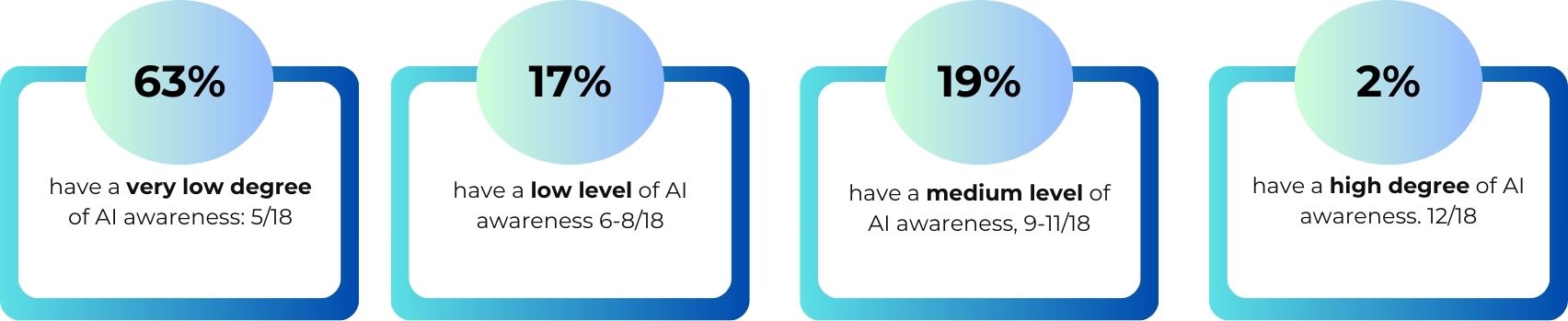
According to Péter Szlezák, the founding managing director of System 32 IT Ltd., this is extremely risky, since a well-thought-out, pre-planned AI strategy is crucial in the process of digital transformation. Business risk can be mitigated this way, and one can proceed more intentionally with realizing one’s business goals, utilizing the opportunities offered by artificial intelligence. This claim is supported by the AI readiness index established for the research, according to which 63% of the companies included in the sample exhibit an extremely low degree of AI awareness, while 17% have a low, 19% have a medium and only 2% have a high level AI awareness.
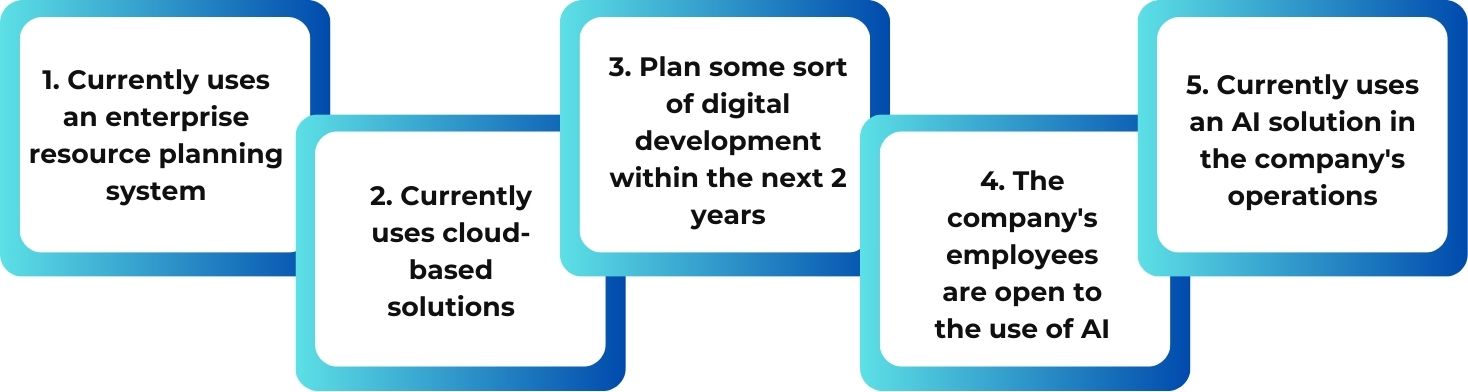
System 32 – AI readiness indexFactors examined when assessing the AI Readiness index.
A demand for education and support
31% of decision-makers participating in the research actively use opportunities presented by AI, while 19% of them plan to introduce AI-based solutions into the company’s operations within the next 2 years. 12% of company managers are uncertain about the areas and tasks in which artificial intelligence can be used in their company. Only 44% have an idea of how to use AI effectively to achieve their business goals. Almost half of the decision-makers considering the introduction of AI find it necessary to involve an external partner in order to do so. There is a significant need for education and external expert support. Currently, 38% of the surveyed organizations have the opportunity to participate in some form of AI-related training and education.
TOP 4 list of AI applications
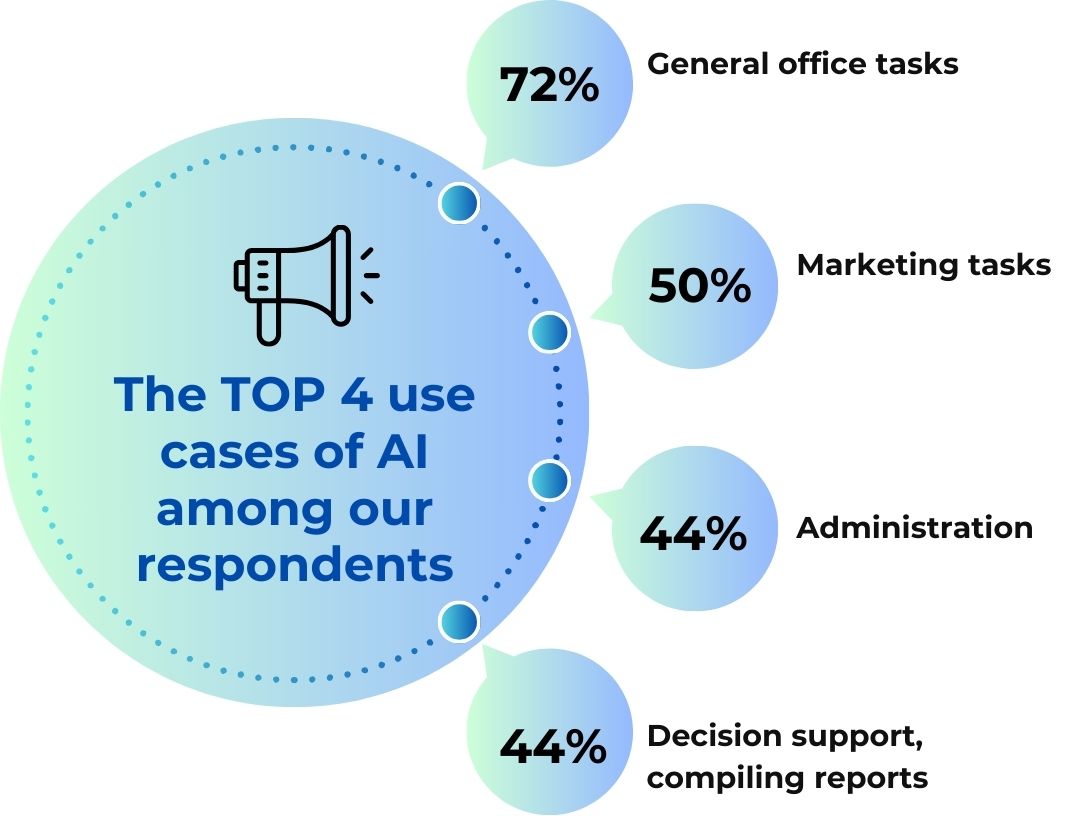
83% of AI users have a positive experience with the use of artificial intelligence. 72% of artificial intelligence users use AI to perform general office tasks. 50% of AI applications are used to support marketing activities, and with a similar proportion they are used for administration, decision support and compiling reports (44%).
Top 4 use cases of AI.
The application of AI: a noticeable generational difference in leadership?
In the research, the decision makers of the responding companies mostly represent the generation X (born between 1965 and 1980) and the Baby Boomer generation (born between 1946 and 1964).
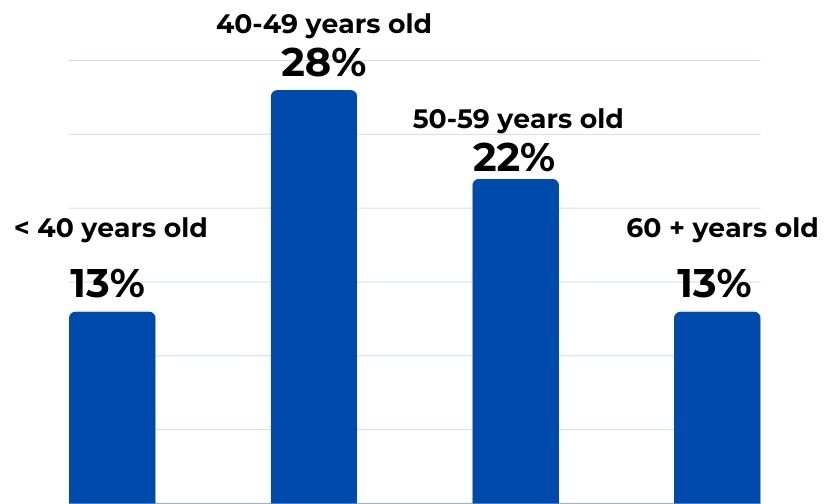
Men and women are almost equally represented among the respondents. 13% are under 40 years old, 28% are between 40-49 years old, 22% are between 50-59 years old, and 13% are 60 years of age or older. Would we have gotten different results if we had asked the young leaders representing Generation Y and Z?
Distribution of respondents by age group.
According to generational researcher Krisztián Steigervald: “We would have obtained significantly different results from the research if the respondents had been dominated by generations Y and Z. The (true) understanding of artificial intelligence can be a serious challenge for elder people from a neurological standpoint, claims László Mérő, among others. It is a practical experience that today’s high school/university students use AI on a rudimentary level, even for the simplest tasks.
The use does not even raise a question, because it is almost a daily routine. Think of taking pictures, making presentations, translation, collecting materials, secondary research, writing studies, not necessarily just writing thesises. This routine-like, bolder use is still missing (may still be missing) among elder people, where the speed of learning and the courage to apply the knowledge is (may be) different, increasing the digital gap between generations.”
AI increases the competitiveness of companies
64% of decision-making respondents agree that AI increases the company’s competitiveness. At the same time, only 46% believe that the company’s employees would be open to the use of AI within the company. According to Péter Szlezák: “My experience is that the vast majority of employees already use some kind of AI-based tool, without ever having received any training on the risks and proper use of it. Leading by example is essential now, as in all major revolutionary and technical changes.”
Péter Szlezák, founding managing director of System32 IT Ltd.
Do robots birth the FOMO Sapiens?
The existential threat posed by super-intelligent systems has cultivated the fear of technological dependence and job loss. Another important effect is FOMO, i.e. “fear of missing out”, the feeling that anyone who does not use AI will be left behind. “It’s not artificial intelligence that will take the jobs, it’s the people who are able to use it.” – explained László Mérő in his lecture series on artificial intelligence.
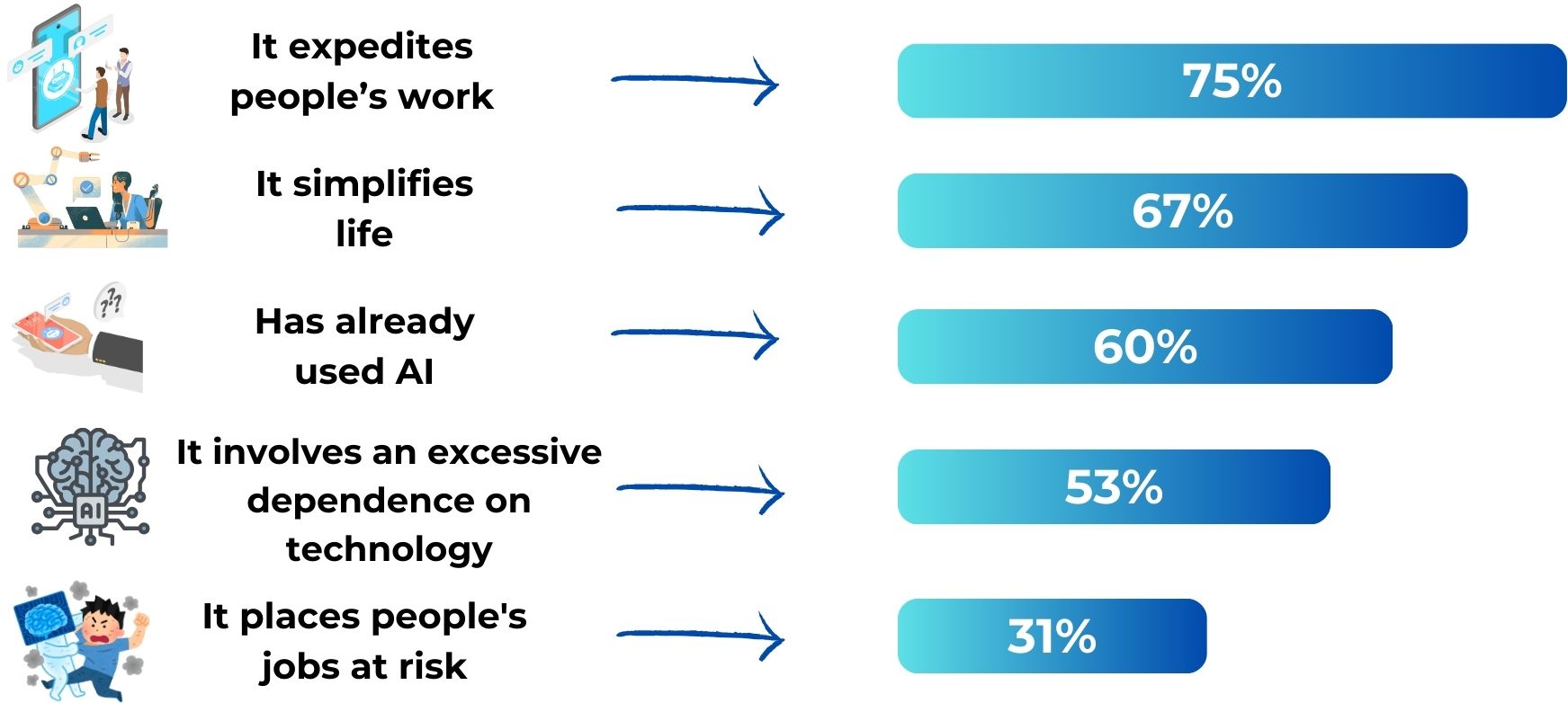
Concerns about digital and technological lag is apparent from this research as well. Among respondents who consider AI to be risky, 68% are concerned about whether the AI’s responses to each prompt come from a credible source. 67% of respondents agreed that AI simplifies life, 75% believed it made it faster, and 31% thought it threatened people’s work. Most of the respondents have already used some kind of AI solution in their work, 78% of them believe that those who do not deal with AI will be left behind. 31% of enterprises have “officially” introduced artificial intelligence into their company operations.
According to Péter Szlezák, the founding managing director of System 32 IT Ltd., education is an important tool for dispersing risks and fears, and for company managers to understand exactly how the currently available AI tools can strengthen the profitability of their own business. IT security is a key issue that we must not lose sight of. But our fears should not prevent us from progressing, because those who miss out will be left behind.
Plans for the use of AI
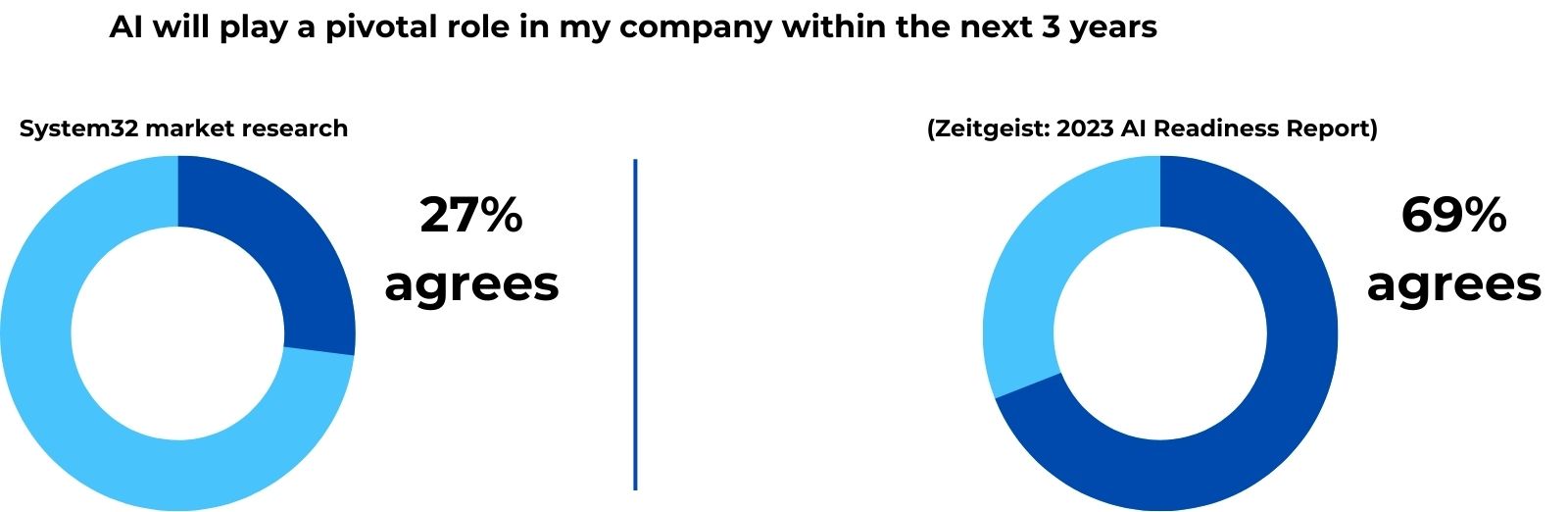
In a 2023 American research, 69% of managers and specialists handling AI claimed that AI will play a key role in the life of their company in the next 3 years. (Zeitgeist: 2023 AI Readiness Report). In this year’s System 32 research, only 27% of managers answered with yes to the same question.
AI will play a pivotal role in my company within the next 3 years
Could the AI strategy be the key to growth?
One of the biggest benefits of AI in organizational operations and company management is that it supports the processing and interpretation of the amount of data that engulfs us thanks from the explosion of information. In addition, it is an important tool of prediction in business planning. Although the majority of the companies examined in the research agree with the findings regarding the usefulness of AI, only a few have integrated it into the operation of their organization along the lines of a developed strategy after proper education.
“System 32’s latest program helps companies assess which stage they are in their preparation and how ready they are for the digital transition. Based on the results, the team of System 32 prepares a customized strategy, recommends tools that meet the company’s needs, and provides adequate training for management and employees.” – said Péter Szlezák.
As long as business plans are still developed on checkered paper and our fears override progressive thinking, we inhibit our own development, and the enormous potential inherent in AI remains untapped.
“With technology, we can obtain anything we want. However, the limitlessness of possibilities is only an illusion, as our physical abilities limit us.” – says Andrew Przybylski, a British psychologist.
To summarize the conclusions of System 32’s market research in a nutshell, there is still a lot to be done in the Hungarian economy in terms of education about the benefits and importance of AI among small and medium-sized enterprises and its introduction and use in everyday business.