Subscribe to our social channels to get the latest news about Hungary!


The days of the Ice Saints have passed, and folklore has it that we can now expect warm weather in the remaining days of spring and in the coming summer. The days of Saint Pancras, Servatius, and Boniface, and extending the tradition, Urban, mark the last frosty period of spring. After 25 May, which is Urban’s Day, according to tradition, flowers can be planted outside. Here are some traditions related to the Ice Saints in Hungary.
The Ice Saints differ from country to country, but some versions of the traditions related to the saints are known across most of Europe, for example, in Germany, Austria, Italy, Czechia, Slovenia, Poland, and Hungary.
In Hungary, 12 May is the feast day of Saint Pancras, 13 May of Saint Servatius, and the 14 May of Saint Boniface of Tarsus. These are also the name days for the Hungarianised versions of these first names: Pongrác, Szervác, and Bonifác.
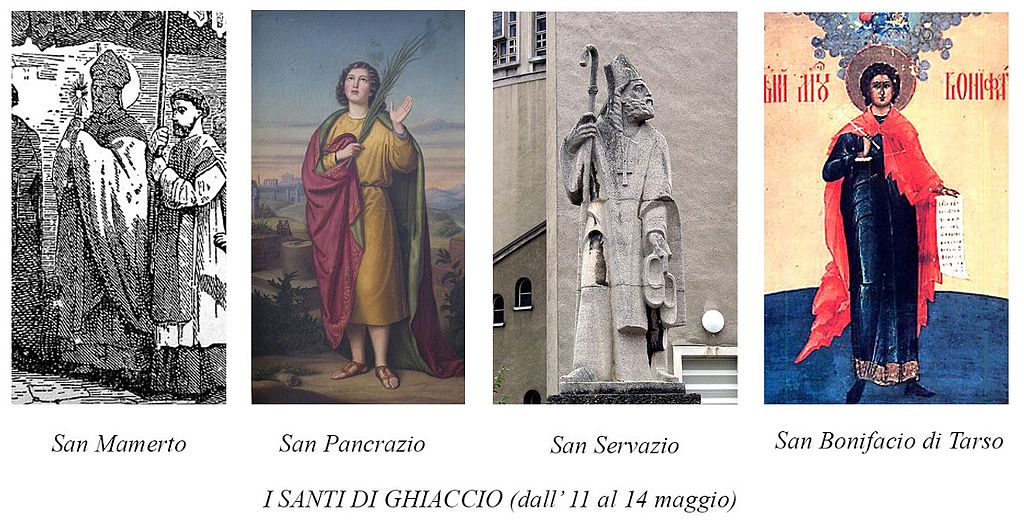
These three days in mid-May are important for agriculture, and traditionally, folks associated important superstitions with the weather at this time. People observed, for example, that the weather often took a turn for the worse in these days, and frosts were to be expected in many cases (this is the so-called blackthorn winter). This meant that people had to be careful with their timing of planting seedlings: a late spring freeze could destroy crops completely.
Chilipaprikablog.hu recalls how “paprika growers in Bogyiszló, Hungary, used to say when late frost hit and killed the plants: ‘The big buyer has bought up all the crop.’”
According to word of mouth in Topolya (a small town in today’s Serbia), “Pancras froze to death in a heatwave wearing a sheepskin coat, Servatius drowned in the middle of the Tisza River that had no water, and Boniface was bitten to death by mosquitoes – so they are angry with us humans and come back year after year to torment us”.
As the Arcanum Database collects, in other regions of Hungary, people believed that if the weather was bad on the Ice Saints’ days, a poor harvest was to come. On the other hand, if there were no clouds in the sky, the year would bring a good wine harvest. In order to keep the Ice Saints away from crops, people would burn fires and use the heat to protect their plants.
When the three Ice Saints had gone, there was still one more risky day in May: the 25th was the day of Saint Urban when the last freeze of the beginning of the year usually showed its teeth. The sudden cold that sets in at this time can be particularly damaging to flowering vines. The grapes are thus placed under the protection of Urban to protect the fruit from frosts on his name day.