Subscribe to our social channels to get the latest news about Hungary!


Scientific relations between Hungary and China are tied stronger as the Chinese Academy of Sciences elects Gábor Stépán, BME’s professor as foreign member.
Gábor Stépán, professor of the Department of Applied Mechanics at BME’s Faculty of Mechanical Engineering was elected as foreign member of the Chinese Academy of Sciences this year. He joins the nearly 150-strong group together with Konstantin Novoselov, Nobel Prize winner, awardee of BME’s John von Neumann Professor title. BME.hu asked Gábor Stépán about the road to his academy membership.
What was the road like to your election as foreign member of the Chinese Academy of Sciences?
It was a long journey and not only because how far China is from here. I started correspondence with a professor from Wuhan as early as the 1980s who wrote publications about the nonlinear vibrations of machine tools during his postdoctoral studies in England. That was when I heard the news about China’s open-door economic policy and the intensive development taking place in universities. Chinese scientists started to visit Western Europe and the USA, I met several researchers at science conferences and I received more and more invitations to Chinese conferences in dynamics. However, my first visit to China was only in 2002 because I was somewhat concerned about travelling within such an enormous country. I first went to Nanjing (Nanking according to the Southern accent), the old Southern capital where an internationally well-known research team at the university was working on the stability, vibrations of time-delay mechanical systems. I attended conferences there again in 2006 and 2012. The progress I could see that both the university made in professional terms and the city itself made was simply shocking. The most prestigious event of our profession, the International Congress in Theoretical and Applied Mechanics took place in Beijing (the Northern capital) in 2012; the appointment as host reflected the development of China’s research in mechanics and its recognition.
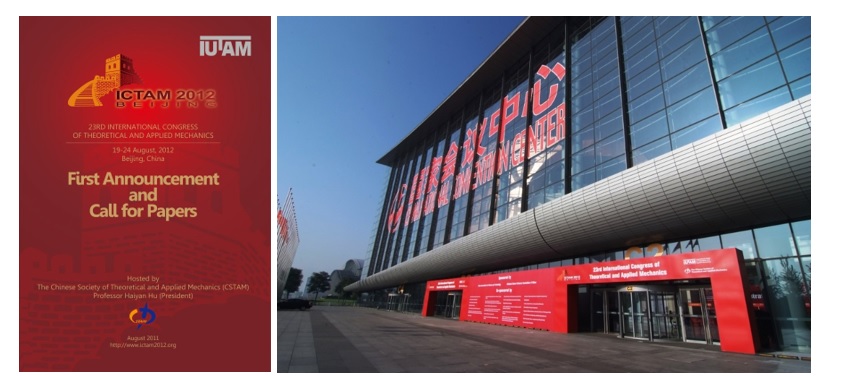
The 23rd International Congress in Theoretical and Applied Mechanics in Beijing in 2012
What collaborations have you had in these nearly 40 years?
In 2012, the first call for applications under the Chinese and Hungarian science and technology cooperation scheme was announced where we won with the research team from Nanjing and BME’s Department of Applied Mechanics. From this time, we had yearly meetings with several Chinese researchers spending 1 to 3 months at our department and several of our teachers, researchers and PhD students taking study tours lasting 2 to 4 weeks at the Mechanics Institute of the Nanjing University of Aeronautics and Astronautics.
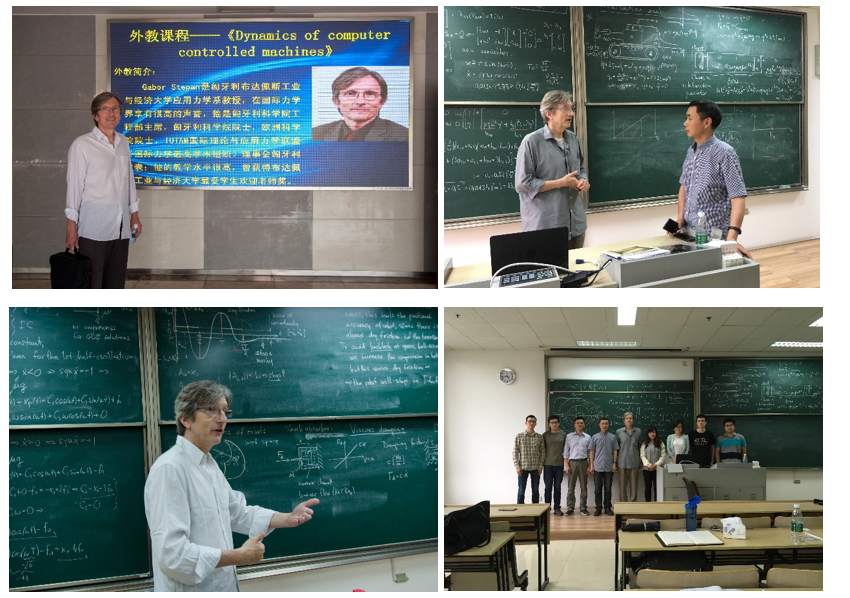
Lectures, courses at the Nanjing University of Aeronautics and Astronautics
There were numerous shared achievements and joint publications that later strongly benefited the dissertations of both the Hungarian and Chinese PhD students. We co-organised international symposia, I won a number of Chinese projects intended for foreign applicants and we built professional relations with Chinese companies. Every two years, I led intensive summer courses for MSc and PhD students at Nanjing University, which were attended both by students and teachers from Beijing in 2018.
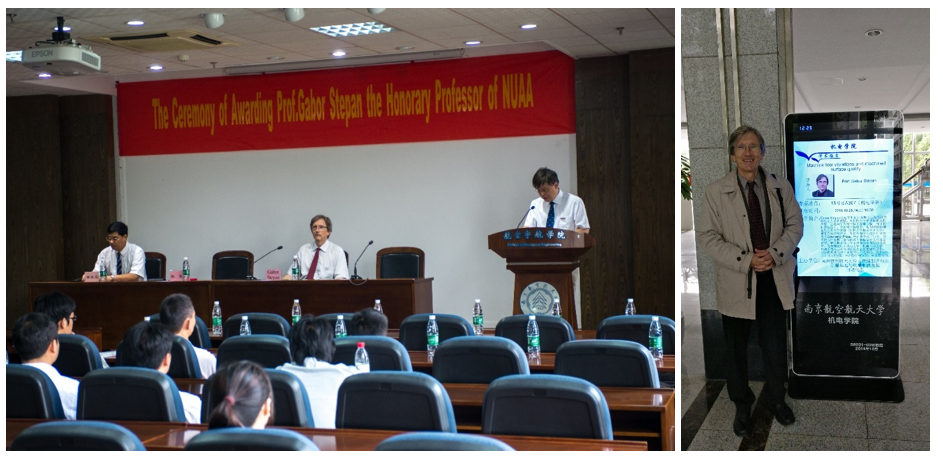
Ceremony of honorary professors in Nanjing
I received an honorary professor title from the university and I spoke at plenary sessions at international conferences in dynamics and production technology. With a team of PhD students from our department, we entered their international invention competition where we won the third prize. In the meantime, the visits of our Chinese colleagues to Hungary offered the opportunity for them to attend European conferences, to be involved in the European research community.
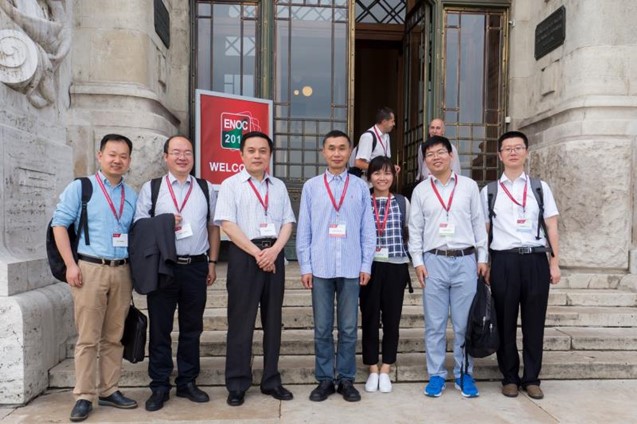
Chinese delegation at the European Nonlinear Dynamics Conference hosted by BME
The list of results achieved with tiny and persistent efforts just goes on including more and more projects with other Chinese universities from Hefei, Xian and Shanghai and many other cities where students spending longer periods of time in Hungary and obtaining their PhD degrees in China built their careers. There was a French PhD student who could not return to Nanjing because of the Covid pandemic but, in view of our good cooperation, the Chinese research centre agreed to pay his scholarship to us and so he pursued his research at us for one and a half years, which again resulted in joint publications. He is about to defend his dissertation in Nanjing.
What other connection points have you identified over these decades?
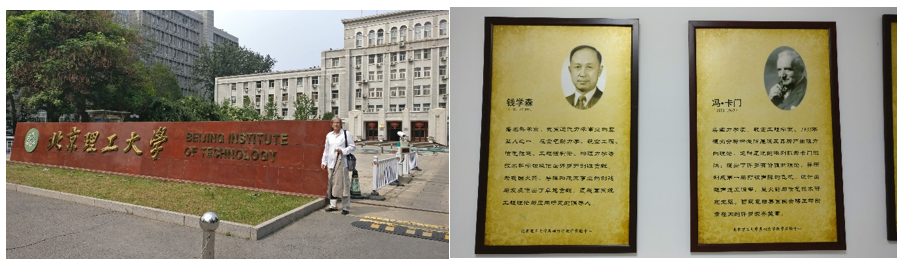
Our cooperation had a historical basis that was a surprise to me and that was a strong inspiration, almost an obligation. On the one hand, I did not know that everybody in China knows the poem Freedom, love by Sándor Petőfi as they must learn about it in school and I was also unaware how much the Chinese engineering science community respects Tódor Kármán.