Subscribe to our social channels to get the latest news about Hungary!


Budapest, February 3 (MTI) – Hungary has completed its renewal and once again has a future, Prime Minister Viktor Orban told parliament ahead of the start of the spring session on Monday.
The country has recovered from a “hopeless state of affairs” characterised by division and recession caused by bad governance before 2010, Orban said. The economy is now growing in a stable and sustainable way and the country is part of a region that will be the engine of growth in the years ahead, he added.
“Hungary is now in a better position than four years ago and its performance is constantly improving,” Orban said, adding that the renewal of Hungary would have been impossible without the two-thirds majority support granted by Hungarian voters, or without national unity on important issues.
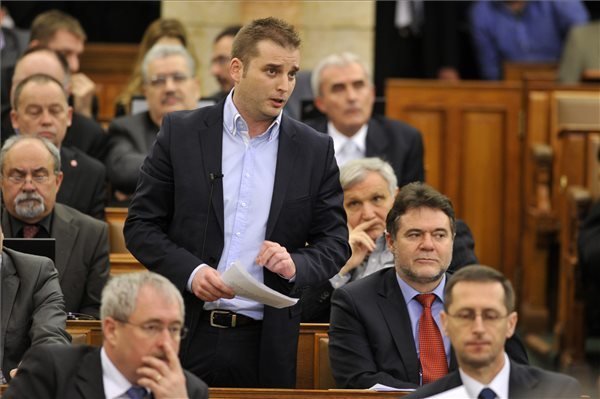 Opposition Socialist deputy group leader Tamas Harangozo branded the Fidesz government as aggressive and lacking in professional skills. Harangozo told the House that public debt is currently higher than in 2010 despite the government “taking away” 3,000 billion forints (EUR 9.6bn) in private pension savings. The current forint low is due to the lack of a credible economic policy. Borrowers with mortgages denominated in foreign currency must now pay higher installments than four years ago, he added. The government has been skilfully and unscrupulously using parliament to legalise corrupt deals and the investigation authorities to blur them. “True democrats” would not act this way even if with a two-thirds majority in parliament, Harangozo said.
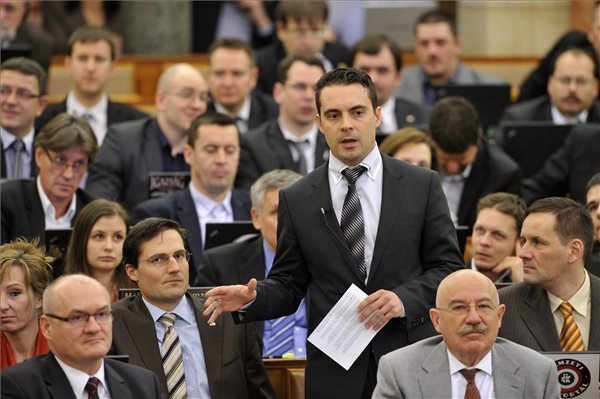 The leader of radical nationalist Jobbik, Vona Gábor called it regrettable that neither the prime minister nor the other government politicians “had the courage to stand firmly” in debates about the upgrade of Paks nuclear power plant. They are instead giving the impression that they have something to hide or to be ashamed of, said Gabor Vona. He said the prime minister acted irresponsibly when he signed the agreement in Moscow without preliminary consultations with parliamentary parties and before the start of the campaign for the April 6 general election, accusing Orban of letting an important professional and strategic issue “turn into an election hysteria.”