Subscribe to our social channels to get the latest news about Hungary!


The iconic building of the Hungarian Parliament, located on Kossuth Square along the River Danube, has become one of the most important landmarks of Hungary. The neo-Gothic building is among the most popular tourist attractions in Budapest, amazing us with several exciting legends and stories from which we have collected the most surprising ones. Do not miss them! 😉
Besides being one of the tallest buildings in the Hungarian capital with a height of 96 m, its global significance is not negligible either as Budapest has the third-largest parliament building in the world, following Bucharest and Buenos Aires in the ranking.
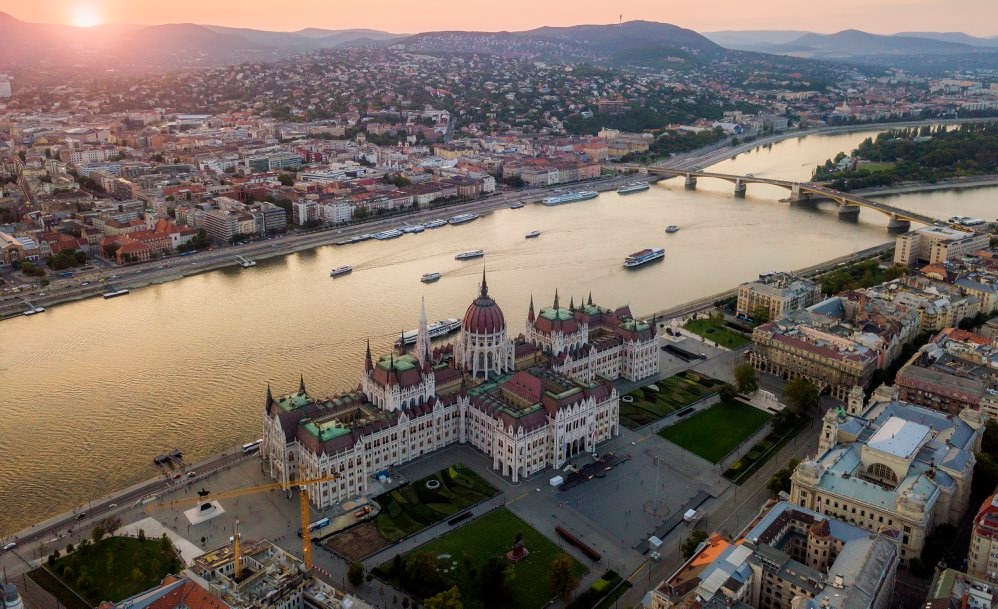
Few may know that its current location, Kossuth Square – also known as the main square of the nation, was an abandoned area until the middle of the 19th century. This was the time when the development of the formerly called Tömő Square started with the purpose of providing a convenient area for the Parliament Building of Budapest along the River Danube.
The construction of Hungary’s notable landmark began in 1885, and its completion lasted for 19 years that was quite a rapid progress compared to the technology of that time. The first parliamentary meeting was held in 1902. Unfortunately, the event could not be attended by the Hungarian architect, Imre Steindl, who had passed away a few weeks before the parliament opened in 1902.
During the construction, there was an important expectation that Hungarian artisans and manufacturers can use only Hungarian raw materials to construct the Hungarian Parliament. This was realised in all the building elements, except for the eight granite columns on either side of the staircase leading to the dome that were delivered from Sweden.
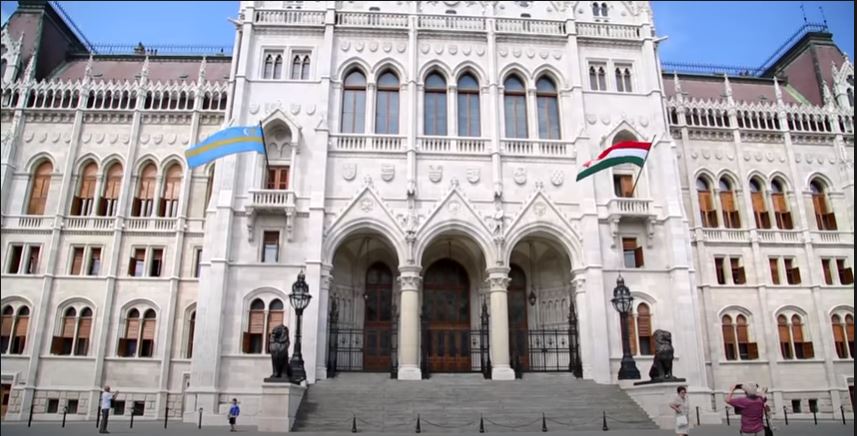
Just like in the case of Budapest Chain Bridge, lion statues have an important symbolic significance standing at the two sides of the entrance. However, during World War II, one of them was “hunted down”. If we face the main gate, we can find the original lion statue on the left, created by Béla Markup, while the younger lion was replaced by József Somogyi, following Markup’s patterns.
In the past, the building also served as a residence, as its dormitories and rooms were reserved for members of the guard and the local fire brigade.


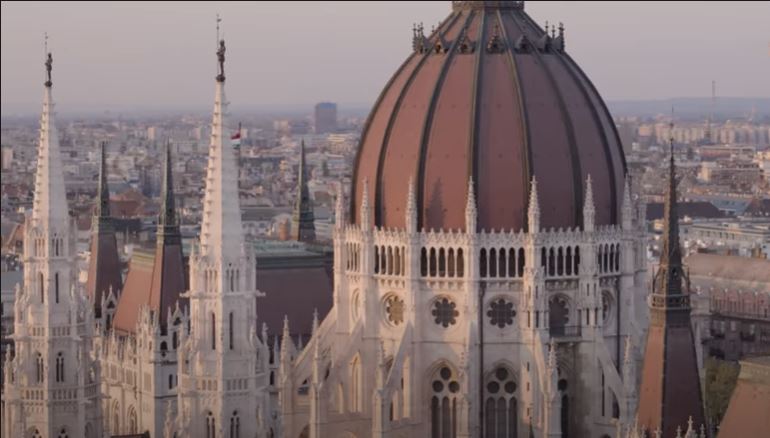
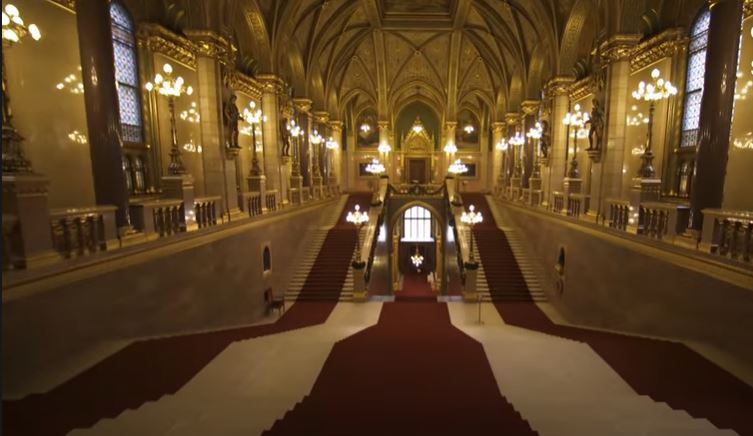
Astonishing masterpiece of Art.
A mixture of Gothic and Renaissance styles, at a time when skyscrapers were build in the US ….