Subscribe to our social channels to get the latest news about Hungary!


This series will try to introduce our readers to Hungarian inventions or products that might be less known. This particular article will be about Hungarian weapons or weaponised vehicles built or designed by Hungarian professionals. Some of them were only prototypes, but others have even influenced the conduct of modern warfare.
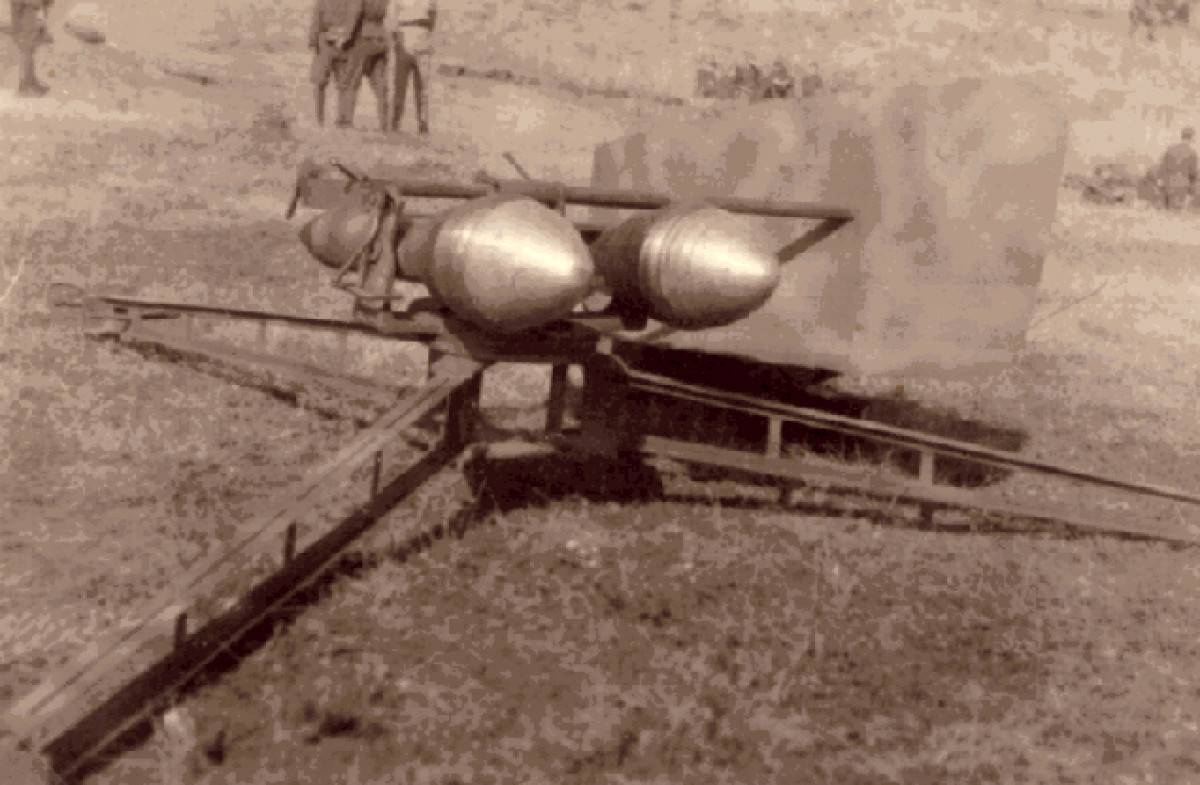
The emergence and number of the Soviet armoured vehicles and heavy tanks in 1942 incited the production of Hungarian anti-tank missiles, as at that time the Germans were reluctant to hand over the blueprints of their own panzerfaust – Honvédelem reports. The missile department of the Institute of Military Technology embarked on the development of two types. The smaller was the 60mm diameter 44M anti-tank hand-held missile launcher, the larger was
the 215mm 44M mace projectile’, which was the first known heavy anti-tank missile in the world,
with a charge of more than four pounds. It had its own portable dual launcher that could be operated from a truck-bed or the ground. Hungary was the third state in the world – only after the Third Reich and the US – to build deployable anti-tank missiles.

The Turán was a Hungarian medium tank developed during WWII. It was inspired by and used solutions from the Czechoslovak Škoda T-21 medium tank. The Turán was produced in two main variants: the 40M (or Turán I) with a 40mm gun and the 41M (or Turán II) with a 75 mm gun. There was also a prototype variant, the 43M (or Turán III). The prototypes were built, but as work on the project stopped in 1944, it did not go to production. Two of the Škoda T-22s were given to Hungary in 1941. It had a 47mm gun, but Hungarian engineers decided to replace the original with a Hungarian-manufactured 40mm gun due to both economic and military reasons. The domestically manufactured 40mm’s muzzle velocity was higher, therefore it had better armour penetrating capabilities.

The Škoda factory carried out the modifications. They put the Hungarian gun into the original Czech gun cradle; additionally, the front armour was also modified by riveting an additional 20mm thick armour plate onto the original making it 50mm thick. In total, only 424 were made. The Turáns were employed by the 1st and 2nd Hungarian Armoured Divisions, as well as the 1st Cavalry Division, in 1943 and 1944.
There is only one known surviving Turán tank, which is a Turán II on display at the Kubinka Tank Museum.

According to Honvédelem, the basis of the modern cumulative (HEAT) ammunition is based on the works of a Hungarian-German scientist pair. Their devices’ principle of operation is called the Misnay-Schardin effect. The cumulative explosives used today are primarily based on the weapons developed by József Misnay, Major General of the Military Technical Staff at the Royal Hungarian Institute of Military Technology between 1938 and 1944.