Subscribe to our social channels to get the latest news about Hungary!


King Matthias I’s (Mátyás in Hungarian) reign is considered by many to be the country’s golden age, and Mátyás himself, born on the 23rd of February, 1443, is one of the most popular historical figures. His cult is based on the legends and tales of Hungarian folklore that present him as Matthias, “the Just” who mingles among the people in disguise to do justice and help the good and the poor, while punishing the bad subjects.
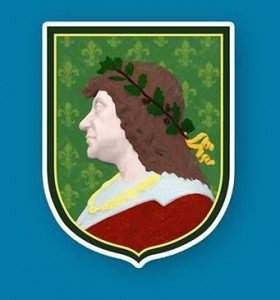 The king was born in 1443 as the second son of János Hunyadi, the regent of Hungary, and Erzsébet Szilágyi. He was the first king who wasn’t connected to the Árpád dynasty (the greatest Hungarian dynasty) in any ways, not even on spindle-side. At the age of 14 Matthias was imprisoned along with his older brother, László Hunyadi, on the orders of King Ladislaus V of Hungary. László Hunyadi was executed, causing a rebellion that forced King Ladislaus to flee Hungary. (Ferenc Erkel’s famous opera, László Hunyadi, tells this story from a chaotic historic era.)
Matthias I became the King of Hungary and Croatia in 1458, and later he was also elected to be the King of Bohemia and adopted the title Duke of Austria in 1487 as well. Since he was only 15 years old at the time, he began his rule under his uncle’s guardianship, but he took effective control of government within two weeks. He knew no limits and surprised everyone with his hustle as he created a powerful federal authority.
King Matthias generously favoured arts and sciences. He invited famous scientists and renaissance artists to his court. He built castles thus facilitating the development of the renaissance architecture in Hungary. His marriage to Beatrice of Naples strengthened the influence of Italian art and scholarship and it was under his reign that Hungary became the first kingdom outside Italy to embrace the Renaissance. His library of huge codices (Bibliotheca Corviniana) is of outstanding importance.


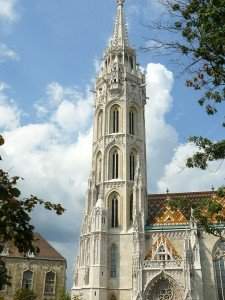 However, when it comes to the reality of these legends, some points can be doubted. His glorious acts were written down by the humanist historians of his court but there’s no evidence of a king doing justice in disguise. Also, Matthias was loved by neither the folk, nor the lords. The folk didn’t love him for the high taxes that came with his many military campaigns and the lords didn’t like him because he was “only” the son of a lord like them, not the offspring of a dynasty. But at the end of the day, he was a hard-handed king, and Hungary flourished under his reign.