Subscribe to our social channels to get the latest news about Hungary!


The purpose of national symbols is to unite people by creating visual or verbal representations of the national values and history. The coat of arms is one of the most important official national symbols, reflecting pivotal events and changes in a country’s history. Each nation’s coat of arms tells the story of wars and peace treaties, internal constitutional struggles, revolutions, the fall of ruling regimes, and national aspirations. The coat of arms of Hungary is no exception. Let us have a look at the origin and the symbolism of the elements.
Nemzeti Jelkepek defines the term ‘coat of arms’ as
“a permanent, coloured symbol designed and drawn according to certain rules from specific tinctures and geometrical or stylised pictorial devices displayed on a shield. On the basis of old unwritten law or a grant given by a ruler, the coat-of-arms was born as a distinguishing or identifying mark by individuals or corporations”.
Although the time and origin of the appearance of coats of arms are uncertain, they probably date back to the early medieval period and the emergence of knighthood.
The Hungarian word for ‘coat of arms’ is ‘címer’ [tsiːmɛr], but where does it come from?
According to Arcanum, the medieval Latin word ‘cymarium’ (helmet crest, helmet decoration) can be found in many European languages as a derivative of the same meaning, e.g. German ‘Zimier’, French ‘cimier’. The French form of the word came to Hungary in the 13th century with the Lorraine settlers. The word ‘címer’ was first used by Charles I in a document in 1326.
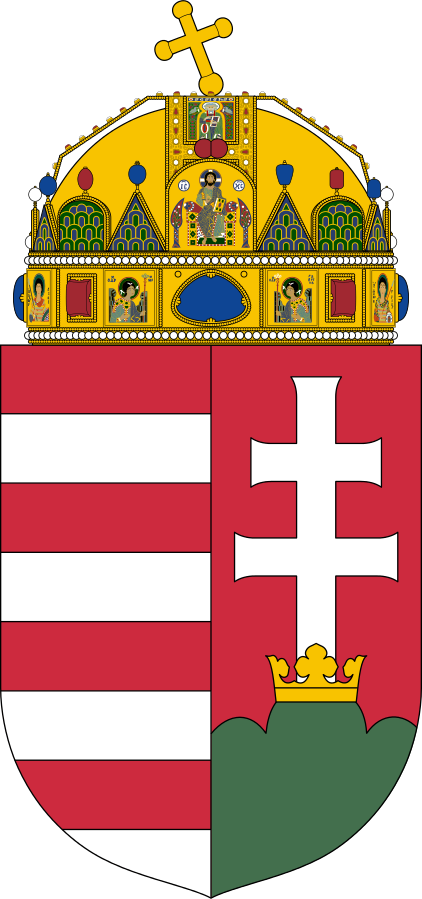
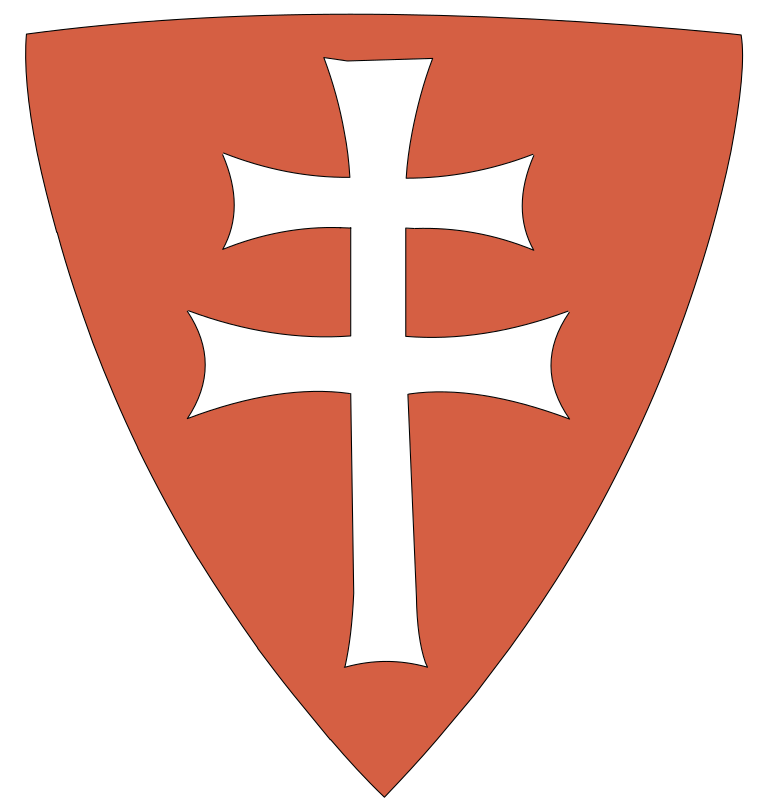
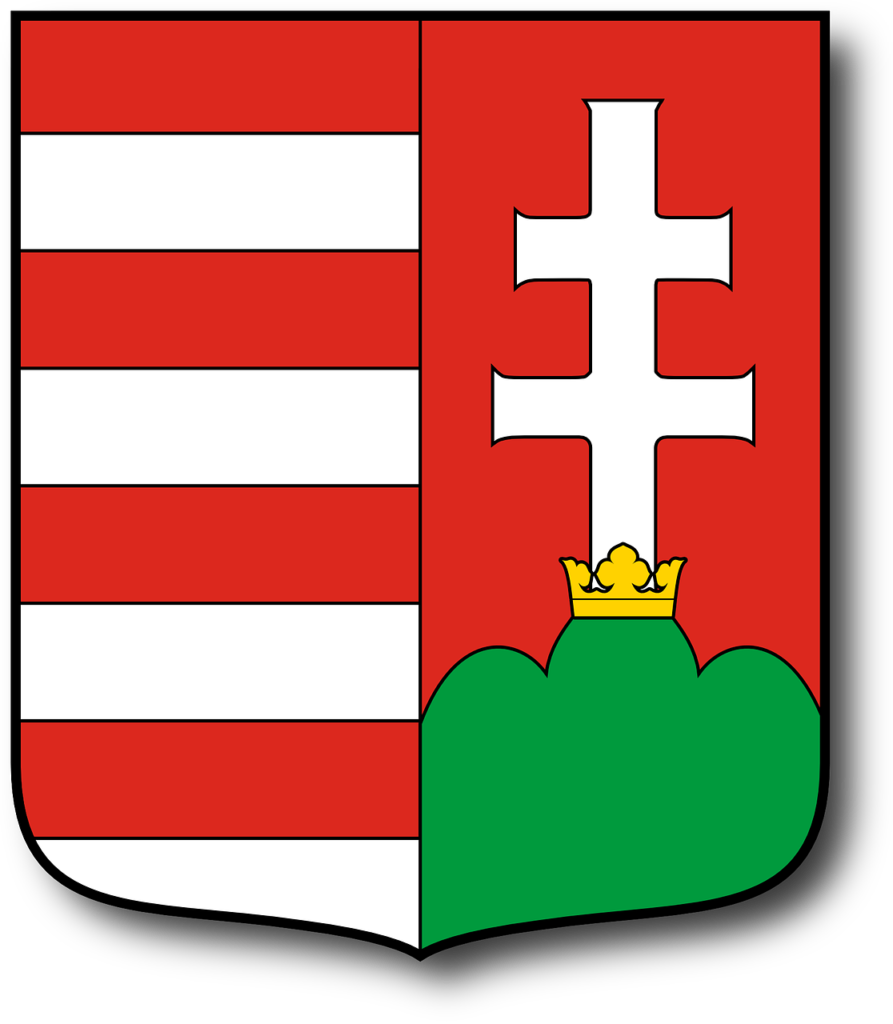
The current small coat of arms with the Holy Crown has developed over several centuries, and its elements were initially depicted on separate shields. It was voted as the official coat of arms by the Parliament in 1990. Some of these components were already used in the 12th and 13th centuries.
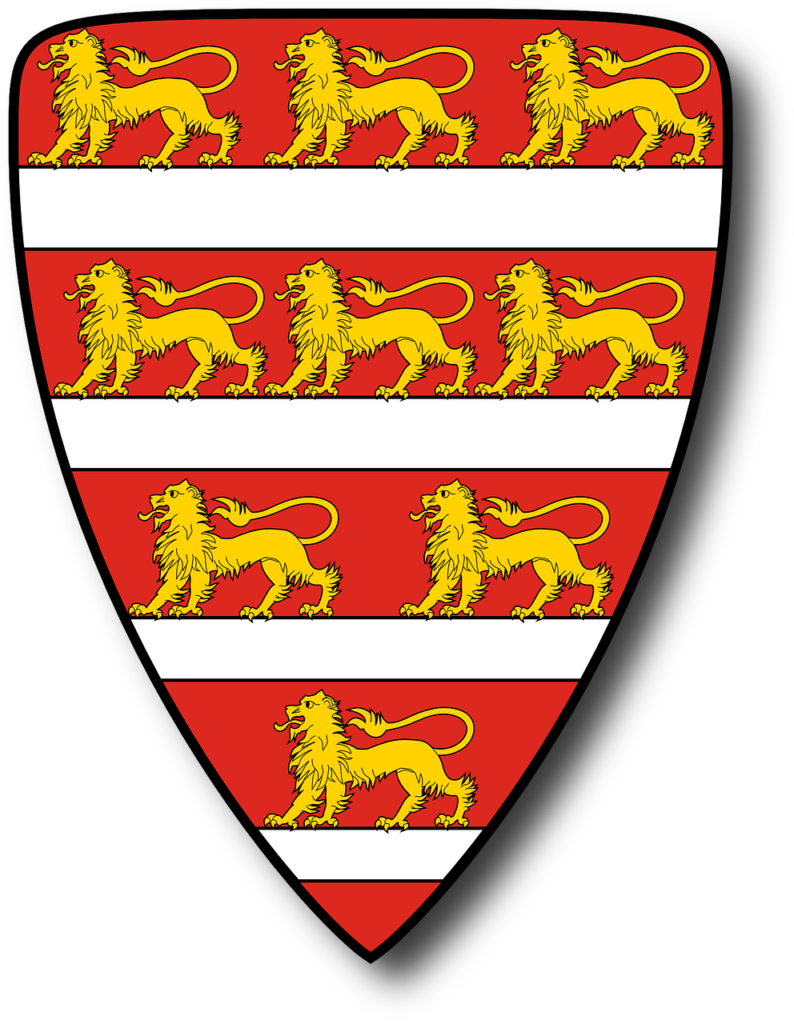
The Hungarian coat of arms is a military-carved and vertically divided shield with a pointed base. The left field contains eight horizontal bars of red and silver. These are called the ‘Árpád stripes’, and they have been associated with the founding dynasty of Hungary. This pattern was first recorded in 1202 on a seal of King Imre (1196−1204), but it was adopted by later rulers and dynasties to emphasise their legitimacy to the Hungarian throne. In his book called A magyar címer története (The history of the Hungarian coat of arms), József Laszlovszky claims that the shape is probably of Spanish origin, and the lion can be regarded as a widespread symbol of royal power. Traditionally, the four silver stripes represent four rivers: the Danube, the Tisza, the Dráva, and the Száva.