Subscribe to our social channels to get the latest news about Hungary!


Addressing a celebration of the 30th anniversary of the Velvet Revolution in Prague on Sunday, Prime Minister Viktor Orbán said that thirty years ago central Europeans had been self-confident enough to declare their region Europe’s future. “And knowing our achievements in light of Europe’s situation we can say with all due modesty that, today, we are indeed the future of Europe”.
“We are ready for this mission,” Orbán said. “Thirty years ago we central Europeans showed that we could not only die for our countries and for Europe but could live and work for them too.”
“Today, we share not only a common destiny but common goals too,” Orbán said. “The cooperation of central European countries is written into the hearts of the people of central Europe”. This is why the coming years would be about the success of central Europe and the Visegrád Group, he added.
Orbán said that the Czech and Polish anti-communist resistance had served as a model for young Hungarians in the 1980s.
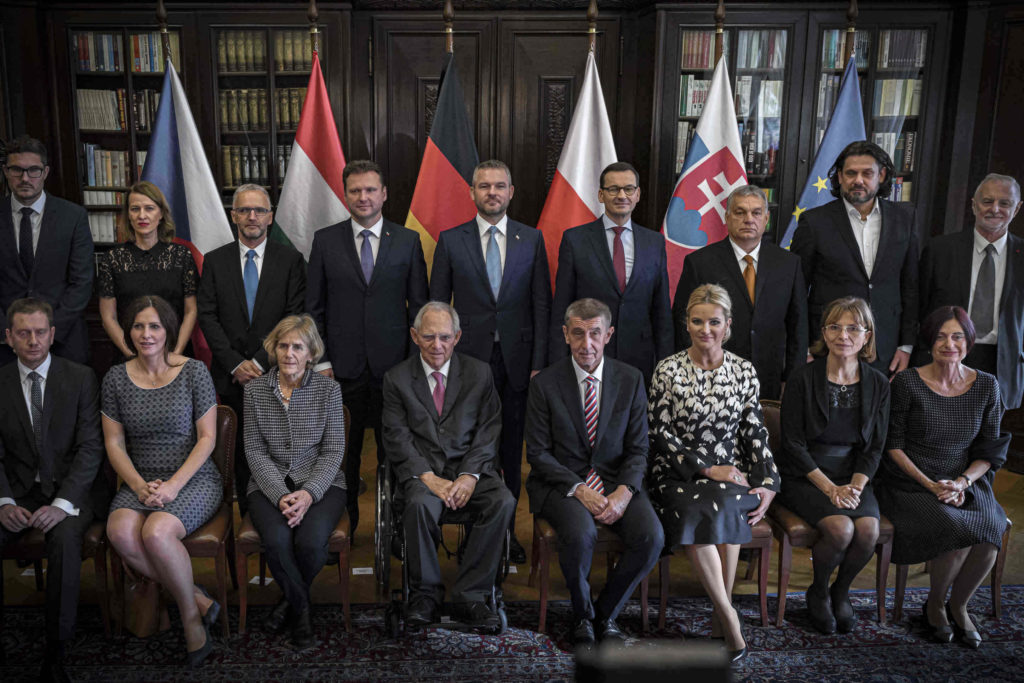
This helped Hungarians to begin dismantling the communist system, he said, adding that it was now clear that belonging to the ’68 generation meant something radically different in West than in central Europe.
He said that whereas the ’68 generation of the West strived to dismantle the Europe of free nation states and Christian culture, “our ’68-ers want to regain and protect these values.”


Unfortunately, the population loss in Eastern Europe does not paint a bright future. Millions of people have left Poland, Estonia, Lithuania, Latvia, Romania, Slovakia, Bulgaria, Croatia Albania, Serbia and the states of former Yugoslavia for Western Europe. Hungary, whose current population is just below 9,800,00 is losing about 60,000+ people a year to deaths, low birth rates and emigration. Some projections show a population as low as 6,000,000 by 2050. This is catastrophic for the economy, for national security and future prospects for the Country and the entire region.