Subscribe to our social channels to get the latest news about Hungary!


In the manufacturing industry, the best experts mostly reliable for the high-quality finished products are the industrial mixers. With the varying types of blades, pressure, speed, tanks, and configurations, they are designed to work effectively according to the need of the different substances that require processing. You’ll lose count of all the products that depend on these powered machines.
There are different forms of mixing. One would be batch mixing. Simply, the materials or ingredients are placed inside the mixer and get blended at a particular amount of time until they are completely mixed with one another. Next would be the continuous mixing. Materials are added over and over as the aqueous substance gets rapidly stirred unabatingly. Others would involve dissimilar methods.
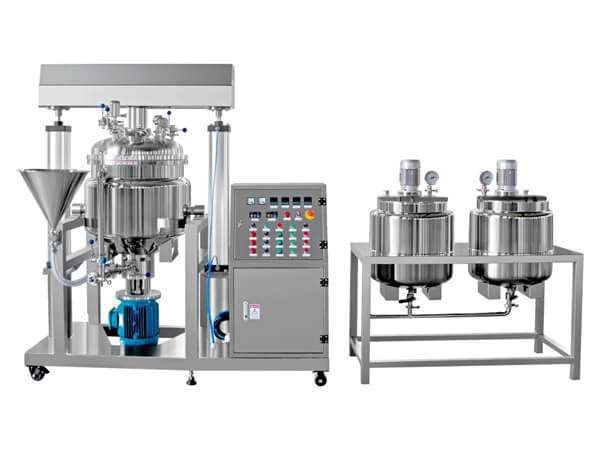
Apparently, one type of mixer will not be able to accommodate the different raw materials and ingredients. These things possess diverse attributes and characteristics that demand an appropriate manner of processing. Innovators have built equipment that specializes in homogenization, some have made a mixer that is a perfect fit for dispersion or particle size reduction. In other words, some features in one agitator may not be present on the other. That’s how they work.
Let us now dig deeper. What are the different types of industrial mixers?
Being informed about this will help you decide which mixer will work best on your application and which will not. If you’re ready, read on!
Convective blenders function at a short mixing period. Some industries prefer this type because it works much faster than the others. But the thing is, it is less practical for diffusive operations. Physically, they are firm, resolute shelves with an impeller – a tool that rotates at a speed rate – such as paddle, plow or ribbon.
Mixers that classify under this category are ribbon blenders, paddle blenders, and vertical screw blenders – via movement, they transmit heat.
Examples of tumbler mixers are v-shape blender, double-cone blender, and slant blender. They utilize air in mixing or blending, upstream or downstream. Tumbler mixers help in filling, mixing, sealing and storing materials inside the tank so that cross-contamination and double-handling of the products would be prevented.
The process of mechanical fluidization involves particle division and perturbation through impingement. A rotating element is used to cause turbulence and rapid churning among the materials within the tank. They move through the solids as if they were hydrous substance. Items include plow and double-paddle mixers.
Fluidization blenders are also used for wet and dry mixing, slurry mixing, and even high viscosity liquid mixing.


