Subscribe to our social channels to get the latest news about Hungary!


If they could talk, the streets of Budapest could tell thousands of stories about love, friendship, goodbyes and new hopes that happened in real life. However, they are also infused with literature and the city is the main character in several Hungarian stories.
Pestbuda has collected some of the most touching stories in which Budapest played a big role, presenting a portrait of the Hungarian city through the eyes of the most prominent Hungarian writers and poets.
The story of Toldi by János Arany is known by every Hungarian: Miklós Toldi is famous for his great strength and good heart, and comes to Budapest to save his honour and to do good for the murder that he has accidentally committed. After having fled his village in the Great Plain, he is amazed by the hills of Buda and the Buda Castle:
A bright moon is shining on the streets of Pest,
chimneys gleaming high in the moonlight. The roof-
tops huddle below shingling in shadow almost all
the walls. You would think they live in attics, and
that is why they raise the roofs so high, wall on
wall and the top twice begun anew.
In this epic, Budapest is not only the place where Miklós’s honour is restored thanks to his bravery and humility,
but also the city where he made a fortune, became a well-respected man and proved his worth through a series of heroic deeds, like fighting a raging bull on the loose that kept the citizens of Budapest in terror.
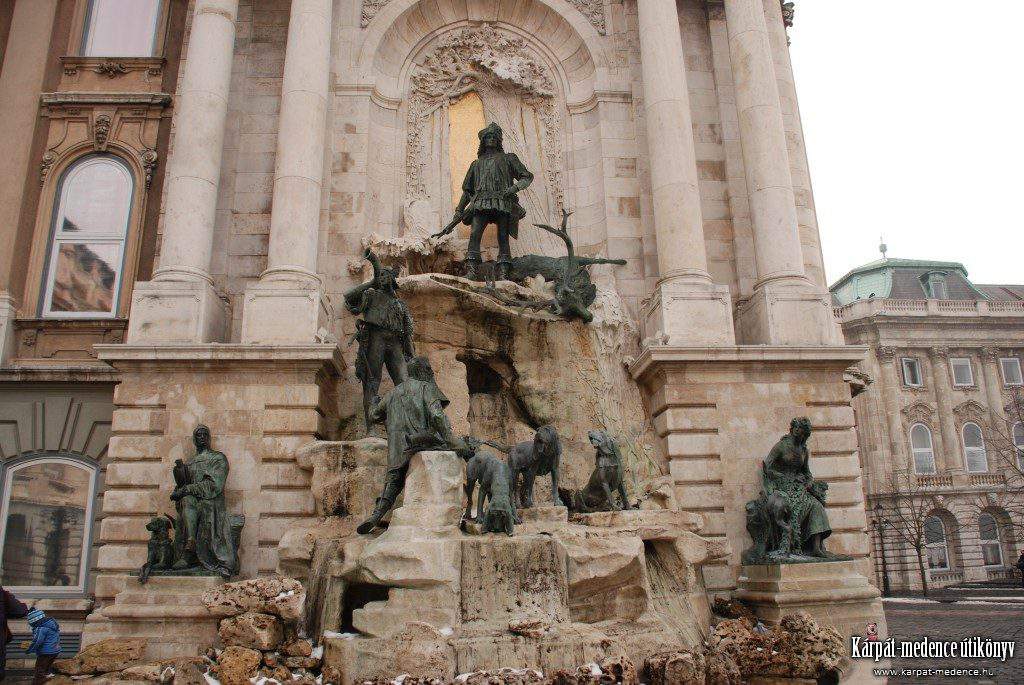
Arriving to Budapest from the countryside does not always end in smiles. The poet Mihály Vörösmarty in Szép Ilonka (Beautiful Ilonka) puts his heroine, Ilonka, through many hardships in Budapest. Ilonka is a naive, innocent and pure-hearted girl from a small village, who gets invited to Buda, to the courts of Matthias Corvinus by an unidentified hunter. She comes to the city with her grandfather:
Peterdi and his grandchild sweet
go up to visit Buda-town.
The old man’s wonder is complete
to see new mansions of renown.
The maiden waits in anxious pain
to meet her handsome youth again.
However, they soon find out that the hunter was the king himself, so feeling lied to and betrayed, they return to their remote little house without actually going to the castle.
A year after Margaret Bridge was inaugurated, János Arany wrote a ballad featuring it in 1877, supposedly based on the urban legend that freshly built bridges are inaugurated by suicidal people, but there are some who claim that there were suicide-jumpers on Margaret Bridge too. This is confirmed by news reports from that time.

In Arany’s view, people turned to suicide as a last resort to break free from the hardships and hopelessness of living in the capital city.
In the ballad, people are jumping into the Danube right after one another, to finally be relieved from their problems:


