Subscribe to our social channels to get the latest news about Hungary!


Press release – The ADF (Hungarian Academy Staff Forum – HASF in English) is a civil initiative of the researchers from the research institute network at the Hungarian Academy of Sciences (HAS).
The Hungarian government is introducing a new system of research financing, in a way which in itself contradicts the appropriate manners of policy making, and which, after implementation, will have disastrous effects on the autonomy of scientific research and scholarship in the entire country as well as academy staff work and life altogether. Given that their voice has not been heard either in public or during the negotiations between the HAS and the government, this initiative is meant to express Hungarian Academy Staff Forum opinions about the situation and the whole process. Summary of the situation:
The Hungarian government is continuing its crackdown on academic freedom. The government first placed all universities in the country under the direct supervision of a chancellor, an administrator appointed directly by the government, and more recently forced Central European University to move most of its programs from Budapest to Vienna. Now, the Hungarian Academy of Sciences is subject to a structural reorganization by the government which will lead to the complete loss of academic independence for the Academy specifically and for scholarship in Hungary in general.
Before the elections in April 2018, government officials made clear in statements published in several right-wing media outlets that the government would intensify efforts to put the research institutes of the Hungarian Academy of Sciences (HAS) under government control because these institutes had not been unquestioning in their loyalty to the government.
The Hungarian Academy of Sciences was founded in 1825 to promote scientific research in Hungary. It was created and maintained with the support of private benefactors. It has since become a national symbol of scientific endeavour and a major centre of cultural life in Hungary. After the First World War, HAS suffered from a major lack of funds, but its autonomy was strengthened and successfully maintained until the last years of the Second World War. Towards the end of the war, purges of the members of the Academy were held by successive regimes (the nationalist-conservative Horthy regime, the Arrow Cross regime which rose to power with the help of the Nazis, a short-lived democratic regime, and the communist regime under Mátyás Rákosi), and by 1948 the Academy had become a typical Soviet-type institution and an organ of the communist state.
Ironically, in the darkest years of the 1950s, an important new element was added to the Academy: the network of research institutes. This network had domestic antecedents, but fundamentally it was based on the Soviet academic world.
After the post-communist democratic transition in 1990, the Academy successfully struggled to retain the values embodied by the various academic institutions, while adapting them to the challenges of the technological revolution. A comprehensive reform of the research network was implemented in 2011–12 by President József Pálinkás, a scholar and former conservative minister of education and research who centralized the smaller institutions into fifteen research centres. The reform introduced a new system according to which scientific performance was evaluated and increased the role of tender-based financing, but it continued to respect the special demands of various disciplines, from the natural to the social sciences and the humanities. Until 2018, academic freedom was guaranteed by the autonomy of the Academy, which was grounded on two pillars affirmed by Law No. XL/1994. First, the Academy was led by a self-governing body of distinguished researchers who played an important role in managing the research centre network and supervising its work. Second, funding was negotiated on non-partisan grounds every year.
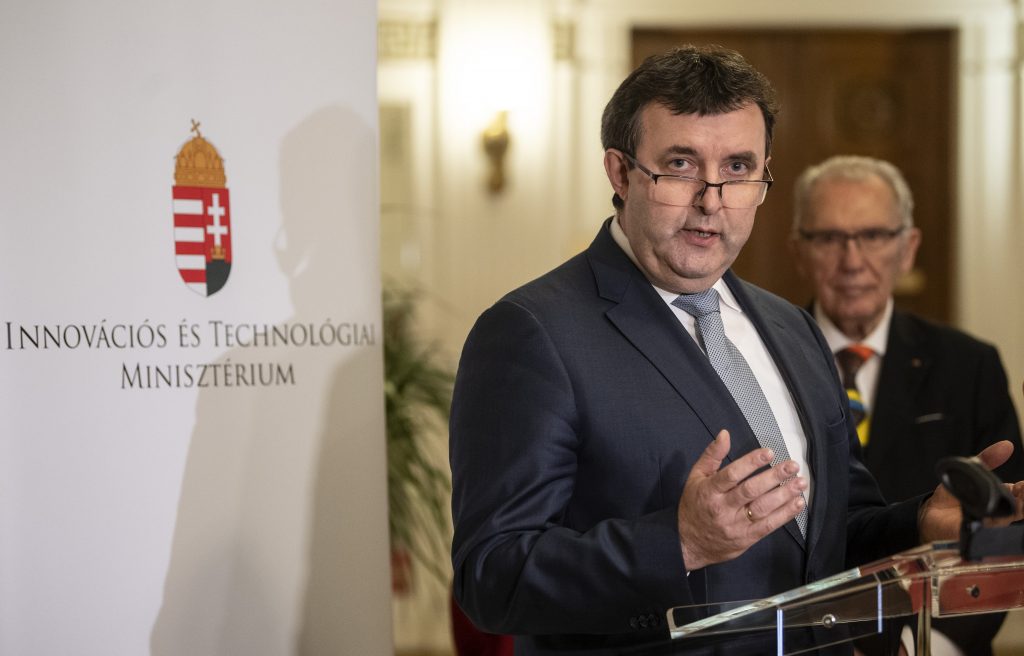
In June 2018, László Palkovics, the newly appointed Minister of the newly created Ministry for Innovation and Technology and himself a member of HAS, who enjoyed the strong support of Prime Minister Viktor Orbán, proposed a seemingly tiny technical amendment to the 2019 budget laws to reallocate the annual financial support for the academic research centre network from the Hungarian Academy of Sciences to the new ministry.