Subscribe to our social channels to get the latest news about Hungary!


If you think you know everything about Budapest, Hungary’s capital, and that you are familiar with every nook and cranny of the city – this article is for you. We move past common knowledge here and focus on the weirdest and quirkiest of facts, based on szeretlekmagyarorszag.hu‘s article.
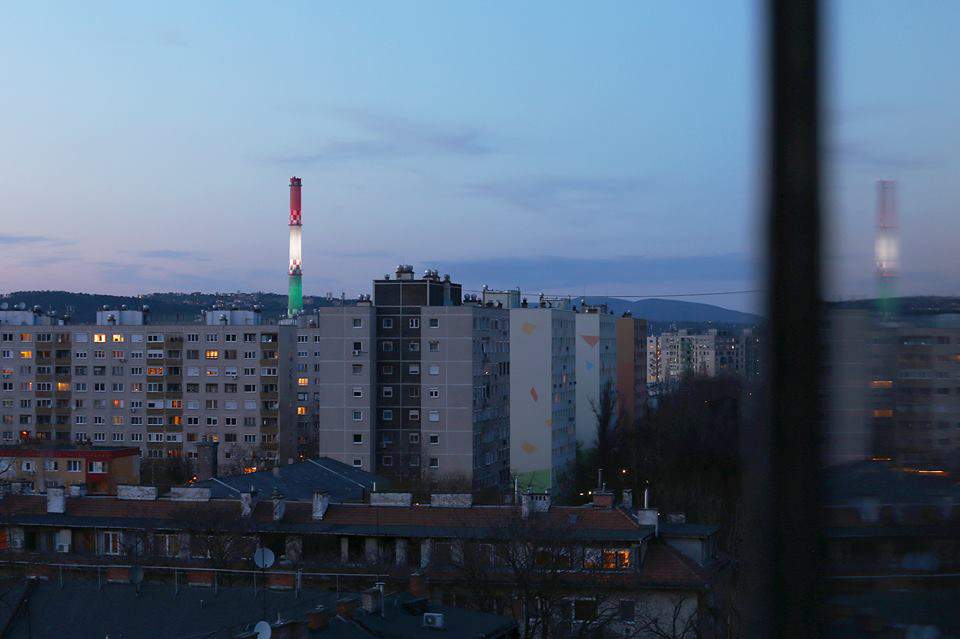
The longest block of flats, located in Óbuda, is called ‘Village Hall’ for a reason. With close to 3 thousand residents living in the 884 units, it does feel like an entire village is crammed into the building. No wonder it turned out to be the most extended block of flats in the entire capital. The building has its own personal victory, too – in 2009, during a full renovation and modernisation, it got to be the proud owner of the biggest solar panel at the time.

The highest point in Budapest is the János Hill, with the Elisabeth lookout tower on top – even if János Hill is only the 4th highest point of the Buda Hills. It is 527 metres, with the lookout tower adding 23.5 metres. Residents have always wanted a lookout tower, and the present building was worth the wait.
If the weather is good, it is possible to see as far as over 10 kilometres.
The current lookout tower is a beautiful Neo-Roman stone build by Frigyes Schulek, architect of the Fisherman’s Bastion, but there has been a long list of previous attempts, mostly from wood. It got its name after Empress Elisabeth of Austria, who was assassinated in 1898. The Empress was so loved and respected that more than 10 years after her death, Hungarians wanted to honour her and named the lookout tower after her.
The Millennium Underground Railway, or Metro Line M1, the ‘yellow line’, can be proud of several things. First of all, it was the first underground of continental Europe (only London had one before Hungary) as well as the first ever operating on electricity instead of steam, the old-time favourite. The shortest section between two stations is also here, from all the metro lines in Budapest. The average distance between two stops is 374 metres. However, the distance between Kodály Circus and Bajza Street is only 190 metres.
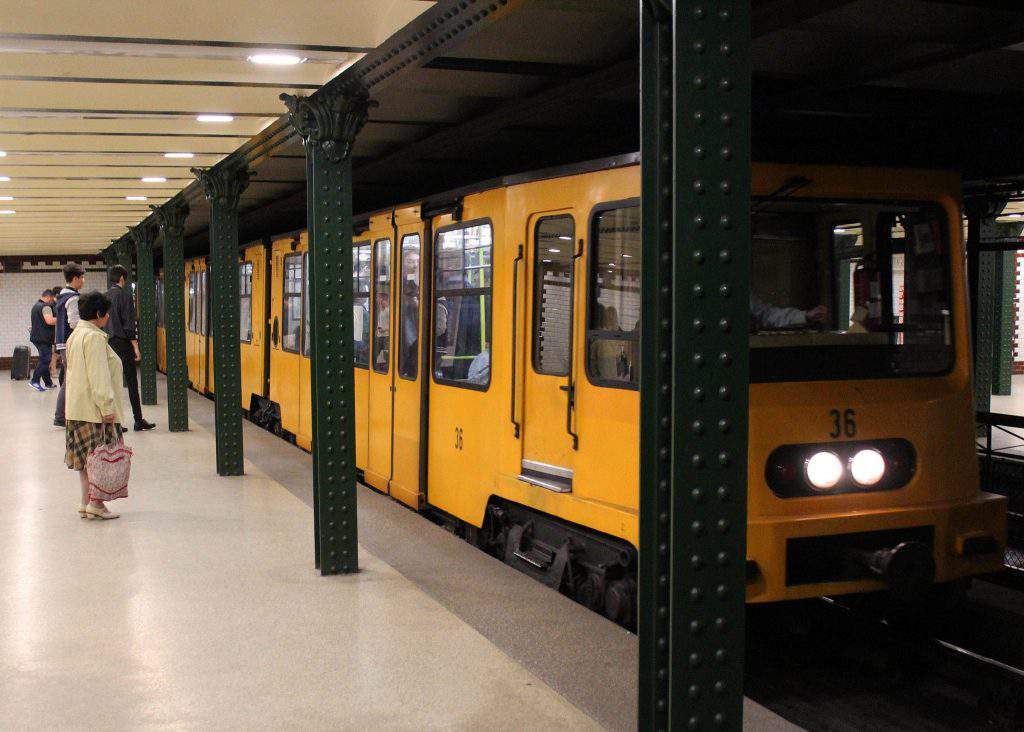
The metro line, opened in 1896, originally had 9 underground stations and 2 were on ground level. Back then, the line came above ground behind Heroes’ Square, making Bajza Street the last station but one. Even though the line is somewhat longer now, it is still the shortest in Budapest, with the most stations compared to its size.
Going down to certain stations, especially on Metro Line M2, can feel like you have been standing on the escalator forever. Well, the longest way down is
at Széll Kálmán Square, with the station being 38.6 metres under the ground, where the strong draft only adds to the feeling the ride is never going to end.
Metro Line M2 was under construction by the ’50s; however, the section from Örs Vezér Square to Deák Ferenc Square as well as the section to Déli Railway Station were only completed in 1972. The station at Széll Kálmán Square was built in a three-tunnel-style, with 4 escalators taking us downwards.