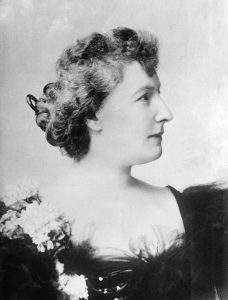
Subscribe to our social channels to get the latest news about Hungary!


According to cultura.hu, (Mária) Mary, (Stefánia) Stefania and (Lujza) Louisa Belgian princesses had a close relationship with Hungary – but not only due to their marriages. Let’s find out about their peculiar life stories!
The Low Countries look back on a long and diverse history, during which the throne was taken by Spanish, Burgundian and Habsburg (with Hungarian relations) rulers in turns. But the independence of Belgium was only proclaimed in 1831, meaning that there were no dynastic relations between the two countries.
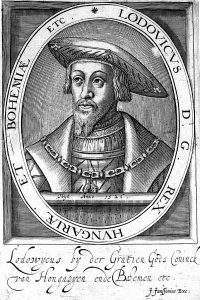
However, in previous centuries, there were some considerable links. For instance, the wife of Hungarian King Louis II (who died at a young age in the Battle of Mohács) Mary was the younger sister of Spanish King and Holy Roman Emperor Charles V.
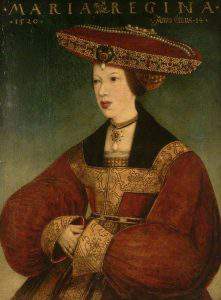
After she had lost her husband, she only stayed in Hungary threatened by the Turks until she managed to ensure the throne for her other brother, Ferdinand. Then, she returned home to the Low Countries, where Charles V trusted her with the governing of his lands.
According to the notes of historians, Mary of Hungary – as she was known – was one of the best governors of the provinces.
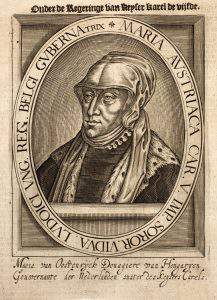
She resigned along with her emperor brother in 1556 and died in a Spanish monastery two years later.
Mary swore that she would never cast her weeds, and she kept her promise until her death 32 years later. Many people wanted to marry her, but she kept saying no. She is depicted in her white veil on all of her portraits that were made after Mohács. She kept her husband’s heart in a golden urn and took it with her everywhere. She remembered Louis II with utmost love in her testament.
The next relationship formed at the end of the 19th century. 1881 was an important year in the history of Belgium. The country was celebrating the semi-centennial jubilee of its independence. Leopold II commemorated the event with a huge triumphal arch and the construction of several museums, and also started its adventure in the Congo with the aim of making Belgium a colonial power.
The king always answered doubtful questions with confidence: “There are no small countries, only small souls”.
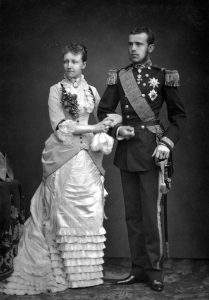
The glorious events of the year were topped off by the royal wedding: Archduke Rudolph, the crown prince of the Austro-Hungarian Empire, married the daughter of the Belgian king, Stefania.